
Lieferung heute & morgen

Qualitätsgarantie

Willkommens-Angebote freischalten: KOSTENLOSE Lieferung | Bis zu 80 % RABATT | Kostenlose 30-Tage-JoyPlus-Testphase
App herunterladen
A juicer can make preparing fruit and vegetable juices much simpler. However, not every appliance delivers the right results for your household. Products are often chosen based solely on wattage, eye-catching design or an especially large feed chute. But these details only tell part of the story when it comes to everyday practicality, cleaning and suitable ingredients.
An electric juicer with 1,000 watts isn’t automatically more suitable for every purpose than a slow juicer with 150 watts. The power consumption primarily describes the motor’s operation. What also matters are the pressing or centrifugal system, the processing speed, the sieve, and the design of the juice and pulp containers.
Before buying, you should check which parts are removable and dishwasher-safe. An appliance may have a quick-rinse function, yet the sieve, feed chute and auger may still need manual cleaning. A cleaning brush supplied with the appliance is particularly handy for fibrous vegetables and pulp.
A juicer with a large feed chute can reduce chopping time. However, whole, very hard or fibrous ingredients should only be added if the instruction manual explicitly allows it. Depending on the appliance, you may need to remove pips, skins and hard parts. So always consider the feed chute together with the list of permitted ingredients.
A juicer that’s easy to clean should have as few individual parts as possible. Look for:
For a small household, a compact 700 ml juice container may be sufficient. Families or users who prepare several portions at once will benefit from larger pulp and juice containers. Dimensions also matter: an appliance with a slim body is easier to fit on a narrow worktop. The stated motor power and design provide clues, but don’t replace the manufacturer’s information on operating time and noise levels.
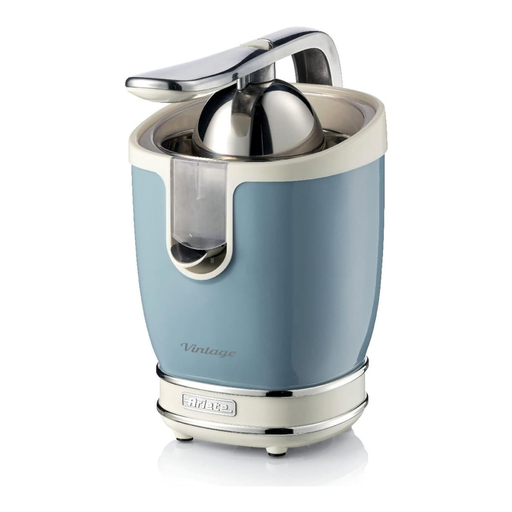
Why this product fits the profile: This electric citrus press is designed for occasional orange, lemon and lime juices and takes up relatively little counter space.
Its clear specialisation prevents buyers from mistaking a citrus press for a universal vegetable juicer. Two pressing cones are provided for different sizes of citrus fruit.
85-watt motor, lever operation, drip-stop spout and compact dimensions of approximately 24 × 24 × 34 cm.
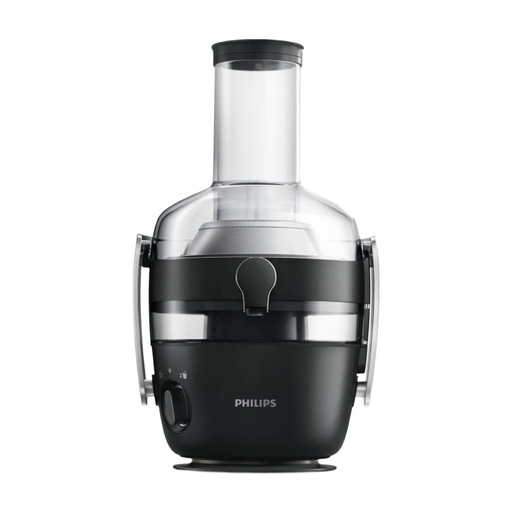
Why this product fits the profile: Two speed settings, an 8 cm feed chute and a 1-litre juice container support regular preparation in a multi-person household.
The technical specifications clearly state the feed chute size, container volume and cleaning functions. This makes it easier to assess everyday practicality than relying on wattage alone.
1,000-watt rating, 2.1-litre pulp container, QuickClean function and integrated drip-stop spout.
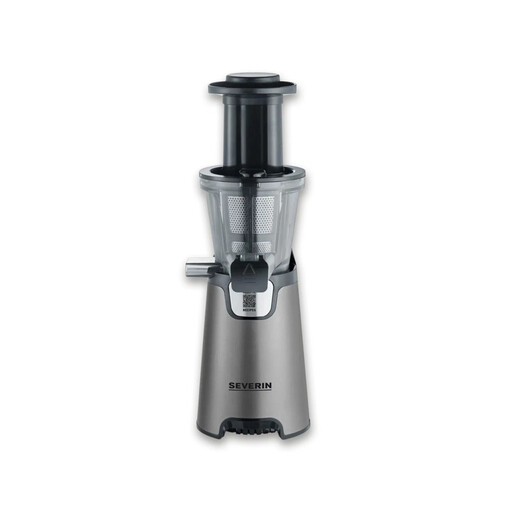
Why this product fits the profile: This cold press juicer processes soft and hard fruit, vegetables and frozen fruit. With suitable attachments, it can also be used for sorbet, jam and passata.
The usage limits are clearly described through two sieve inserts and an attachment for frozen fruit. This reduces the risk of buying the wrong product for special recipes.
150 watts, 1-litre juice container, Easy-Clean concept, drip-stop closure and non-slip feet.
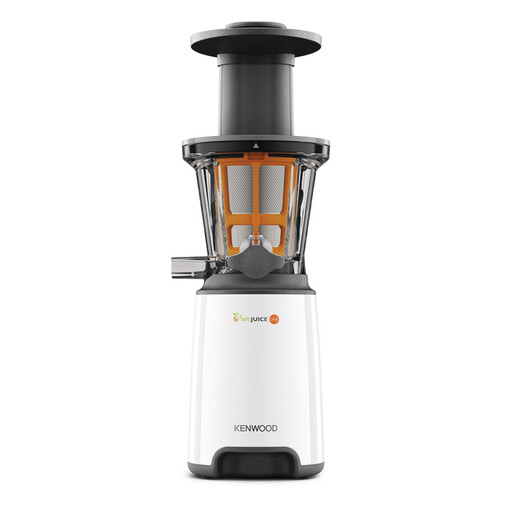
Why this product fits the profile: The slim body, approximately 15 cm wide, is ideal for smaller worktops. A 700 ml juice container covers single portions.
The stated speed of 55 revolutions per minute makes the pressing principle clear. A rinse function and cleaning brush address the common maintenance effort.
140 watts, 700 ml juice jug, 1.3-litre pulp container, drip stop and slim appliance profile.
We’ve put together a full, regularly updated list of products that fully meet these strict selection criteria and the safety regulations in force in the EU.
For versatile use, both centrifugal juicers and slow juicers are worth considering. A slow juicer works with an auger at low speed, while a centrifugal appliance processes ingredients using a rotating sieve. For oranges and lemons only, a citrus press is usually sufficient. Before buying, check the specifications for fibrous vegetables, leafy greens and hard ingredients.
The lifespan depends on how often you use it, how you clean it, correct assembly and the ingredients you process. Sieves, augers and seals are wear parts. The appliance should be cleaned after each use and not operated beyond the running time specified in the manual. Warranty and spare parts information can be found in the respective manufacturer’s documentation.
Electricity consumption depends on the motor power and the actual running time. An appliance with 1,000 watts running for ten minutes uses approximately 0.167 kilowatt-hours. A model with 150 watts over the same duration uses about 0.025 kilowatt-hours. So the ongoing costs depend not only on the wattage, but also on the quantity prepared, running time and frequency of use.