
Lieferung heute & morgen

Qualitätsgarantie

Willkommens-Angebote freischalten: KOSTENLOSE Lieferung | Bis zu 80 % RABATT | Kostenlose 30-Tage-JoyPlus-Testphase
App herunterladen
A juicer can make preparing fresh juice much simpler. However, electric juicers, slow juicers and citrus presses differ significantly in the fruit they can handle, the preparation required and the cleaning effort involved. If you only focus on wattage or an extra-large feed chute, you might end up buying an appliance that doesn't match your everyday usage habits.
Motor power alone tells you very little about how well an appliance handles apples, carrots, leafy greens or soft fruits. A 600-watt centrifugal juicer works differently from a slow-turning cold press juicer. What really matters are the pressing or cutting mechanism, sieve design, rotation speed and the maximum operating time.
A juicer with a large feed chute can reduce the amount of chopping needed. However, peel, pips, hard skins or very fibrous ingredients still need to be prepared according to the instruction manual. Some appliances, for example, aren't suitable for bananas, avocados, sugar cane or very hard components.
Removable parts make cleaning easier, but they don't automatically prevent pulp from sticking. Particularly fine-mesh filters may need rinsing promptly after use. So pay attention to the number of components, whether parts are dishwasher-safe, and whether the motor housing can only be wiped clean with a damp cloth.
An electric citrus press is ideal for oranges, lemons, limes, mandarins and similar fruits. It usually works with a pressing cone and doesn't need a cutting blade. For carrots, apples, cucumbers or leafy greens, however, you'll need a fruit and vegetable juicer or a slow juicer.
A slow juicer (also called a cold press juicer) processes ingredients at a low speed using an auger. This can be a good choice for households that regularly want to prepare different types of fruit and vegetables. The actual juice yield depends on the ingredient, its ripeness, the size of the pieces and the appliance's design.
A feed chute of 80 to 135 millimetres can save time with larger pieces of fruit. Even so, you may still need to cut ingredients in half and remove pips when necessary. For a single-person household, a smaller juice container is often sufficient. Families are better off with a capacity of 1.4 to 1.8 litres, provided there's enough worktop space.
Also consider the height of the appliance, its weight and the clearance under wall cupboards. A large container can be practical, but it often increases the amount of cleaning required.
For a juicer that's easy to clean, look for few removable components, smooth surfaces and a filter that's easy to access. A BPA-free juicer may be important to buyers who check the material specification of the plastic parts that come into contact with food. Check the specific product description and the manufacturer's information for this.
For electrical appliances used in UK households, the voltage rating of 220–240 V and 50 Hz should match your local mains supply. The appliance must stand on a stable surface. Always unplug it before disassembling, moving or cleaning it. The motor housing of the models mentioned must not be immersed in water.
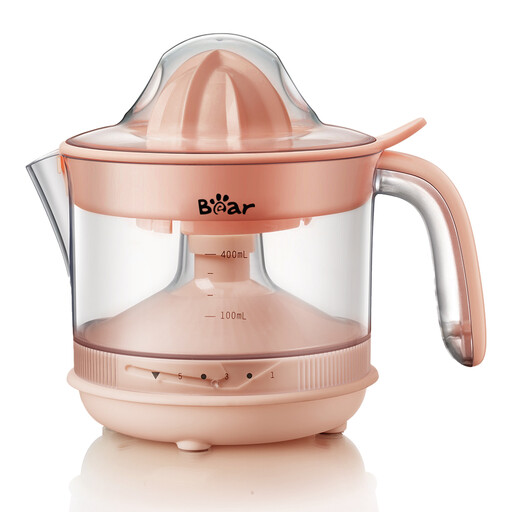
Why this product fits the profile: This electric citrus press is designed for oranges and lemons, and its 400 ml container capacity takes up very little space. Five adjustable settings let you control how much pulp you want in your juice.
The design makes it clear that this appliance is for citrus fruit, not hard vegetables. The removable construction makes cleaning easier.
30 watts, 400 ml capacity, five settings, BPA-free material specification and non-slip base.
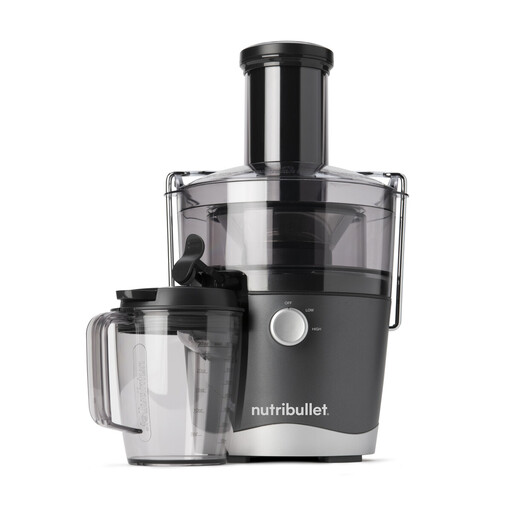
Why this product fits the profile: This cold press juicer features an 800-watt motor, a 1.5-litre capacity and a 3-inch feed chute, making it ideal for regular household quantities.
Two speed settings make operation straightforward. The removable pulp container is dishwasher-safe according to the product information.
800 watts, 1.5 litre capacity, 800 ml juice jug and two speed settings.
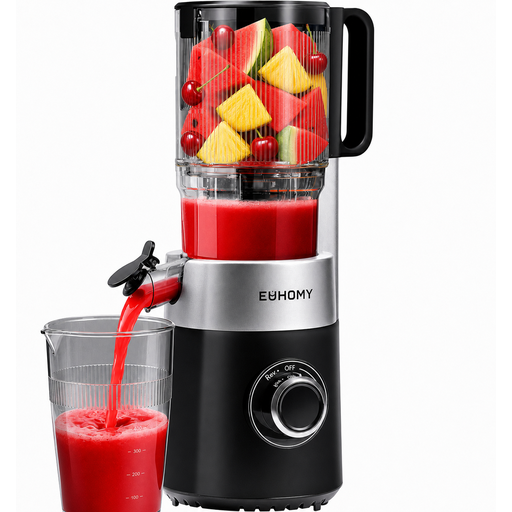
Why this product fits the profile: The large feed chute and 1.8-litre capacity are designed for households that want to prepare larger quantities of fruit and vegetable juice in one go.
The design specifies three assembly steps and cleaning with removable parts. This makes it easier to assess the maintenance effort before buying.
220 watts, 135 mm feed chute, 1.8 litre capacity and a three-stage filter system according to the product description.
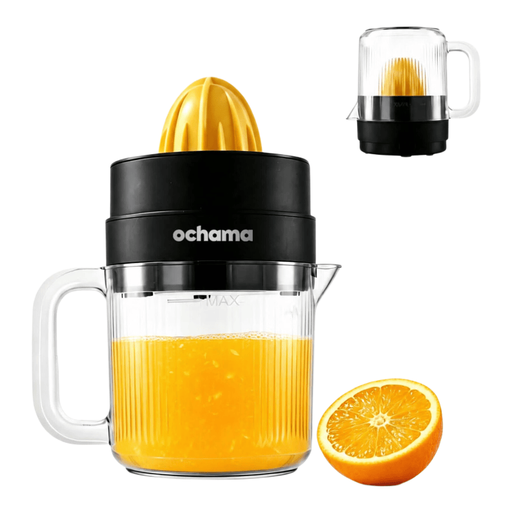
Why this product fits the profile: This semi-automatic citrus press is designed for oranges, lemons, mandarins and pomegranates, and comes with a 1.4-litre container.
The product information clearly states that it is limited to citrus fruit. This prevents it being mistakenly used as a universal juicer.
30 watts, 1.4 litre capacity, blade-free pressing design and removable accessories.
We've put together a full, regularly updated list of products that fully meet these strict selection criteria and the safety regulations in force in the EU.
For apples and carrots, a fruit and vegetable juicer or slow juicer is more suitable than a citrus press alone. Check which ingredients are allowed, the size of the feed chute and the recommended operating time. Hard pips and unsuitable parts should be removed.
The lifespan depends on how often you use it, how well you clean it, correct assembly and whether you process suitable ingredients. Stick to the specified maximum running time. Blockages can occur when processing fibrous or very hard ingredients. A reverse function can help with certain slow juicers, but it doesn't replace switching off the appliance safely before intervening.
You can roughly calculate the electricity consumption from the power rating, running time and your electricity tariff: divide the wattage by 1,000, then multiply by the operating time in hours and the price per kilowatt-hour. For short juicing sessions, the electricity cost is usually lower than the cost of the fruit, vegetables and any replacement parts.