
Lieferung heute & morgen

Qualitätsgarantie

Willkommens-Angebote freischalten: KOSTENLOSE Lieferung | Bis zu 80 % RABATT | Kostenlose 30-Tage-JoyPlus-Testphase
App herunterladen
A juicer can make it easier to prepare fruit and vegetable juices every day. However, electric juicers vary considerably in their design, ease of cleaning, noise levels and the ingredients they can handle. If you focus only on wattage or eye-catching design, you could end up with an appliance that gets little use in everyday life.
A powerful motor can process hard ingredients more quickly. On its own, however, it tells you little about how much juice the appliance will actually extract. The filter, pressing mechanism, speed, feed chute and the ingredients themselves all play a part.
A centrifugal juicer is usually quick and suits households looking to process larger quantities in less time. A slow juicer, also known as a cold press juicer, operates at a lower speed and uses an auger. This can be handy for fibrous vegetables and soft fruit, but the process often takes longer.
A juicer that is easy to clean should have only a few parts that are easy to reach. Before you buy, check:
An appliance with lots of narrow channels can take a long time to clean, even if it extracts plenty of juice. If you plan to use it every day, this matters more than a decorative extra programme.
A wide feed chute means less chopping beforehand. That doesn’t automatically mean you can put every fruit or vegetable in whole. Depending on the instructions, you may need to remove pips and hard skins or chop larger pieces.
If you regularly juice apples, carrots or cucumbers, look for a juicer with a wide feed chute. For oranges, lemons and grapefruit, an electric citrus juicer or orange juicer is usually a better choice.
A citrus juicer won’t replace a juicer for fruit and vegetables. Equally, a universal juicer may not be the most space-saving option if you only occasionally juice oranges in the morning.
A juice jug holding around 0.6 to 0.8 litres may be enough for a single-person household. Families should also check the pulp container. A larger container means fewer interruptions, but it often takes up more worktop space.
Also check the maximum operating time stated by the manufacturer. When processing hard ingredients or larger quantities, don’t run the appliance for longer than recommended.
A non-slip base, a safety lock and a drip-stop spout make an appliance more convenient to use. The filter on a centrifugal juicer is sharp, so take care when cleaning it. Never put your fingers or kitchen utensils into the feed chute while the appliance is running.
Never immerse the motor unit in water. Unplug the appliance before taking it apart, cleaning it or moving it. Always check the product description or instruction manual to see whether the parts are dishwasher-safe.
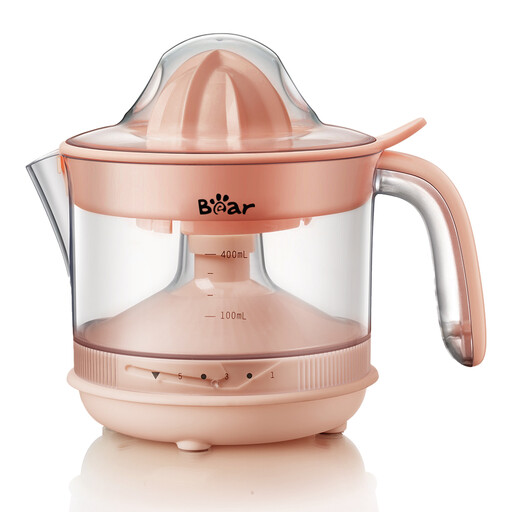
Why this product suits this profile: This compact electric citrus juicer is designed for oranges and lemons and has a 400 ml container. Five adjustable settings let you choose how much pulp you want in your juice.
Its clear specialism means you won’t buy a universal juicer just to juice citrus fruit occasionally. The removable design also makes it easier to clean.
30 watts, 400 ml capacity, five settings and a non-slip base, according to the product specifications.
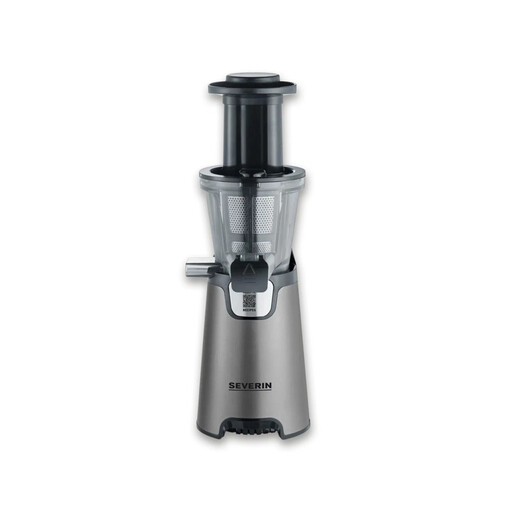
Why this product suits this profile: This cold press juicer handles soft and hard fruit as well as vegetables. Two filter inserts, an attachment for frozen fruit and a 1-litre juice jug give you more ways to use it.
The Easy-Clean design and included brush make the cleaning requirements clearer than vague marketing claims.
150 watts, a 1-litre juice jug, two filter inserts and a drip-stop spout, according to the product description.

Why this product suits this profile: This electric juicer is designed for households that want to process fruit and vegetables quickly. Its 75 mm feed chute and 1.25-litre juice jug are made for regular use and larger quantities.
Two speed settings tell you more than a wattage figure on its own. The separate pulp container means fewer interruptions while juicing.
800 watts, a 75 mm feed chute, a 1.25-litre juice jug, two speed settings and a drip-stop spout, according to the product specifications.
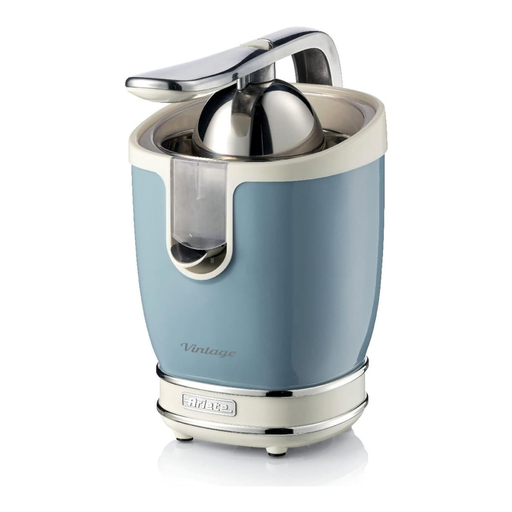
Why this product suits this profile: Its lever mechanism is designed for citrus fruit. Two pressing cones, a drip-stop spout and a compact design make it a good fit for kitchens where the juicer can stay out on display.
It has a clearly defined purpose: it’s designed for citrus fruit, not for juicing hard vegetables.
85-watt motor, two pressing cones, lever operation and a drip-stop spout, according to the product description.
We’ve put together a complete, regularly updated list of products that meet these strict selection criteria and fully comply with the safety regulations in force in the EU.
Centrifugal juicers and slow juicers are suitable for versatile use. Check the product description to see whether the model is designed to handle both hard and soft ingredients. An orange juicer, on the other hand, is made specifically for citrus fruit.
Its lifespan depends on how often you use it, how well you clean it, whether it is assembled correctly and whether you follow the recommended operating time. Filters, augers and seals are wear parts. Remove pulp straight after use and only use the cleaning tools provided or recommended.
Electricity use depends on the motor’s power and how long you run the appliance. A 800-watt appliance running for ten minutes would use less than 0.14 kilowatt-hours. If you use it for short periods each day, energy use is usually modest; your household’s electricity tariff will determine the actual cost.