
Lieferung heute & morgen

Qualitätsgarantie

Willkommens-Angebote freischalten: KOSTENLOSE Lieferung | Bis zu 80 % RABATT | Kostenlose 30-Tage-JoyPlus-Testphase
App herunterladen
A juicer can make it much easier to prepare fresh juice. But there are important differences between slow juicers, cold-press juicers, centrifugal juicers and citrus presses. If you focus only on wattage, a large feed chute or bold marketing claims, you could end up with a machine that doesn’t suit the way you plan to use it.
Motor power tells you about electrical output, but that’s only part of the picture. The filter design, pressing or grating method, speed and suitability for particular ingredients also matter. A centrifugal juicer usually works quickly, while a slow juicer presses ingredients more slowly. That’s why wattage alone isn’t enough to compare these machines.
A juicer with a large feed chute can reduce the need to chop apples or carrots. Depending on the machine, you may still need to remove skins, pips and tough parts. With many electric juicers, citrus fruit shouldn’t be added unpeeled, as the peel can affect the flavour and put extra strain on the machine.
Filters, sieves and pressing augers can trap residue. Check how many separate parts there are, whether a cleaning brush is included, which components are dishwasher-safe and whether the instructions are easy to follow. If you use your juicer every day, clean it straight after juicing, before the pulp dries on.
A feed chute measuring 75 to 135 millimetres can cut down on prep time. For families, the size of the juice jug also matters. Machines with a capacity of around 600 millilitres are better suited to individual portions, while models with a capacity of 1 to 1.8 litres are designed to make several glasses. Bear in mind that larger containers need more storage space and can make the machine heavier.
You should be able to reach removable parts without complicated steps. Sieves and cutting components can have sharp edges, so unplug the machine before cleaning and follow the instructions. Never put your fingers or kitchen utensils into the feed chute while the machine is running.
Also look for:
When brands make claims about juice yield, vitamins or nutrient retention, distinguish between technical specifications and marketing claims. Such figures won’t necessarily apply to every type of fruit or every preparation method.

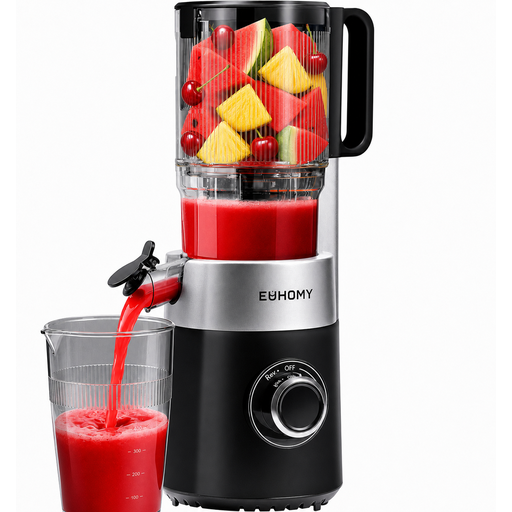
Why this product suits this profile: Its vertical design, two speed settings and 600 ml container make it a good fit for individuals or smaller households who want to make fresh juice now and then.
The product description mentions removable parts and automatic separation of juice and pulp. Before buying, check the conflicting power specifications: the title states 400 W, but 50 W appears elsewhere.
Compact vertical design and two speed settings, according to the product details.
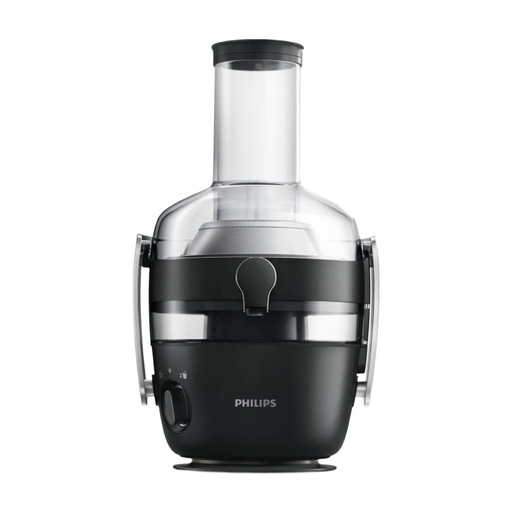
Why this product suits this profile: According to the product details, this model has two speed settings, a 1-litre juice jug, a 2.1-litre pulp container and an 8-cm feed chute.
The QuickClean Plus function, drip-stop feature and mostly dishwasher-safe removable parts help tackle common cleaning issues.
1000 W motor according to the product details, 1-litre juice jug and FiberBoost function.
Why this product suits this profile: The large feed chute and 1.8-litre capacity are designed with families and regular preparation of larger quantities in mind.
The removable-part design and three-stage filter specification give you clear details to check. Treat percentage claims about juice yield as manufacturer figures.
135-mm feed chute, 1.8-litre capacity and 220 W motor, according to the product description.
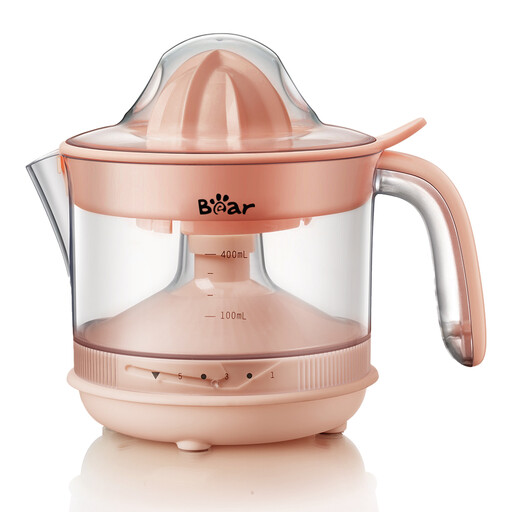
Why this product suits this profile: This compact citrus press is designed for oranges, lemons and similar fruit. Its five adjustable settings and 400 ml container make it suitable for smaller portions.
Its intended use is clear: it’s described as a citrus press, not a juicer for hard vegetables. Removable parts make it easier to clean.
30 W power, 400 ml capacity and five adjustable pressing settings, according to the product details.
We’ve put together a complete, regularly updated list of products that meet these strict selection criteria and fully comply with the safety regulations in force in the EU.
For a mix of apples, carrots, cucumbers or leafy greens, consider a centrifugal juicer or a slow juicer. The key is to check what the manufacturer says the machine can handle. A citrus press, on the other hand, is mainly suited to oranges, lemons and other citrus fruit.
Its lifespan depends on how often you use it, how well you clean it, whether you load it correctly and whether you stick to the maximum operating time. Avoid overloading it, using hard pips or adding ingredients that aren’t approved for the machine. Replace wear parts such as sieves or pressing augers as needed, following the manufacturer’s guidance.
Electricity use depends on the motor’s power and how long you run the machine. Even a high-wattage appliance may use a modest amount of electricity if you only use it for a short time. For a realistic estimate, multiply the power in kilowatts by the operating time. If you use your juicer every day, cleaning effort and choosing the right container size are also important considerations.