
Lieferung heute & morgen

Qualitätsgarantie

Willkommens-Angebote freischalten: KOSTENLOSE Lieferung | Bis zu 80 % RABATT | Kostenlose 30-Tage-JoyPlus-Testphase
App herunterladen
With the right appliance, you can easily make fresh juice from apples, carrots, celery or oranges. Options range from fast centrifugal juicers and slower slow juicers to electric citrus presses. But differences in feed chute size, cleaning, noise levels and capacity can determine whether you use your juicer regularly or leave it in the kitchen cupboard after a few weeks.
This buying guide will help you make sense of the technical details and avoid common buying mistakes.
A powerful motor can speed up juicing, but it doesn’t tell you much on its own about how much juice you’ll actually get. The filter system, cutting mechanism, auger and the consistency of the ingredients all play a part, too. A centrifugal juicer is often a good choice for quickly processing firm ingredients. A slow juicer, by contrast, processes fruit and vegetables at a lower speed using a pressing mechanism.
So don’t just look at the wattage. Check the juicing technology, maximum operating time and whether the appliance is suitable for the ingredients you like to use.
A juicer with a large feed chute can mean less chopping for apples, cucumbers or carrots. However, you’ll still need to remove pips, hard stones and unsuitable ingredients. For example, according to the WOOX 600W Centrifugal Juicer product information, bananas, mangoes, avocados, sugar cane and corn should not be processed. Fibrous or sticky ingredients can clog the filter.
Check the manufacturer’s guidance before buying. A wide feed chute is convenient, but it doesn’t mean you can skip preparing your ingredients.
An easy-to-clean juicer should come apart without any fiddly steps. The filter, auger and juice chamber need particular attention after each use. Fine fibres and pulp dry quickly, making them harder to remove.
Look for removable parts, a cleaning brush included in the box and clear information about whether the parts are dishwasher-safe. The motor housing must never be immersed in water. Clean the removable parts as soon as possible after making your juice.
A centrifugal juicer uses a rapidly rotating grater or cutting mechanism and a sieve. It’s designed for quick preparation and is suitable for many types of firm fruit and vegetables. Models with multiple speed settings let you adjust the juicing process for softer or firmer ingredients.
A slow juicer, also known as a cold press juicer, usually chops and presses ingredients more slowly. This often makes it quieter, but it takes longer. The term “cold pressing” doesn’t automatically guarantee a particular juice quality or health benefit. What matters are the specific technical details of the model.
For families or regular juicing, a juice jug that’s large enough and a spacious pulp container are important. A feed chute measuring 80 to 135 millimetres can reduce the amount of preparation needed. Even so, you should cut ingredients as instructed in the manual.
A compact model with a capacity of around 400 to 800 millilitres may be enough for one person. If you make several glasses in a row, larger containers and a longer operating time approved by the manufacturer can be useful.
Look for:
Take extra care around sharp filter screens and rotating parts. Unplug the juicer before opening it or cleaning it.

Why this product suits you: This centrifugal juicer is designed for quick preparation. According to the product information, it has a wide feed chute and a stainless steel construction.
The product information lists specific exclusions, including sugar cane, corn and certain starchy fruits. This makes it easier to plan which ingredients to use in advance.
600 W motor, wide three-part feed chute and removable components, according to the product description.
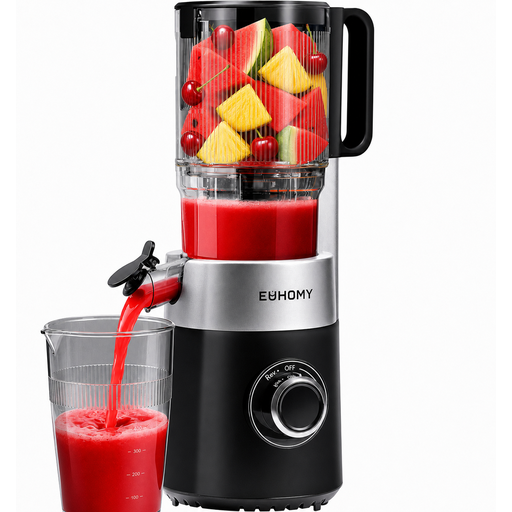
Why this product suits you: According to the product information, this cold press juicer combines a 1.8-litre capacity with a slow-running motor and a multi-stage filter system.
The large feed chute is listed with specific measurements. This makes its size clearer than a general marketing claim.
135 mm feed chute, 1.8-litre capacity and a stated noise level of 60 decibels.
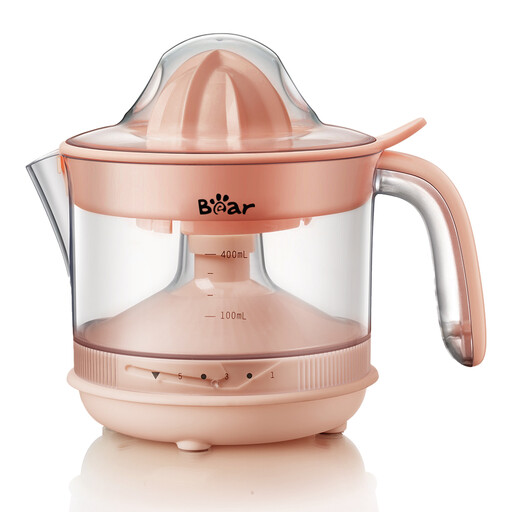
Why this product suits you: This electric juicer is designed specifically for lemons, oranges and other citrus fruits. According to the product information, it has five adjustable settings.
The product description clearly limits its use to citrus fruits. This reduces the risk of using a specialist appliance for unsuitable ingredients.
400 ml capacity, five pressing settings and a removable design, according to the product information.
We’ve put together a complete, regularly updated list of products that meet these strict selection criteria and fully comply with the safety regulations in force in the EU.
Both centrifugal juicers and slow juicers are suitable for a range of uses, as long as the ingredients are approved for use in the manual. If you only want to juice oranges, lemons or grapefruits, a citrus press will do the job. Before buying, consider whether you want to process whole fruit, leafy greens or fibrous ingredients.
Its lifespan depends on how often you use it, how well you clean it, how long you run it for and whether you handle hard ingredients correctly. Don’t use the appliance for longer than the stated operating time. Remove pips and hard stones, and let the motor cool down if it overheats. Regularly cleaning the filter and pressing chamber can help reduce build-up.
Energy consumption depends on the motor’s power and how long you use it. An appliance with a higher wattage uses more energy than a lower-powered model when both are run for the same length of time. You’ll also need to factor in the cost of fruit and vegetables and, if needed, replacement parts such as filters or seals. For a realistic comparison, consider how long you typically use the juicer each week and how much juice you make each time.