
Lieferung heute & morgen

Qualitätsgarantie

Willkommens-Angebote freischalten: KOSTENLOSE Lieferung | Bis zu 80 % RABATT | Kostenlose 30-Tage-JoyPlus-Testphase
App herunterladen
Selection by the Joybuy Product Recommendation Officer
A juicer lets you conveniently prepare fresh fruit and vegetable juices at home. The choice ranges from the classic electric juicer and slow juicer to an electric citrus press or portable model. Wattage is not the only deciding factor. The design, feed chute, cleaning effort and the types of fruit and vegetables the appliance is suitable for all determine whether you will actually use it regularly.
Motor power initially only describes the electrical power consumption. A 600-watt centrifugal juicer works quickly, while a 130-watt slow juicer presses more slowly. On its own, this does not allow any general conclusion about flavour, juice quantity or suitability for particular ingredients.
The pressing or centrifugal system, the size of the strainer and the foods suitable for the appliance are more important. Always check the manufacturer’s information on how the appliance should be used.
A juicer that is easy to clean should be possible to dismantle without complicated tools. However, strainers and pressing screws can collect pulp regardless of the model. Look for removable components, a cleaning brush supplied with the appliance and – where applicable – individual parts that are dishwasher-safe.
The motor housing of an electrical appliance must never be immersed in water. Unplug the appliance before dismantling and cleaning it.
A large-capacity juice jug or pulp container can be useful for families. For single people or small kitchens, however, larger dimensions take up more space. When choosing a juicer for fruit and vegetables, consider capacity, footprint and feed chute size together.
A slow juicer uses a pressing screw and usually separates juice from pulp in a slower process. This design suits users who value controlled preparation and a compact, often more upright construction. Pressing generally takes longer than centrifuging.
A centrifugal juicer chops ingredients using a rotating strainer. It is suitable for many hard fruits and vegetables and can process larger quantities quickly. However, the higher operating speed may mean more noise and more cleaning around the strainer.
A wide opening reduces preparation time. According to the product information, the Bear YZJ-F01D6 has an 80 mm feed chute. The NutriBullet NBJ100G is specified as having a 3-inch feed chute. Nevertheless, fruit and vegetables may need to be prepared according to their shape, core and the operating instructions.
Not every food is suitable for every system. According to the WOOX model’s product information, for example, bananas, mangoes and avocados should not be used because their consistency can clog the strainer. Very tough fibres, stones or sticky pulp can also cause blockages.
For a BPA-free juicer, the BPA-free status should be explicitly stated in the product information. This applies, for example, to the Bear CZJ-A04B1. The following points are also relevant:
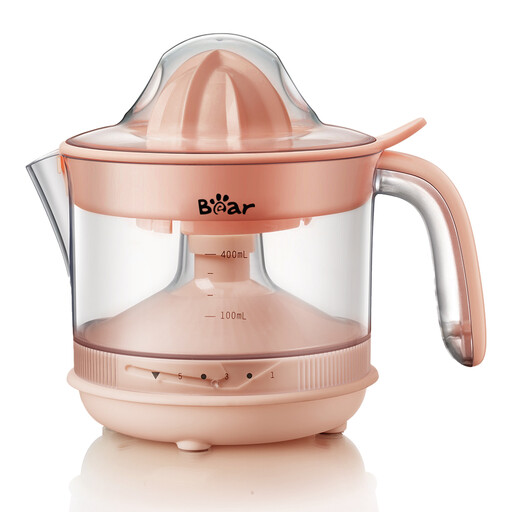
Why this product suits this profile: This electric citrus press is designed for oranges and lemons and uses comparatively little power at 30 W. Its 400 ml capacity is suitable for individual portions or a small household.
The removable design and blade-free pressing system avoid unnecessarily complex components. The product information also specifies five adjustable settings and BPA-free materials.
400 ml capacity, five pressing settings, non-slip base and removable parts according to the product description.
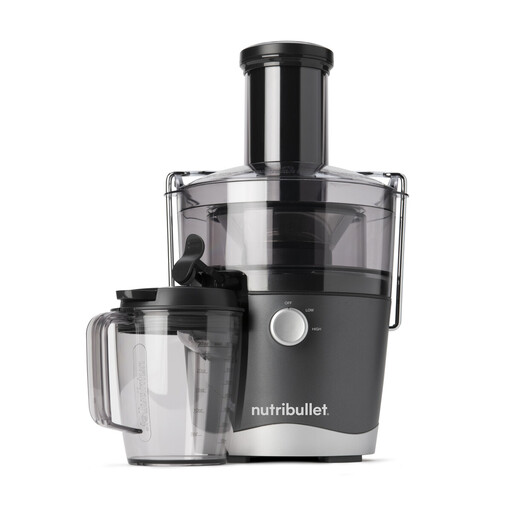
Why this product suits this profile: This model is aimed at households that want to prepare larger quantities of fruit and vegetable juice regularly. It features an 800-watt motor, two speed settings and a 1.5-litre pulp container.
The two speed settings allow you to adapt the appliance to different ingredients. According to the product information, the dishwasher-safe pulp container reduces cleaning effort.
3-inch feed chute, 1.5-litre pulp container and sealable 800 ml juice jug according to the product description.
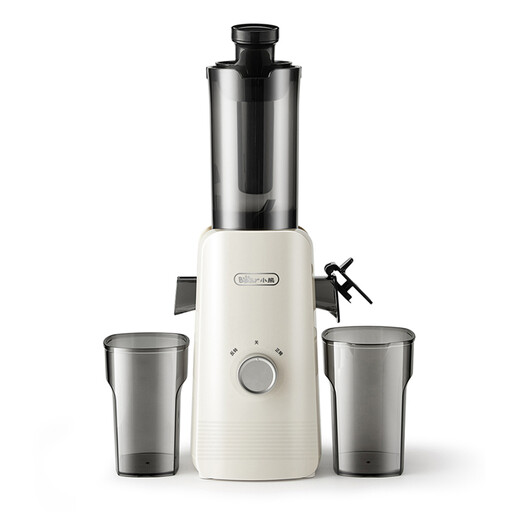
Why this product suits this profile: This 130 W slow juicer with an 80 mm feed chute is suitable for users who want to prepare fruit and vegetable juice with a pressing screw while also valuing a compact design.
The product information specifies three main components, separate juice and pulp collection, and a maximum operating time of 15 minutes per cycle. This makes the operating routine easier to plan.
80 mm feed chute, 0.8-litre capacity, plus juice and pulp containers supplied with a cleaning brush.
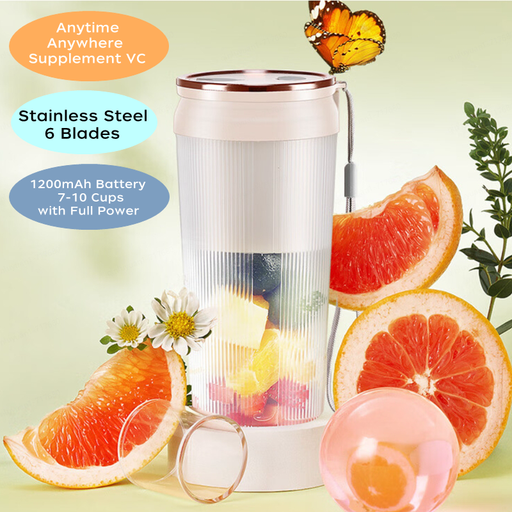
Why this product suits this profile: This portable juicer with a 300 ml cup and 1200-mAh battery is designed for small portions on the go or at work. Soft ingredients must be cut into pieces measuring 1 to 1.5 cm.
The clearly limited 300 ml capacity prevents the compact appliance from being mistaken for one designed for family-sized quantities. According to the product description, it is intended for soft, prepared ingredients.
Battery operation, 300 ml cup and washable design according to the product description.
The ongoing costs of a juicer mainly consist of electricity, ingredients and possible replacement parts. An appliance with a lower rated power will generally use less electricity during a short period of use than a more powerful model. However, the duration and frequency of use are what really matter.
Clean the strainer as soon as possible after juicing. Dried-on fibres increase the time needed for cleaning and can affect the flow-through. Overloading, hard stones and unsuitable ingredients can put strain on the motor, blades or strainer. Follow the relevant operating instructions and observe any specified breaks between uses.
We have put together a complete, regularly updated list of products that fully meet these strict selection criteria and the safety regulations applicable in the EU.
The removable parts should be rinsed after every use. The strainer, pressing screw and pulp area in particular should be kept free of fruit pulp. Clean the motor housing only with a slightly damp cloth and never immerse it in water.
Service life depends on the design, frequency of use, ingredients and care. There is no fixed period that applies universally. Removing hard stones, observing the permitted operating time and avoiding overfilling the appliance will reduce unnecessary strain.
The cost of electricity depends on the rated power and operating time. A 30-watt citrus juicer uses less electrical energy over the same operating period than an 800-watt model. For a realistic comparison, you should also consider how long each appliance runs to prepare one portion and how much juice you make per use.