
Lieferung heute & morgen

Qualitätsgarantie

Willkommens-Angebote freischalten: KOSTENLOSE Lieferung | Bis zu 80 % RABATT | Kostenlose 30-Tage-JoyPlus-Testphase
App herunterladen
A juicer can make fresh fruit and vegetable juices, but different designs vary considerably in speed, noise, juice texture and how much cleaning they require. If you focus only on wattage or an extra-large feed chute, you could miss some important details. For German households, the key considerations are choosing the right technology, safe operation and a cleaning process that’s practical for everyday use.
Motor power alone tells you little about how suitable a juicer will be in practice. A centrifugal juicer is usually quick and works well with firm ingredients such as apples and carrots. A slow juicer, also known as a cold press juicer, processes ingredients more slowly using an auger. The design, how the ingredients are prepared and the recommended operating time are also important.
Claims such as ‘up to 99 per cent juice yield’ usually come from manufacturers and can vary depending on the type of fruit or vegetable, how ripe it is and how it’s prepared. Soft, fibrous or starchy ingredients behave differently from apples, cucumbers or oranges. Treat these figures as a guide, not as a guarantee of what you’ll get at home.
A juicer with a large feed chute can reduce the amount of chopping needed. However, you may still need to remove skins, pips and hard parts. Citrus peel can affect the flavour. Ingredients such as bananas, avocados, sugar cane and ice cubes aren’t suitable for many juicers and could put strain on the filter or pressing mechanism.
A 600-millilitre juice container may be enough for one person. Families may find larger containers more useful, but should also consider the size of the pulp container. A machine with a 1.8-litre capacity is handy for making several portions, but takes up more worktop space.
Feed chute width is measured in millimetres. A 75–80-millimetre chute means less chopping for many ingredients. Models with a 130- or 135-millimetre chute can take larger pieces. Even so, follow the instructions and use the pusher rather than pushing ingredients in with your fingers.
A juicer that’s easy to clean should have as few separate parts as possible, with an accessible filter and removable components. Filters may need more attention than smooth pressing chambers, even when they’re easy to take apart. Rinse off any residue as soon as possible after use.
Also look for:

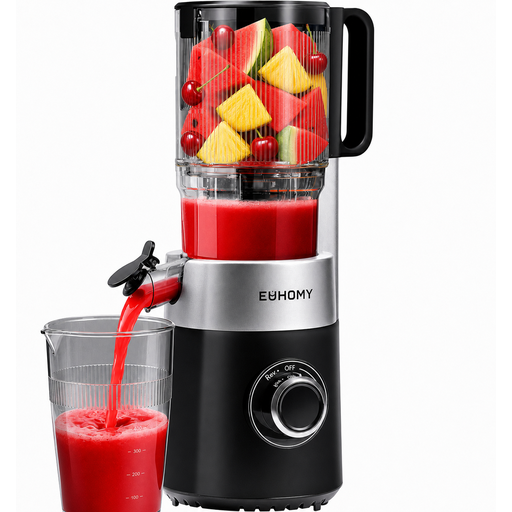
Why this product suits you: Its compact, upright design and 600ml container make it a good fit for one person or for smaller portions each day.
According to the product description, the removable parts are designed for easy cleaning. Its compact size also saves unnecessary space.
400W motor, according to the product details, two speed settings and automatic pulp separation.
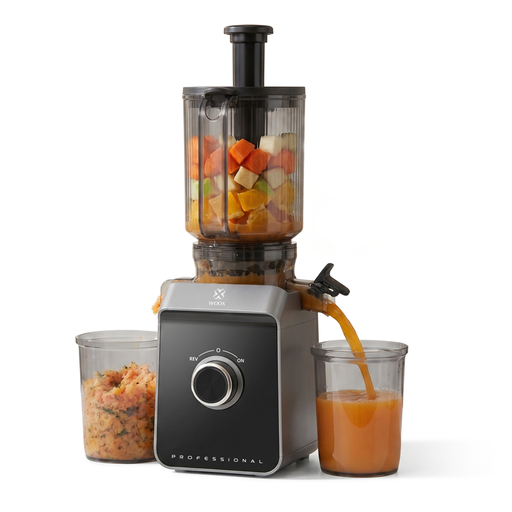
Why this product suits you: The large feed chute and 1.8-litre capacity make this a good choice for households looking to prepare several portions at once.
Its twin-auger pressing system and 135mm feed chute help reduce frequent refills and the need to chop ingredients into small pieces.
220W motor, according to the product details, 1.8-litre capacity and a three-stage filtration system.
Why this product suits you: Its 130mm feed chute, 1.8-litre chamber and separate juice and pulp containers are designed for regular use.
The instructions state a maximum operating time and recommend taking a break if the machine overheats. This helps you plan realistically if you use it frequently.
150W motor, overheating protection and a noise level below 72 dB, according to the product details.
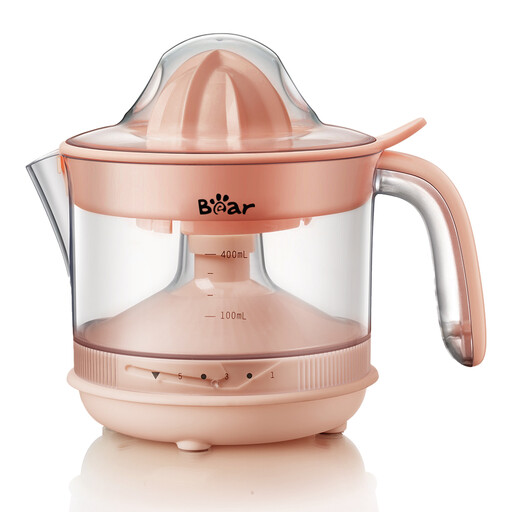
Why this product suits you: If you mainly juice oranges and lemons, you won’t need a bulky all-purpose fruit and vegetable juicer.
It has no cutting blades and is designed specifically for citrus fruit. This reduces the risk of overloading it with unsuitable ingredients.
400ml capacity, five adjustable pressing settings and removable parts, according to the product description.
We’ve put together a comprehensive, regularly updated list of products that meet these strict selection criteria and fully comply with the safety regulations in force in the EU.
It depends on the ingredients and how much juice you want to make. A slow juicer is a good fit for households that regularly process a variety of fruit and vegetables. A centrifugal juicer makes sense if you want to prepare juice quickly. If you only juice oranges, lemons or grapefruits, a citrus juicer is usually enough.
There’s no reliable lifespan that applies to every juicer. It depends on how often you use it, the ingredients, how you clean it and whether you follow the recommended operating time. Hard pips, ice cubes and unsuitable fibrous ingredients can put more strain on the components. Regular rinsing and proper storage can help keep your juicer working well for longer.
Alongside the purchase price, the main ongoing costs are electricity and cleaning. For short periods of use, the electricity for individual batches of juice is usually a smaller expense than the cost of buying the machine. For everyday use, it’s more important to check that replacement parts are available, how much water cleaning takes and whether containers or filters can be bought separately. Check these details in the product information before you buy.