
Lieferung heute & morgen

Qualitätsgarantie

Willkommens-Angebote freischalten: KOSTENLOSE Lieferung | Bis zu 80 % RABATT | Kostenlose 30-Tage-JoyPlus-Testphase
App herunterladen
Fresh juice made from apples, carrots or oranges is easy to prepare at home. There’s a wide choice of appliances, from fast centrifugal juicers and slower slow juicers to manual or electric citrus presses. But not every appliance is suited to the same ingredients or quantities.
If you focus only on wattage, an extra-large feed chute or claims such as ‘maximum juice yield’, you could miss some important details. Three common buying pitfalls are worth looking out for:
A centrifugal juicer chops fruit or vegetables using a rotating filter basket, then separates the juice through centrifugal force. This type is suited to households that want to process larger quantities quickly. Two speed settings are useful if you plan to juice both soft fruit and firmer ingredients such as apples or carrots.
Pay particular attention to cleaning the fine filter. Pulp can get stuck in it if you don’t rinse the appliance soon after use.
A slow juicer uses a juicing screw or a similar slow pressing system. This can produce a different juice consistency from a centrifugal juicer when processing fibrous vegetables and certain types of fruit. Claims about vitamins, oxidation or ‘nutrient retention’ often come from product marketing and shouldn’t automatically be taken as proven benefits.
Instead, look for clear specifications such as motor power, maximum running time, container capacity, feed chute size and cleaning instructions. A cold-press juicer isn’t automatically suitable for frozen ingredients, ice cubes or very tough fibres.
An electric press, or citrus press, is designed for oranges, lemons, limes and similar fruit. It’s usually simpler to use than a juicer for fruit and vegetables, but it isn’t designed for apples, carrots or celery.
Models with a lever, drip-stop feature and interchangeable cones can make everyday juicing easier. The motor unit must generally not be immersed in water.
A large feed chute reduces preparation time, but it’s no substitute for checking the instruction manual. According to the product specifications, the Braun Multiquick 3 J300 has a 75 mm feed chute. The EUHOMY Cold Press Juicer and the WOOX MX0289 list feed chute sizes of 135 mm and 130 mm, respectively. This can be handy for larger pieces of apple or vegetables.
Also important:
For a centrifugal juicer, the filter material and shape are key components. Stainless steel filters can be durable with regular use, but they need careful cleaning. For a slow juicer, check whether it uses a filter, a juicing screw or a filter-free system.
A clear separation between juice and pulp is useful for everyday use. Claims such as ‘up to 99 per cent juice yield’ should be treated as manufacturer claims, as results depend on the ingredients, their ripeness, how they’re cut and how the appliance is used.
A juicer that’s easy to clean has as few removable parts as possible and clear assembly points. Dishwasher-safety applies only to the components specified as dishwasher-safe, not the motor unit.
Also look for:

Why it suits this profile: This centrifugal juicer is designed to make juice quickly from fruit and vegetables. Its 1.25-litre juice container is a practical size for everyday use.
The specifications list two speed settings, a 75 mm feed chute and a four-point safety lock, rather than relying on vague claims about power.
800 W motor, 2-litre pulp container and removable parts listed as dishwasher-safe in the product specifications.
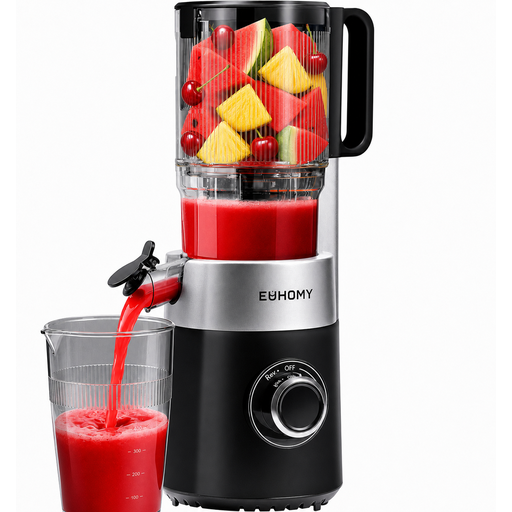
Why it suits this profile: This slow juicer is for households looking to combine a slow pressing system with a larger capacity and a wide feed chute.
The product description gives specific figures for 220 W, 60 dB and a 1.8-litre capacity. Claims about vitamin retention should still be treated as manufacturer claims.
135 mm feed chute, triple-filter system and two glasses included, according to the product description.
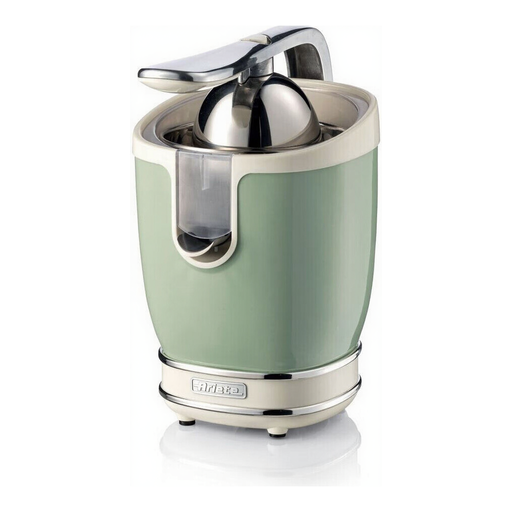
Why it suits this profile: If you mainly juice oranges, lemons or other citrus fruit, you don’t need a combination appliance designed for hard vegetables.
It’s clearly designed for citrus fruit only. That means you can avoid buying a universal appliance for a job that a citrus press can do more simply.
85 W motor, electric pressing lever, two cones and a 0.6-litre container, according to the product specifications.
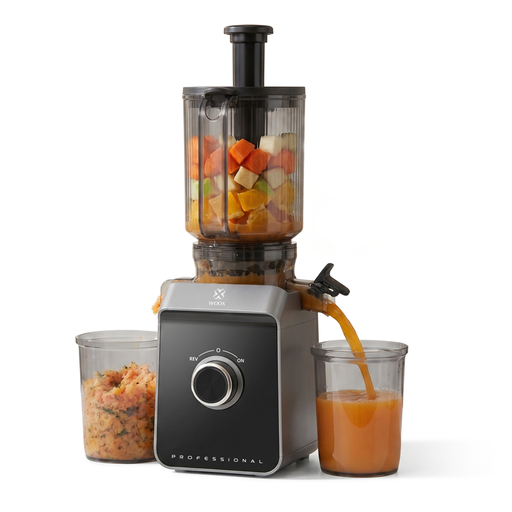
Why it suits this profile: The combination of a 1.8-litre chamber, 600 ml juice jug and 130 mm feed chute is designed for regular household portions.
The stated maximum running time of ten minutes and the required cooling break help you plan realistically when making larger quantities.
150 W motor, overheat protection and removable parts listed as dishwasher-safe in the product description.
We’ve put together a complete, regularly updated list of products that meet these strict selection criteria and fully comply with the safety regulations in force in the EU.
A centrifugal juicer or slow juicer is suitable for a mix of apples, carrots, cucumbers and similar ingredients. A citrus press, by contrast, is limited to oranges, lemons and related fruit. Check which ingredients are permitted and the maximum running time before you buy.
How long it lasts depends on cleaning, running intervals, ingredients and the quality of the components. Remove pulp straight after use, use the pusher rather than your fingers, and follow the manufacturer’s guidance on breaks. A damaged filter or unusual vibrations are reasons to stop using the appliance.
You can estimate electricity costs by looking at power, running time and your electricity tariff. A 800 W appliance running for ten minutes would use around 0.133 kilowatt-hours on paper. Actual motor running time may be shorter, as ingredients are added in batches. To work out the overall cost, also consider cleaning effort, replacement parts and the lifespan of the filter or pressing components.