
Lieferung heute & morgen

Qualitätsgarantie

Willkommens-Angebote freischalten: KOSTENLOSE Lieferung | Bis zu 80 % RABATT | Kostenlose 30-Tage-JoyPlus-Testphase
App herunterladen
A juicer can make preparing fruit and vegetable juices part of your everyday routine. However, appliances vary considerably in their juicing method, feed chute, container size, noise level and ease of cleaning. If you focus only on wattage or claims such as ‘extra high juice yield’, you could overlook important details.
As a Joybuy Product Recommendation Officer, I filter the relevant product information and assess it in the context of typical uses. This makes it easier to work out which juicer is right for a one-person household, a family or a specific purpose.
Motor power mainly describes how much electrical power an appliance uses. On its own, it tells you little about juice yield, consistency or how well the appliance handles soft and hard ingredients. A centrifugal juicer, for example, often runs at high speed and is suited to quick preparation. A slow juicer, by contrast, processes ingredients more slowly using a pressing or auger mechanism.
What matters is the juicing system as a whole, the filter design and the ingredients the appliance is approved to handle.
A juicer with a large feed chute can reduce the need to chop ingredients. However, depending on the model, you may still need to remove skins, pips or particularly tough fibres. Many juicers require citrus fruit to be peeled, while stones from plums, peaches and cherries should never go into the feed chute.
Check the actual size of the opening and the manufacturer’s instructions rather than relying on a label such as ‘XXL’.
Removable parts make cleaning easier, but you’ll still need to rinse the filter, auger or juice channel straight after use. Fine fibres can dry on and make cleaning much more time-consuming. Look for a small number of separate parts, a cleaning brush and—if specified—parts that are dishwasher-safe.
A centrifugal juicer grates ingredients and usually separates the juice through a filter. This method works well for apples, carrots and many other firm ingredients, and is relatively quick. According to the product information, models such as the Philips HR1919/70 and Braun Multiquick 3 J300 have two speed settings.
A slow juicer, also known as a cold-press juicer, crushes and presses ingredients using a slowly rotating auger. This may appeal if you prefer a different juice consistency and a quieter process. Check details such as the speed, container capacity and maximum operating time. It’s not appropriate to make general claims about nutrient quality without suitable evidence.
For a glass or two, a compact juicer with a juice container of around 600 to 800 millilitres is often enough. Families may prefer a larger pulp container and a more spacious juice chamber. Depending on the model, the juicers in this selection have capacities of 600 millilitres, 1 litre or 1.8 litres, for example.
A large feed chute can save time if you juice regularly. It should, however, be paired with a secure safety lock and a well-fitting pusher.
Look for:
Take care when handling the sharp filters, rotating parts and feed chutes of any juicer. Unplug the appliance before taking it apart or cleaning it.

Why this product suits this profile: This compact centrifugal juicer is designed for smaller quantities and takes up little storage space at home.
The manufacturer’s information lists two speed settings, removable parts and automatic separation of juice and pulp.
Designed for 600 ml, with a vertical form and removable components for everyday use.
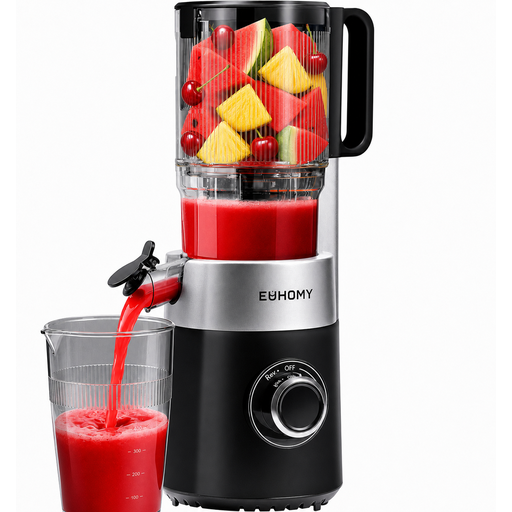
Why this product suits this profile: This slow juicer is aimed at households that prefer to prepare larger quantities and want a generous feed chute.
The product information lists a 135 mm feed chute, a 1.8-litre capacity and a multi-stage pressing process. How well it performs depends on the ingredients.
Large capacity, a low stated speed and three filter settings according to the product description.
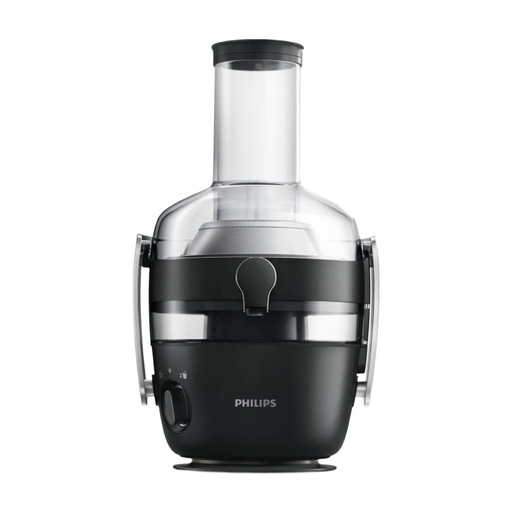
Why this product suits this profile: According to the manufacturer, this centrifugal juicer has two speed settings, an 8 cm feed chute, a 1-litre juice container and a 2.1-litre pulp container.
QuickClean Plus, a drip stop and parts that are dishwasher-safe according to the manufacturer all help tackle common cleaning problems.
FiberBoost function, 1,000 W according to the product details, and separate containers for juice and pulp.
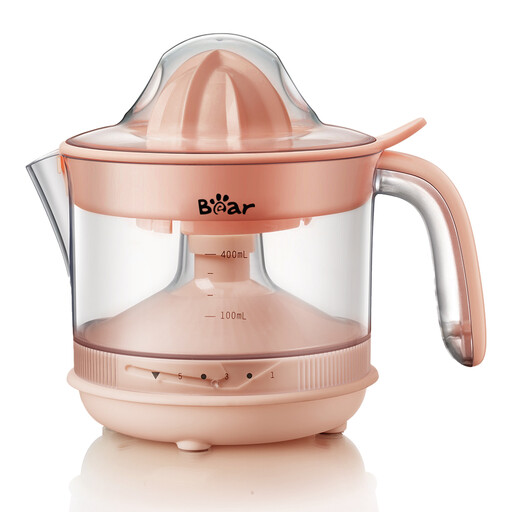
Why this product suits this profile: This electric citrus press is designed for oranges, lemons and similar fruit, and doesn’t use a rotating grating disc.
Its clearly defined use as a citrus press helps avoid expecting it to work as a versatile fruit and vegetable juicer.
400 ml capacity, five adjustable pulp settings and removable parts according to the product information.
We’ve put together a comprehensive, regularly updated list of products that meet these strict selection criteria and fully comply with the safety regulations applicable in the EU.
A centrifugal juicer is often a practical choice for firm ingredients such as apples and carrots. If you’d like to juice slowly and try different consistencies, you could choose a slow juicer. For oranges, lemons and similar fruit only, an electric citrus press is enough.
Its lifespan depends on how often you use it, how you clean it and whether you follow the recommended operating time. Avoid overloading it, and don’t use hard pips, ice cubes or ingredients that aren’t approved. Cleaning it after every use helps prevent residue building up on the filter and pressing system.
Energy use depends on the stated motor power and how long the appliance runs. A higher-wattage appliance won’t necessarily use more electricity per glass if it runs for less time. For a fair comparison, consider the motor power, the quantity you prepare and how long you use it each day.