
Lieferung heute & morgen

Qualitätsgarantie

Willkommens-Angebote freischalten: KOSTENLOSE Lieferung | Bis zu 80 % RABATT | Kostenlose 30-Tage-JoyPlus-Testphase
App herunterladen
A juicer can make preparing fresh juice much easier. However, glossy marketing promises do not always lead to the right buying decision. High wattage, large containers or an especially wide feed chute alone say little about whether an appliance is suitable for your ingredients, household size and cleaning routine.
Our selection explains the most important appliance types and verifiable product features. This allows households, families and people who regularly make juice to compare the right electric juice press objectively.
Motor power is just one parameter. A centrifugal juicer, for example, operates at high speed and is suitable for larger quantities of hard ingredients. A slow juicer or cold-press juicer works more slowly and processes fruit and vegetables using a pressing auger.
Other important factors include:
An appliance with 150 watts may be designed for slow pressing, while a centrifugal juicer with 600 or 800 watts uses a different operating method. Wattage should therefore always be considered alongside the design and instruction manual.
A large juice container reduces the need to refill it, but it requires more storage space and may involve more cleaning after use. A 400- or 600-millilitre container may be enough for one person. Families are more likely to benefit from 1.2 to 1.8 litres, provided the pulp container is also large enough.
Also check whether the juice flows directly into a glass or is first collected in an integrated container. With an electric orange press or classic electric citrus juicer, container size is particularly important if several people want to drink juice one after another.
A juicer that is easy to clean should have few individual parts, easily accessible surfaces and, wherever possible, removable components that are dishwasher-safe. A fine-mesh filter can collect residue more quickly when used with fibrous ingredients. Filter-free designs can simplify rinsing, but they must still be cleaned immediately after use.
Look for specific details rather than general marketing claims:
For lemons, oranges, grapefruits and mandarins, an electric citrus juicer with a pressing cone is sufficient. These appliances are usually straightforward in design and work without cutting blades. An automatic start-stop function or a lever can make operation easier.
A juicer for fruit and vegetables is more versatile. Centrifugal models process many hard ingredients quickly, while a slow juicer with a gentle pressing motion is often designed for apples, carrots, cucumbers and various types of vegetables. Very hard stones, ice cubes or ingredients not approved for the appliance must not be added.
A juicer with a large feed chute can reduce preparation time. A 75-millimetre opening can accommodate larger pieces; models with 110- or 130-millimetre openings are designed for correspondingly larger pieces of fruit. Nevertheless, “whole fruit” should not be added without checking first. Hard stones, stalks, skins and very large pieces must be removed or chopped according to the manufacturer’s instructions.
With citrus fruit, also bear in mind that the peel should not be pressed in many appliances. Orange and grapefruit peel is generally removed before the fruit is placed in a versatile juicer.
With a BPA-free juicer, this specification should be stated explicitly in the product details. This applies particularly to the juice container, feed chute and pressing chamber. Safety locks, overheating protection, non-slip feet and a supplied pusher are also practical features to consider.
The motor unit must not be immersed in water. Unplug the appliance before dismantling, cleaning or removing blocked ingredients. Keep your hands and kitchen utensils away from moving parts and observe the stated maximum continuous operating time.
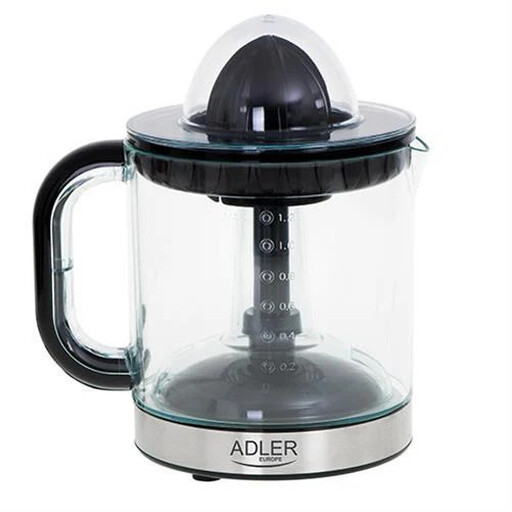
Why this product suits the profile: This electric juice press is designed for lemons, oranges and grapefruits, while its 1.2-litre capacity is suitable for preparing several glasses at home.
Two pressing cones accommodate small and large citrus fruit. The automatic start-stop system avoids unnecessary switch operation.
40 watts rated power, 1.2-litre glass container, pulp sieve and dishwasher-safe removable parts according to the product details.

Why this product suits the profile: This centrifugal juicer is designed to process fruit and vegetables quickly and features a 75-millimetre feed chute.
The two speed settings distinguish between softer and harder ingredients. A safety lock prevents operation when the parts have not been fitted correctly.
800-watt motor, 1.25-litre juice jug, 2-litre pulp container, anti-drip system and mostly dishwasher-safe parts according to the product description.
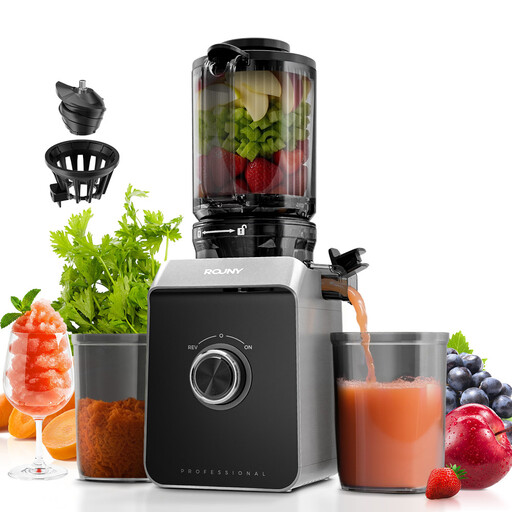
Why this product suits the profile: The 1.8-litre capacity and 130-millimetre feed chute are designed for regular household quantities. The reverse function can help when ingredients become blocked.
According to the product details, the filter-free design is intended to reduce blockages and make rinsing easier. Ingredients must still be prepared appropriately.
150 watts, 50 revolutions per minute, 1.8-litre capacity, BPA-free materials according to the product details and reverse function.
We have put together a complete, regularly updated list of products that fully meet these strict selection criteria and the safety regulations applicable in the EU.
Power consumption depends on wattage and operating time. An appliance with a higher wattage uses more energy than a lower-powered model when operated for the same length of time. With short pressing sessions, the difference in household energy use is usually smaller than the ongoing cost of fruit and vegetables. More important for everyday practicality is whether the appliance has to be completely dismantled and cleaned after every use.
For a longer service life, you should:
For oranges, lemons or grapefruits only, an orange press or electric citrus juicer is usually sufficient. It does not require a fine centrifugal filter and is often easier to operate and clean. If you also want to process carrots, apples or leafy vegetables, choose a slow juicer or centrifugal juicer.
There is no fixed service life that can be stated for every appliance. It depends on the motor, materials, operating time, cleaning and the ingredients used. Observe the maximum continuous operating time and allow the motor to cool down after longer pressing sessions. A damaged sieve, cracked pressing chamber or unusual noises are reasons to stop using the appliance.
A slow juicer can be a good choice if you regularly process different types of fruit and vegetables and are happy with the slower operating method. For occasional orange juice, a compact citrus juicer is often the more practical option. The key factors are the ingredients, household quantity, cleaning effort and available worktop space.