
Lieferung heute & morgen

Qualitätsgarantie

Willkommens-Angebote freischalten: KOSTENLOSE Lieferung | Bis zu 80 % RABATT | Kostenlose 30-Tage-JoyPlus-Testphase
App herunterladen
A juicer can make it easier to prepare fresh juice – provided its design, feed chute and cleaning requirements suit your daily routine. Poor purchases are often caused not by a lack of motor power, but by impractical details: a small feed chute adds to the prep time, hard-to-reach filters make cleaning more difficult, and a juice jug that’s too small can quickly become inconvenient for families.
This guide explains what to look for in an electric juicer and which types of appliance suit different needs.
A powerful motor can be useful for hard ingredients such as carrots or apples. But wattage alone tells you nothing about juice yield, noise levels or how easy the juicer is to clean. The juicing system, the quality of the filter and the permitted operating time are also important.
A centrifugal juicer is usually quick and suits making larger quantities in a short time. A slow juicer, also known as a cold-press juicer, processes ingredients more slowly using an auger. This may appeal if you prefer a different juice consistency and a quieter way of working.
A juicer with a wide feed chute reduces the amount of chopping needed. You should still remove hard stones, peel and any unsuitable ingredients. A chute measuring 80 to 135 mm can make preparation easier, but it should be paired with a stable feed system and components that are easy to remove.
Check how many separate parts need cleaning after juicing. A fine filter can produce clear juice, but it often needs a thorough clean. Models with removable parts, a rinse function or dishwasher-safe components may be more convenient for everyday use. The motor housing must never be immersed in water.
A juice jug with a capacity of less than one litre may be enough for a single-person household. Families often benefit from larger jugs and a separate pulp container. Clear separation of juice and pulp keeps fruit fibres out of your drink and makes it easier to serve portions.
As well as checking the juice capacity, look at the size of the pulp container. If you have to empty it several times during one juicing session, the appliance may be less convenient in practice, even if it has a powerful motor.
Check the following:
Sharp grating and filter components need to be handled carefully. Unplug the juicer before taking it apart, cleaning it or removing blocked ingredients.

Why it suits this type of user: This upright juicer has a 600 ml jug and two speed settings, making it a good choice for smaller households and occasional fruit and vegetable juices.
Removable parts and automatic pulp separation reduce the need for manual filtering. Its compact design takes up little worktop space.
400 W motor, two speed settings and an upright design for everyday use at home.
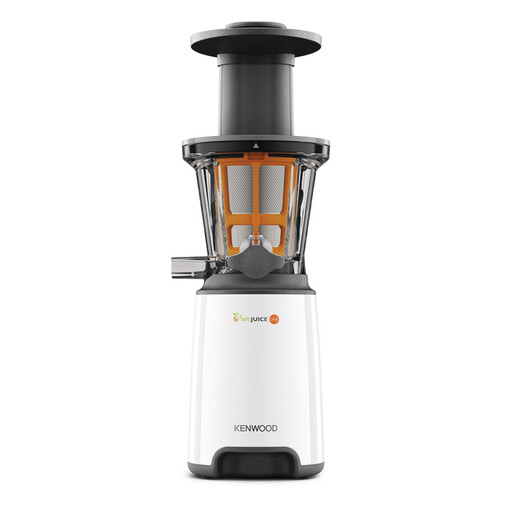
Why it suits this type of user: According to the product details, the auger operates at 55 revolutions per minute. It’s a good fit if you prefer a slower juicing process and precise control.
The stated rinse function and a cleaning brush help tackle the effort involved in cleaning the auger and dealing with fibrous ingredients.
700 ml juice jug, 1.3-litre pulp container, anti-drip stopper and compact dimensions.
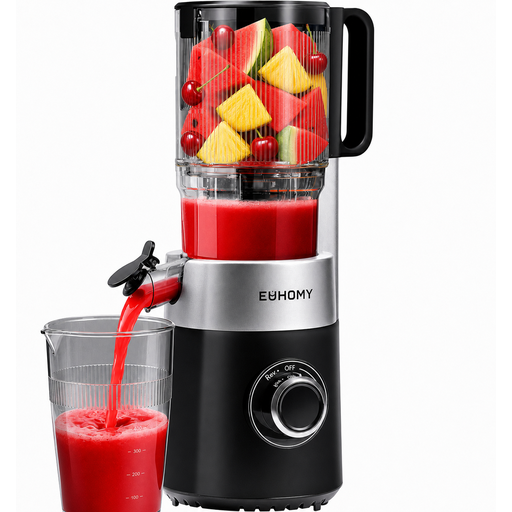
Why it suits this type of user: Its 1.8-litre capacity and wide feed chute are designed for families or anyone who regularly makes juice using larger quantities of ingredients.
The wide chute cuts down on preparation time. Its multi-stage filter system is designed to separate juice from fruit fibres.
135 mm feed chute, 1.8-litre container, 220 W motor and a stated operating noise level of 60 decibels.
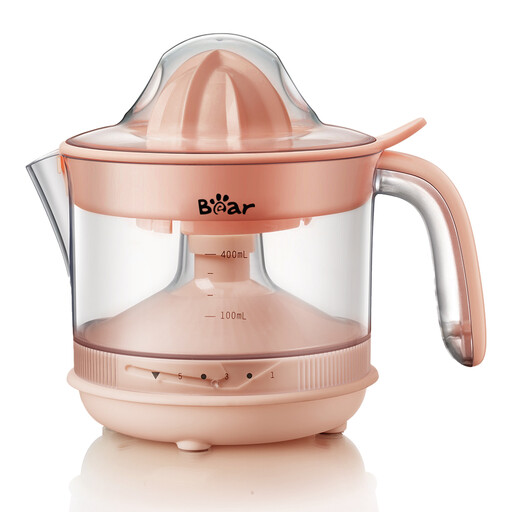
Why it suits this type of user: If you mostly juice oranges, lemons or mandarins, you don’t need an all-purpose juicer. This model is designed specifically for citrus fruit and is easy to use.
Choosing a dedicated citrus juicer means you won’t use an all-purpose model for ingredients it wasn’t designed to handle.
30 W motor, 400 ml capacity, five adjustable pulp settings and removable parts.
We’ve put together a complete, regularly updated list of products that meet these strict selection criteria and fully comply with the safety regulations in force across the EU.
Wash fruit and vegetables before juicing, and remove any hard stones. Cut fibrous ingredients such as celery into smaller pieces. Bananas, avocados and ingredients with a very high starch content aren’t suitable for many conventional juicers. Always follow the instructions provided by the manufacturer.
Clean the filter, auger and containers as soon as possible after use. Dried-on fruit residue is harder to remove. You may need to let the juicer cool down if you use it for longer periods. Check the instruction manual for the exact operating limit.
An all-purpose model, such as a centrifugal juicer or slow juicer, is suitable for many types of fruit and vegetables. Still, check the guidance for fibrous, very hard or starchy ingredients. For citrus juice alone, an electric citrus juicer is usually all you need.
A juicer’s lifespan depends on its motor, build quality, care and how hard it’s used. Regular cleaning, cutting ingredients to the right size and sticking to the recommended operating time can reduce strain on the mechanism. Replaceable parts such as filters or augers should be changed when needed, in line with the manufacturer’s instructions.
Energy use depends on the motor’s power and how long it runs. As many juicers only run for a few minutes at a time, wattage isn’t the only factor to consider. Your running costs will depend on how often and for how long you use the appliance.