Families short on time in the morning
If you need to make several portions of fruit or firm vegetables quickly, processing speed and the size of the juice and pulp containers are important factors to consider.


If you want to make several glasses of apple or carrot juice in the morning, a centrifugal juicer with suitably sized juice and pulp containers is an obvious choice. If you often switch between ingredients such as leafy greens and herbs, a slow juicer may be a better fit. And if you only juice oranges, you may not need the extra functions these appliances offer. As well as the type of juicer, compare preparation time, cleaning and container capacity.
If you need to make several portions of fruit or firm vegetables quickly, processing speed and the size of the juice and pulp containers are important factors to consider.
If you want to use vegetables, leafy greens or herbs as well as fruit, check which ingredients each appliance can process and how much preparation and cleaning it involves.
If you mainly juice citrus fruit for breakfast, consider a citrus juicer instead of paying for functions you won’t use.
A good fit if: You mainly juice firm fruit or vegetables in the morning and want to make several glasses.
Things to consider: This type is generally less suited to leafy greens. Container capacity, noise levels and cleaning requirements vary by model.
A good fit if: You often want to juice leafy greens, herbs or a mix of soft and firm ingredients.
Things to consider: The feed chute, preparation and cleaning requirements vary. Make sure the longer preparation time works with your morning routine.
A good fit if: You mainly squeeze oranges or other citrus fruit at breakfast.
Things to consider: It’s designed for citrus fruit, so compare the cone, spout and parts that need cleaning.
| Priority | What to check before buying | Who is this important to? |
|---|---|---|
| Make several glasses quickly | Check the juice jug and pulp container separately. A wide feed chute can reduce the need to chop suitable ingredients beforehand. | If you need several portions ready on time in the morning, speed and container capacity matter most. Around 36% of consumers put these two factors first. |
| Everyday cleaning | Check the instructions to see which parts can be taken apart and put in the dishwasher; this won’t necessarily apply to every component. | If you use the appliance often, you’ll want to clean the sieve and removable parts without too much hassle. Around 29% of consumers prioritise ease of cleaning. |
| Process a variety of ingredients | Check which ingredients the specific model can handle and the size of its feed chute. A slow juicer may be a better fit if you often use leafy greens. | If your breakfast menu includes vegetables, herbs or leafy greens as well as fruit, the range of ingredients is key. Around 21% of consumers put this first. |
| Juice citrus fruit only | Compare the cone, juice spout and parts that need cleaning; a citrus juicer is designed for citrus fruit. | If you regularly juice only oranges or other citrus fruit, you may not need the extra versatility of a multi-purpose juicer. Around 14% of consumers prioritise juicing citrus alone. |
The type of juicer primarily affects which ingredients it can handle and how it works. Juice is no substitute for whole fruit and vegetables; the Federal Centre for Nutrition recommends drinking fruit juice in moderation, and not to quench your thirst.
Choose a juicer to suit your ingredients and breakfast routine. Don’t rely on claims about health benefits based solely on the speed of the juicer or advertising.
The capacity of a container for ingredients doesn’t automatically tell you how much finished juice it can hold. Hurom lists a 0.8-litre feed container for the H310A, while nutribullet gives the NBJ100G a 800 ml juice jug. These are different functions.
To check how many glasses you can make, look at the capacity of the juice jug and pulp container separately.
With smaller containers, you may need to pour out the juice or empty the pulp container more often during breakfast.
nutribullet lists the NBJ100G as a centrifugal juicer, separate from its slow juicer. A different name on its own doesn’t tell you which technology a model uses.
Check the full model number and juicing technology against the manufacturer’s information.
The HR1921/20 is a centrifugal juicer for firm fruit and vegetables, and for making several portions at breakfast.
The H310A is a compact slow juicer for households that want to use a variety of ingredients.
The J700 is a centrifugal juicer, while the CitrusQuick range is a separate option for citrus fruit.
The JuiceFit Pro is a slow juicer for buyers who value a wide feed chute and separate containers.
The NBJ100G is a centrifugal juicer; the brand also sells a separate slow juicer.
This selection includes slow juicers and centrifugal juicers for fruit and vegetables, as well as a separate citrus juicer. For each model, check the containers, feed chute and cleaning requirements.
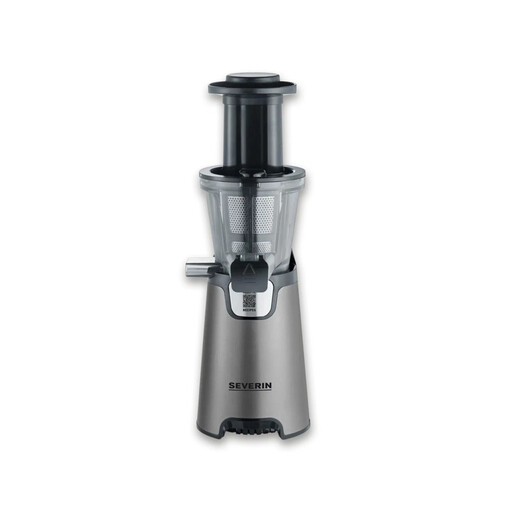 No image available
For households looking for a slow juicer with a juice container and removable parts for easy cleaning afterwards.
1-litre juice container; 150 W. The product description says removable parts can be cleaned with a brush or in the dishwasher.
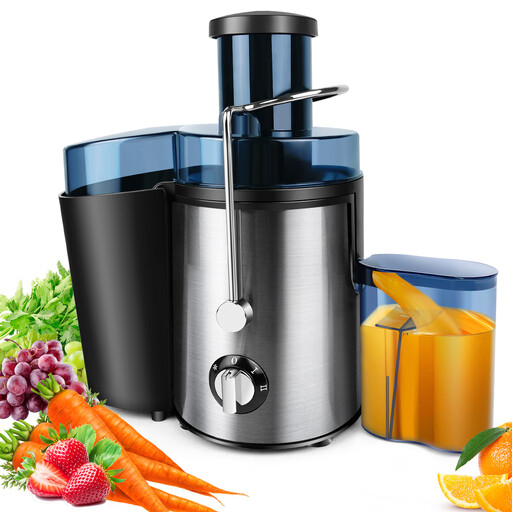 No image available
For breakfasts with fruit and vegetables, with two speed settings to suit the ingredients you use.
65 mm feed chute; two speed settings; 500 ml container. The product description lists removable parts and a cleaning brush.
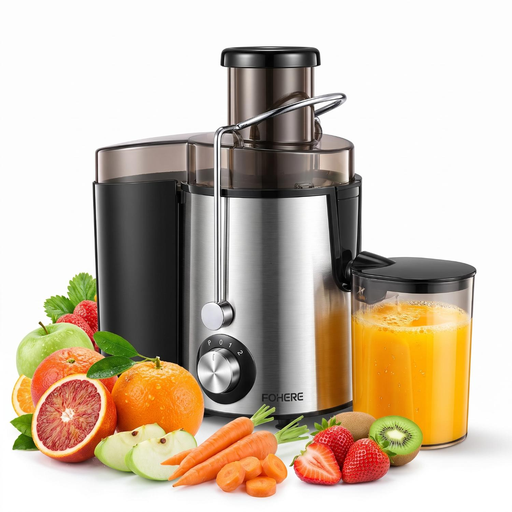 No image available
The size of the feed chute is worth considering if you want to prepare larger pieces of fruit and vegetables.
75 mm feed chute; three speed settings; 304 stainless steel micro-sieve.
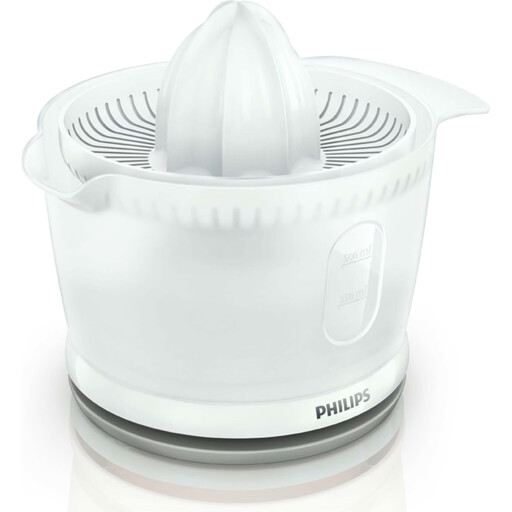 No image available
For breakfast juice made from oranges or other citrus fruit; it isn’t described as a multi-purpose juicer for apples, carrots or leafy greens.
25 W; 500 ml juice container; drip-free spout. The product description says the removable parts are dishwasher-safe.
 No image available
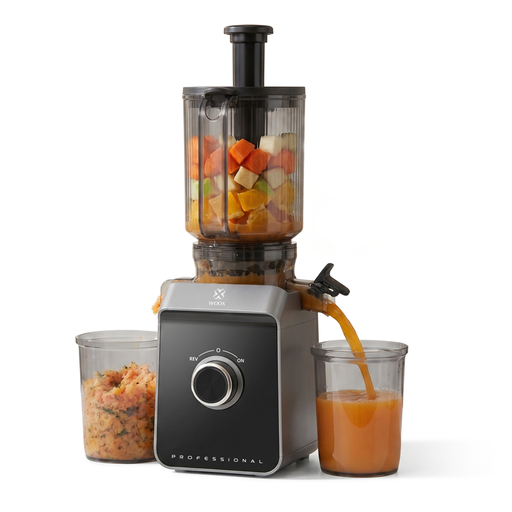
For households looking for a slow juicer with a wide feed chute and separate containers for juice and pulp.
150 W; 130 mm feed chute. According to the product information, run for no more than 10 minutes continuously, then leave to cool for 20 minutes.
No. The Federal Centre for Nutrition recommends drinking fruit juice in moderation, and not to quench your thirst. Water is a better regular choice for children; juice is also no substitute for eating whole fruit and vegetables.
Wash the ingredients and hygienically clean any parts that come into contact with food. Follow the instructions for assembling the appliance and handling removable parts. Unplug it before cleaning and never immerse the motor base in water.
Your statutory rights are with the seller and are separate from any voluntary guarantee. Online purchases also usually come with a 14-day right to cancel; the terms of your specific purchase apply. The Verbraucherzentrale (consumer advice centre) explains these rights in Germany.
No. The European Union describes CE marking as a mark for products covered by relevant EU rules, not as independent safety approval by a public authority. For electrical appliances, also look for clear information from the manufacturer and safety guidance.