Teams sharing breakfast juice
If several people use the same office kitchen, agree from the outset who will clean and dry the parts that come into contact with juice after every use.


If you’ll mainly be juicing citrus fruit, a standalone citrus juicer should be enough. For a mix of fruit and firm vegetables, consider a centrifugal juicer; if you’ll often be juicing leafy greens, a slow juicer may be a better choice. In a shared office, you’ll also need to think about cleaning the juicer after every use, how much space you have and whether a quick morning routine matters more than quieter juicing.
If several people use the same office kitchen, agree from the outset who will clean and dry the parts that come into contact with juice after every use.
If you want to juice different types of fruit or vegetables before work, consider the feed chute, pulp container and the whole preparation and cleaning process – not just the wattage.
If you’ll be juicing almost exclusively citrus fruit, a dedicated citrus juicer is a focused option. ETM TESTMAGAZIN’s guide associates leafy greens, celery and ginger more with slow juicers; suitability will depend on the specific model.
Base your choice on the biggest challenge in your office routine: sharing the cleaning, finding time in the morning, noise, ingredients or available worktop space.
| Priority | What to look for when buying | Who it matters most to |
|---|---|---|
| Cleaning and hygiene | Check how the sieve, juicing mechanism and pulp container come apart and can be cleaned; agree who will take care of this after each use. | If I share appliance parts with colleagues, I want to be able to clean and dry them properly after every use. Around 28% of consumers put cleaning and hygiene first when sharing an appliance. |
| Morning speed | Compare the full process for your ingredients: preparation, feeding and emptying, as well as juicing. | If several people take turns making juice before work, the whole process – from preparation to emptying – matters to me. Around 22% of consumers prioritise speed when preparing juice in the morning. |
| Noise | Check whether an independent test has measured the noise level of the specific model; also consider where it will be placed in relation to workstations. | If workstations are next to the kitchen, I want to disturb my colleagues as little as possible. Around 22% of consumers put low noise levels first. |
| Range of ingredients | Decide which ingredients you’ll use regularly and check that the particular type of juicer is suitable for them. If you’ll often juice leafy greens, check the model’s suitability. | If I want to alternate between fruit, vegetables and leafy greens, the type of juicer needs to suit those ingredients. Around 17% of consumers prioritise the range of ingredients they can juice. |
| Space and citrus fruit | Measure the available worktop and storage space, and distinguish between a standalone juicer and an attachment that requires a compatible appliance. | If I mainly juice citrus fruit and share the worktop, I don’t want to make room for features I don’t need. Around 11% of consumers prioritise a simple citrus-focused option and the space available. |
Even appliances from the same brand can differ in which parts are dishwasher-safe. Philips lists the juicer HR1921/20 as dishwasher-safe, but not the citrus juicer HR2752/90.
Check the cleaning instructions for the exact model number and agree on a regular cleaning routine as a team.
The WMF Kult-X citrus attachment is designed for a compatible spiraliser; it isn’t a standalone juicer.
Check what’s included and whether it’s compatible before buying. If you only make orange juice, a standalone citrus juicer could be a better option.
CHIP’s hands-on test highlights differences in how tested centrifugal juicers perform. A wide feed chute alone doesn’t tell you how long preparation, emptying and cleaning will take.
Compare the whole process using your ingredients and the number of people who’ll take turns making juice.
The HR2752/90 and HR1921/20 are designed for different uses: citrus juicing and general juicing, respectively.
The Kult-X juicer is an option for fruit and vegetables, while the Kult-X citrus attachment is an accessory for a compatible appliance.
The SJ7000GY and J700 may be worth considering if you’re looking for a centrifugal juicer; check the specifications for each model individually.
The REVO830 is an example of a slow juicer designed for different ingredients, including long vegetables.
This selection includes standalone citrus juicers, as well as slow and centrifugal juicers for the ingredients your team uses.
 No image available
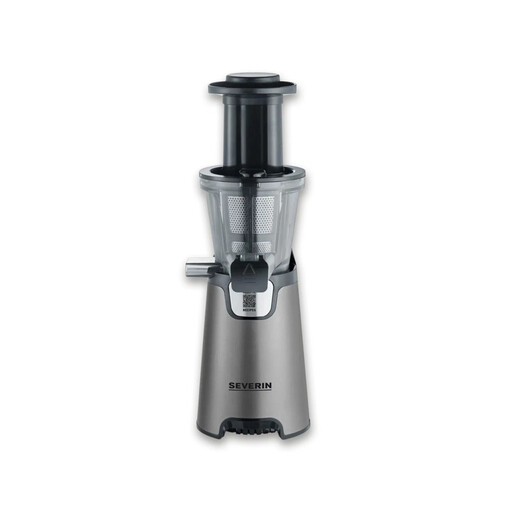
This slow juicer is worth considering if your team wants to juice different types of fruit and vegetables.
Listed in the product name: 150 W, a 1-litre juice container and stainless steel.
 No image available
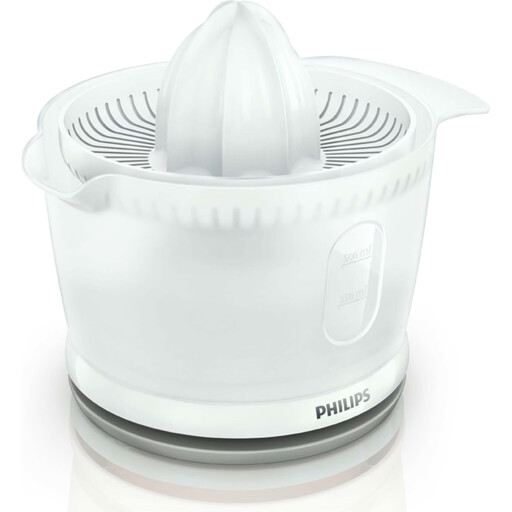
A focused option if you mainly juice citrus fruit at the office; it isn’t designed for apples or vegetables.
Listed in the product name: 25 W and a compact design.
 No image available
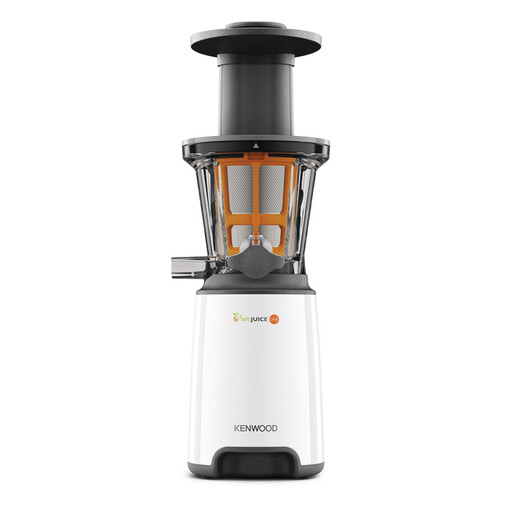
A slow juicer for teams who want to make fruit and vegetable juice; check that it’s suitable for the ingredients you plan to use.
Listed in the product name: White variant.
 No image available
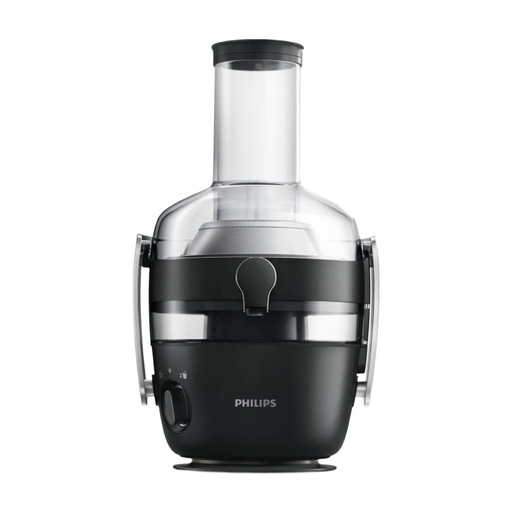
An option if you want to juice different types of fruit and vegetables in the morning; check the cleaning instructions for shared use.
Listed in the product name: 1-litre container, 1000 W and FiberBoost Technology.
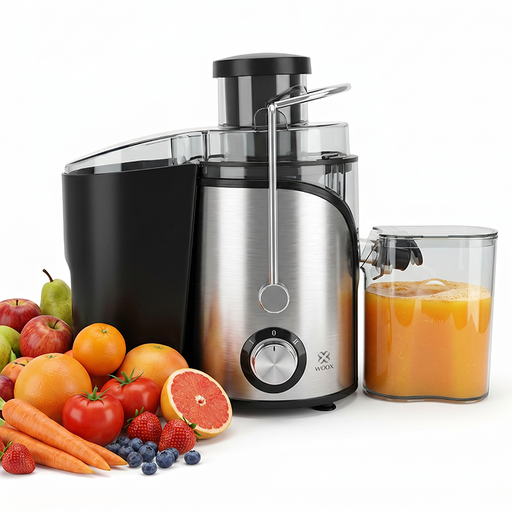 No image available
A centrifugal option for a range of ingredients; before buying, check that the model is suitable for the fruit and vegetables you plan to use.
The product name lists 600 W and a stainless-steel housing. The product description advises against using bananas, mango, avocado, sugar cane and corn. Kiwi or dragon fruit shouldn’t be processed on their own, as they may clog the filter.
Yes, if you’ll be juicing almost exclusively citrus fruit. If you also want to juice apples, carrots or leafy greens, compare juicers that are suitable for those ingredients. A citrus attachment isn’t automatically a complete appliance.
Check the available space, power socket and instruction manual for the specific model, and agree who will clean the parts that come into contact with juice after use. The German Federal Institute for Risk Assessment notes that pre-cut fruit and vegetables can spoil quickly, so process them promptly.
Agree in advance who will buy the ingredients, which cleaning products and spare parts you might need, and which customer service team to contact. The consumer advice centres distinguish between a manufacturer’s guarantee and statutory rights for faulty goods; if the business is making the purchase, check the specific contract terms.
The German Social Accident Insurance (DGUV) explains that businesses are responsible for keeping electrical equipment in proper working order and having it inspected regularly by a suitably qualified person. Your business will need to clarify whether your office allows staff to bring in an appliance and how it should be covered by workplace inspection and usage rules. Products sold in the EU must also comply with the relevant product safety regulations.