
Lieferung heute & morgen

Qualitätsgarantie

Willkommens-Angebote freischalten: KOSTENLOSE Lieferung | Bis zu 80 % RABATT | Kostenlose 30-Tage-JoyPlus-Testphase
App herunterladen
A juicer can make preparing fruit and vegetable juices much easier. However, there are significant differences between slow juicers, cold-press juicers, electric citrus presses and traditional fruit and vegetable juicers. If you focus only on wattage, a large feed chute or claims such as ‘high juice yield’, you can easily overlook important details.
Motor power initially describes only the electrical power consumption. A powerful motor can be useful for hard ingredients, but on its own it says nothing about the appliance’s design, pressing process or cleaning requirements. With an electric citrus press, the pressing cone, rotating action and strainer are also crucial to how it performs.
A juicer with a large feed chute can reduce the preparation time for apples, oranges and other fruit. Even so, depending on the model, ingredients may still need to be cut, deseeded or stripped of hard skins. Particularly hard stones, ice cubes and unsuitable foods can damage the mechanism.
A juicer is not automatically easy to maintain simply because individual parts can be removed. Look at the number of components, whether it has a strainer or a filter-free design, and whether it is suitable for the dishwasher. A juicer that is easy to clean is particularly practical when it can be dismantled and rinsed after every use without taking up too much time.
For oranges, lemons, grapefruits and similar fruit, an orange press or electric citrus press is usually sufficient. It works with a pressing cone and separates pulp and stones using a strainer.
A slow juicer or cold-press juicer, on the other hand, can also process apples, carrots, leafy greens and other ingredients, depending on the model. Its auger or pressing spiral works slowly. This can affect noise levels and the pressing process, although it can also make preparation take longer. Check whether the appliance has a reverse function in case ingredients become stuck.
The feed chute should suit the size of ingredients you typically use. The ROUNY Slow Juicer has a stated opening of 130 mm, while the Bear YZJ-F01D6 has an 80 mm opening. Large openings can reduce the need for cutting, but they do not remove the need to check for stones, skins and hard parts.
For individuals, juice containers holding 0.6 to 1 litre are often sufficient. Families can benefit from larger containers, but should also consider the space required and the size of the pulp container. According to the product specifications, the Philips HR1919/70 model has a 1-litre juice container and a 2.1-litre pulp container.
After use, removable parts should ideally be rinsed with water straight away to prevent pulp from drying on. The motor base, cable and plug must not be immersed in water. Before dismantling, moving or cleaning the appliance, disconnect it from the mains.
For appliances with an auger or strainer, use the supplied pusher. Fingers and kitchen utensils must not be placed in the feed chute. Also observe the operating time specified in the relevant instructions. For example, the Bear YZJ-F01D6 has a stated maximum operating time of 15 minutes per use.
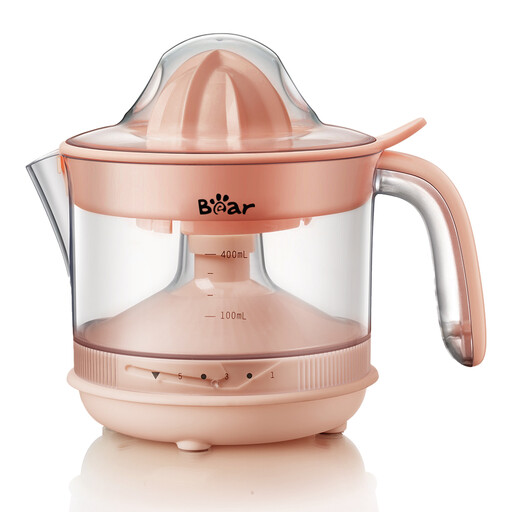
Why this product suits this profile: This electric citrus press is designed for oranges, lemons and similar fruit. With 30 W of power, it takes up relatively little space. The 400 ml container is suitable for individual portions.
The five adjustable settings allow you to adapt the appliance to different types of fruit and personal preferences. The removable parts make rinsing after use easier.
400 ml capacity, 50 revolutions per minute, a 110 mm feed chute according to the product specifications, and a blade-free pressing system.
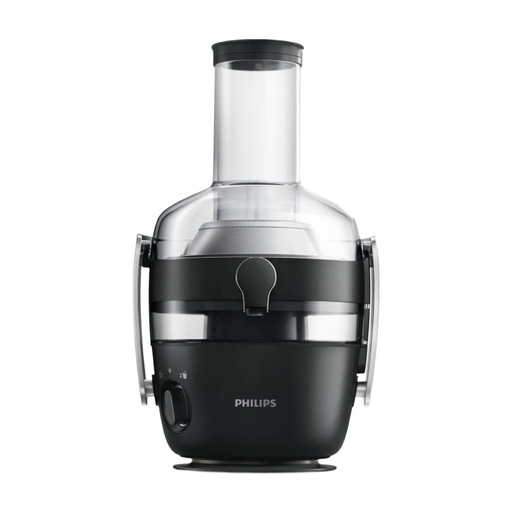
Why this product suits this profile: According to its specifications, this fruit and vegetable juicer has a 1000 W motor, two speed settings and a 1-litre juice container. It is designed for households that want to process a range of ingredients regularly.
The QuickClean Plus function, drip stop and removable parts that are dishwasher-safe according to the product description address common cleaning and spillage issues.
8 cm feed chute, 2.1-litre pulp container, two speeds and FiberBoost function according to the manufacturer’s specifications.
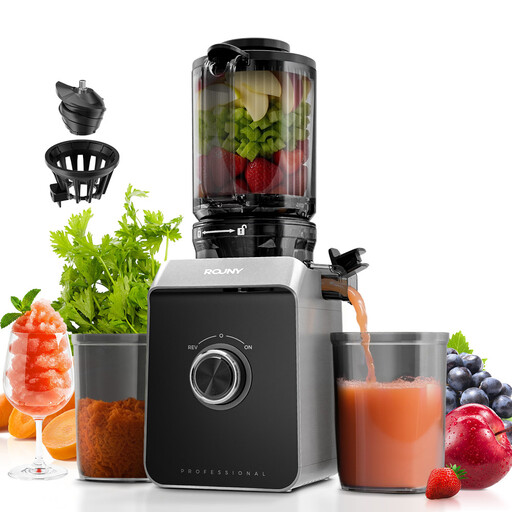
Why this product suits this profile: According to the product description, this slow juicer processes fruit, vegetables and suitable frozen fruit. With a capacity of 1.8 litres, it is designed for larger household quantities.
The filter-free design is intended to reduce blockages and make rinsing easier. A reverse function can help if ingredients become stuck in the pressing mechanism.
130 mm feed chute, 1.8-litre capacity, 150 W, 50 revolutions per minute and suitability for frozen fruit pieces according to the product specifications.
We have put together a complete, regularly updated list of products that fully meet these strict selection criteria and the safety regulations applicable in the EU.
Electricity costs depend on the power consumption and how long the appliance is used. A 1000 W appliance uses approximately 0.167 kWh during ten minutes of operation. A 150 W model uses around 0.025 kWh over the same period. The actual cost depends on your local electricity tariff and operating time.
There is no single standard lifespan that applies to every juicer. Regular cleaning, suitable ingredients, following the recommended operating time and handling the strainer, pressing auger and seals correctly all make a difference. If you notice unusual noises, cracks or damaged cables, stop using the appliance.
For occasional orange juice, a citrus press is usually sufficient. If you regularly want to process apples, carrots, celery or other ingredients, choose a slow juicer or fruit and vegetable juicer with a suitable feed chute, separate pulp container and clear cleaning system. Always check the product specifications and safety information for the specific model before buying.