
Lieferung heute & morgen

Qualitätsgarantie

Willkommens-Angebote freischalten: KOSTENLOSE Lieferung | Bis zu 80 % RABATT | Kostenlose 30-Tage-JoyPlus-Testphase
App herunterladen
A juicer can make fresh juice from fruit and vegetables, but not every model is right for every household. Many disappointing purchases are not caused by insufficient power, but by unsuitable feed chutes, hard-to-access filters or a juice jug that is too small.
High motor power sounds convincing at first. However, wattage alone is not a reliable way to compare juicers. The pressing or centrifugal system, how the ingredients are processed and the permitted operating time are also important.
A slow juicer usually works at a low speed and uses a pressing auger. A classic centrifugal juicer, on the other hand, chops fruit and vegetables more quickly using a rotating grater. If you mainly want to prepare hard apples, carrots or larger quantities, you should consider the construction and the manufacturer's usage instructions alongside the power rating.
A juicer with a large feed chute can reduce the amount of chopping required. Even so, stones, tough skins and unsuitable parts still need to be removed. Depending on the model, fibrous ingredients such as celery may also need to be cut into smaller pieces.
The size of the opening should also suit your kitchen. A machine with a wide feed chute may be taller or wider and require more space on the worktop.
The term quiet juicer is useful in everyday shopping, but difficult to assess without a specific decibel rating. Check the stated noise level and bear in mind that hard ingredients, vibrations and the work surface can all affect how loud the machine seems.
An easy-to-clean juicer still requires several steps. Removable parts, a cleaning brush and dishwasher-safe components can reduce the effort involved. The motor unit must never be immersed in water.
A cold-press juicer, also known as a slow juicer, typically crushes and presses ingredients at a low speed. This can help limit foaming and heat build-up during processing. However, it does not provide a blanket guarantee about the nutritional quality of the finished juice. The recipe, storage time and ingredients also play a part.
An electric citrus press is designed specifically for oranges, lemons and similar fruit. It does not separate pulp and pomace in the same way as a juicer for fruit and vegetables. If you want to process carrots, celery or apples, you will need a different type of machine.
For making individual glasses, a compact juicer with a smaller juice jug is often sufficient. Families are more likely to benefit from a larger processing chamber and separate containers for juice and pomace.
Use these points as a guide:
Look for clearly described, removable components and cleaning instructions. Stainless steel parts may appear durable, but they do not replace proper care. Fruit fibres should be removed as soon as possible after use.
The following are also important:
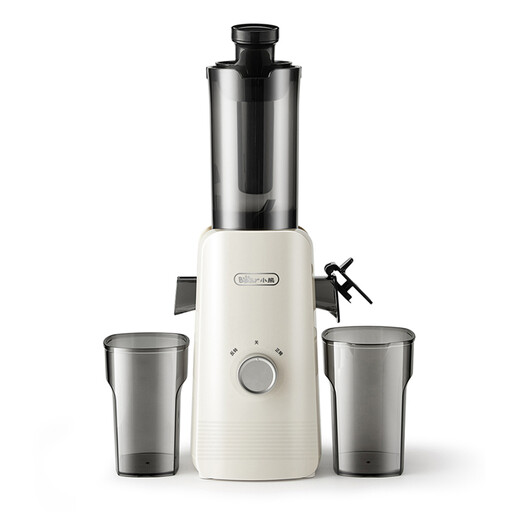
Why this product suits this profile: This compact model takes up relatively little space and is designed for everyday use, with an 80 mm feed chute, a capacity of 0.8 litres and three removable main components.
The product details specifically mention quick assembly and cleaning. At the same time, the maximum operating time of 15 minutes makes it clear that the machine is not designed for unlimited continuous operation.
130 W motor, separate juice and pomace containers, plus a compact design.
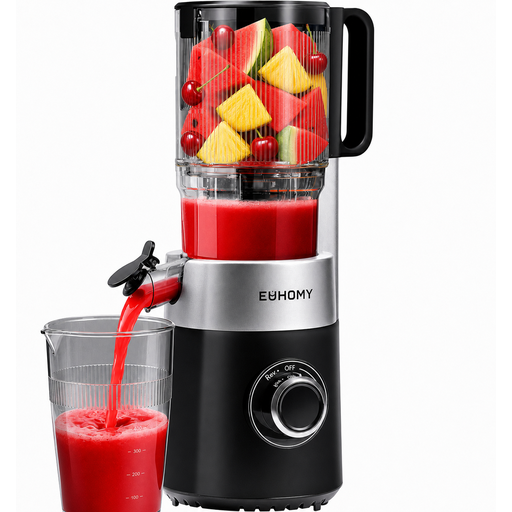
Why this product suits this profile: The 135 mm feed chute and 1.8-litre capacity are designed for larger quantities and less frequent refilling.
The manufacturer describes a seven-stage pressing process and a triple filtration system. These details should be understood as a technical product description, not as a blanket promise of quality.
220 W motor, stated noise level of 60 dB and two glasses included.
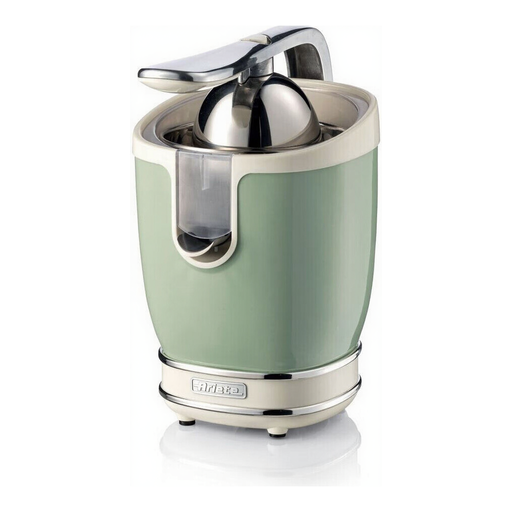
Why this product suits this profile: This citrus press is designed for oranges, lemons and other citrus fruit. Its electric lever is suitable for regular portions without the need for a full-size slow juicer.
Its intended use is clear: the machine is designed for citrus fruit, not hard vegetables or other solid ingredients. This helps prevent unsuitable use.
85 W motor, two pressing cones and a capacity of 0.6 litres.
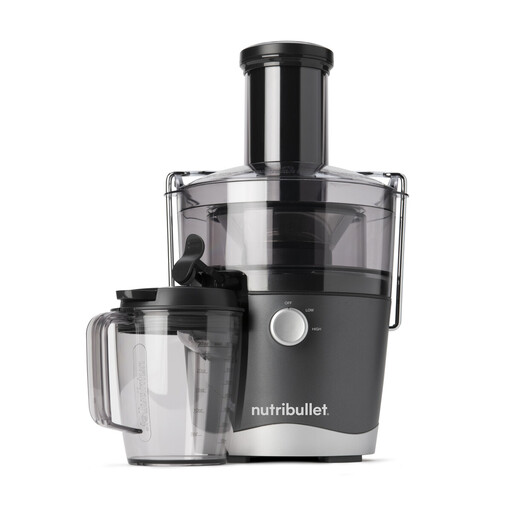
Why this product suits this profile: The 3-inch feed chute, two speed settings and 1.5-litre capacity are designed for different types of fruit and vegetables and for preparing several portions.
The dishwasher-safe pomace container reduces some of the manual cleaning required. The 800 W power rating is complemented by two selectable speed settings.
1.5-litre capacity, 800 W motor and sealable 800 ml glass for storage.
Another option for families is the WOOX MX0289, with a 130 mm feed chute, 1.8-litre chamber, 600 ml juice cup and a stated noise level of less than 72 dB. According to the product description, the removable parts are dishwasher-safe. For mobile use, the portable juicer from Royalstar comes with a 300 ml cup and a 1200 mAh battery. It processes soft, finely chopped ingredients and should therefore not be equated with a cold-press juicer for hard carrots or celery.
We have put together a complete, regularly updated list of products that fully meet these strict selection criteria and the safety regulations applicable in the EU.
Prepare ingredients in accordance with the operating instructions. Remove stones and tough parts, cut fibrous vegetables into smaller pieces and do not overfill the feed chute. If blockages occur, a reverse function may help, provided the model has one.
The following sequence is recommended after each cycle:
Fresh juices should be stored sealed and refrigerated. The relevant manufacturer's instructions apply; for the nutribullet model, consumption within 48 hours is recommended.
For a variety of ingredients, a slow juicer or another juicer with separate juice and pomace containers is generally more suitable than a citrus press alone. Check the permitted ingredients, feed chute and operating time for the model in question.
Service life depends on how often the machine is used, cleaning, the ingredients and whether the operating limits are observed. Hard or fibrous ingredients can place greater strain on the motor. Regular cleaning and breaks in accordance with the operating instructions help ensure proper operation.
Consumption depends on the motor power and the actual running time. A machine rated at 800 watts does not automatically use more electricity over time than a 150-watt model if it is operated for a significantly shorter period. Running costs therefore depend on the combination of power, operating time and frequency of use.