
Lieferung heute & morgen

Qualitätsgarantie

Willkommens-Angebote freischalten: KOSTENLOSE Lieferung | Bis zu 80 % RABATT | Kostenlose 30-Tage-JoyPlus-Testphase
App herunterladen
A juicer can make preparing fresh juices at home easier. However, appliances differ considerably in terms of their intended use, cleaning requirements and operation. If you only want to juice oranges, you will need different features from a family that regularly processes apples, carrots and leafy vegetables.
As a Joybuy Product Recommendation Officer, I focus on clear product data rather than vague advertising claims when making a selection. Three typical pitfalls in particular often lead to unsuitable purchases:
A citrus press, also known as an orange press, works with a pressing cone. The halved fruit is placed on top and squeezed by applying pressure. This type of appliance is suitable for oranges, lemons, mandarins and grapefruits. An electrically powered lemon press usually requires little preparation and has no contact with rotating cutting blades in the pressing area.
Look for:
A model with 400 to 600 ml capacity is often suitable for individual portions or smaller households. A larger capacity may be more practical for several people.
A centrifugal juicer chops ingredients using a rotating sieve. The liquid is then separated through the spinning motion. These appliances are suitable for many hard and soft fruits and vegetables. A large feeding chute can reduce preparation time, as ingredients can be added in larger pieces.
Important specifications include:
A high wattage should not be assessed in isolation. What matters is whether the appliance is designed for the planned quantity of ingredients and the intended duration of use.
A slow juicer processes ingredients using a slowly rotating auger. These appliances are worth considering if you regularly want to process different fruits and vegetables or fibrous ingredients. Particular attention should be paid to the feeding chute, maximum operating time and cleaning of the pressing chamber.
When comparing a cold-press juicer, you should check:
Claims such as ‘rich in nutrients’ or ‘oxidation-free’ should not be taken as proof of performance without checking the details. Juice quality depends on factors including the ingredients, storage and preparation time.
A BPA-free juicer may be appealing to buyers who specifically want to take the plastic materials used in the product into account. This claim should relate to the components actually used. Clear manufacturer and responsible-person information for the EU market is also important.
Regardless of the model, a few basic rules apply to safe use at home:
For an easy-to-clean juicer, having a small number of easily accessible individual parts is often more important than particularly high motor power. Sieves should be rinsed immediately after juicing, as dried-on fruit fibres can make cleaning more time-consuming.
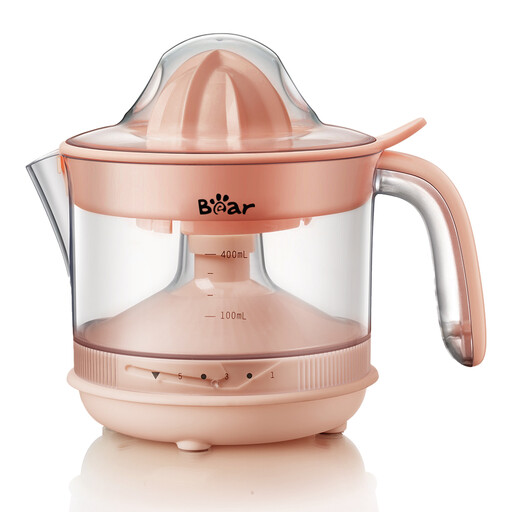
Why this product suits this profile: This electric juicer is designed for citrus fruits and has a 400-ml container for individual portions or smaller households.
This design has no rotating cutting blades in the pressing area. Removable components and five adjustable pulp settings address ease-of-use and cleaning considerations.
30 W, 110-mm fruit opening, BPA-free materials according to the product information, and a non-slip base.

Why this product suits this profile: This fruit and vegetable juicer has separate containers for juice and pulp, as well as two speed settings for different ingredients.
The 75-mm feeding chute reduces the need for chopping when suitable ingredients are used. According to the product information, a four-way safety system prevents operation if the appliance has not been assembled and secured correctly.
800 W, 1.25-litre juice jug, 2-litre pulp container, stainless-steel micro-filter and dishwasher-safe removable parts according to the product description.
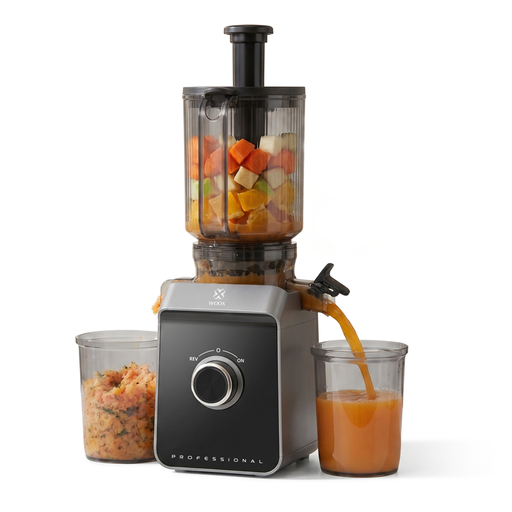
Why this product suits this profile: This slow juicer is an interesting option for households that prepare juice regularly. It features a 130-mm feeding chute and separate containers.
The manufacturer’s information specifies overheating protection, a reverse function for blockages and a maximum continuous operating time of ten minutes.
150 W, 1.8-litre chamber, 600-ml juice cup and 836-ml pulp container; removable parts are dishwasher-safe according to the product information.
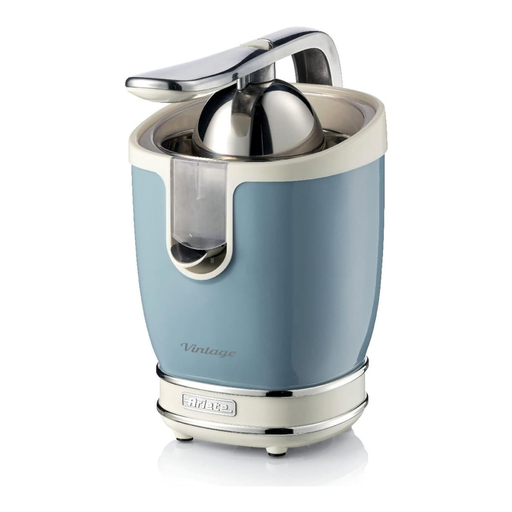
Why this product suits this profile: The lever mechanism makes it easier to juice larger quantities of citrus fruit. Two pressing cones accommodate both small and large fruits.
The design is clearly limited to citrus fruits. This helps avoid unrealistic expectations when it comes to processing carrots, apples or fibrous vegetables.
85 W motor, 0.6-litre capacity, two pressing cones and a drip-free spout according to the product description.
We have put together a complete, regularly updated list of products that fully meet these strict selection criteria and the safety regulations applicable in the EU.
For citrus fruits alone, an electric juicer is generally more practical than a centrifugal or slow juicer. Important criteria include pressing cones, a drip-free spout and an easy-to-remove juice bowl.
Its lifespan depends on how often it is used, the ingredients processed, cleaning and compliance with the specified operating times. Hard stones, ice or unapproved ingredients can put strain on the filter and motor. Removable parts should be cleaned after every use, and damaged components should no longer be used.
Consumption depends on the motor power and the actual operating time. A 30 W citrus press used briefly requires less energy per use than an 800 W centrifugal juicer. For running costs, therefore, it is not just the wattage that matters, but also how long and how often the appliance is operated.