
Lieferung heute & morgen

Qualitätsgarantie

Willkommens-Angebote freischalten: KOSTENLOSE Lieferung | Bis zu 80 % RABATT | Kostenlose 30-Tage-JoyPlus-Testphase
App herunterladen
A juicer can make it easier to prepare fresh juice at home. The range extends from compact electric juicers and slow juicers to classic citrus presses. The main differences concern the ingredients they can process, juice yield, cleaning, noise levels and space requirements.
However, many purchasing decisions fail not because of the appliance itself, but because of unrealistic expectations. Focusing only on wattage or an unusually large feed chute may mean overlooking important details for everyday use.
Motor power alone says little about an appliance’s actual suitability. An electric juicer with high power consumption may be designed for hard ingredients, but it often operates with a rapidly rotating sieve. A slow juicer, by contrast, uses a slower pressing action. The decisive factors also include speed, pressing system, sieve design and permitted ingredients.
A juicer with a large feed chute can accommodate apples or larger pieces of fruit. Nevertheless, hard, fibrous or unusually large ingredients may need to be prepared in advance, depending on the model. The manufacturer’s instructions remain authoritative. Pips, hard peels, ice cubes or fibrous stems can cause blockages or damage.
An appliance is not automatically easy to maintain simply because individual parts can be removed. Check whether the sieve, auger, juice container and pulp container can be detached without tools. Small openings and fine filters may require additional effort after every use. A filter-free design can make rinsing easier, but it does not eliminate the need to clean the appliance after use.
A slow juicer, also known as a cold-press juicer, crushes and presses ingredients at a low speed. This is appealing to users who regularly process leafy greens, apples, carrots or fruit-and-vegetable blends. Juice preparation often takes a little longer, but the process can be quieter.
A centrifugal juicer uses a rapidly rotating cutting or filtering system. It is suitable for users who want to process larger quantities quickly. With fibrous or very soft ingredients, results may vary depending on the design. Juice-yield figures should be viewed as manufacturer specifications rather than universal benchmarks.
The size of the feed chute affects preparation time. Models with an opening between 80 and 135 millimetres can accommodate larger pieces, but whole fruit is not automatically suitable for every ingredient. Families may also benefit from a juice container with a capacity of around 1 litre or more. For individuals or occasional use, a compact container can save valuable space.
Also pay attention to the pulp capacity. A small collection container will need to be emptied more frequently when processing larger quantities. A reverse function can be useful if ingredients become lodged in the pressing chamber.
Removable parts should be cleaned after use in accordance with the operating instructions. The motor housing must not be submerged in water. Unplug the appliance before disassembling it. With bladeless citrus presses, contact with cutting blades is reduced; nevertheless, hands must be kept away from the pressing area during operation.
For use in the UK, check for 220–240 volts, a suitable mains connection and clear safety information. For appliances containing plastic parts, claims such as BPA-free should be assessed within the stated scope of the product. Hard pips, ice cubes or unsuitable ingredients should never be placed in the juicer unless the instructions expressly permit this.
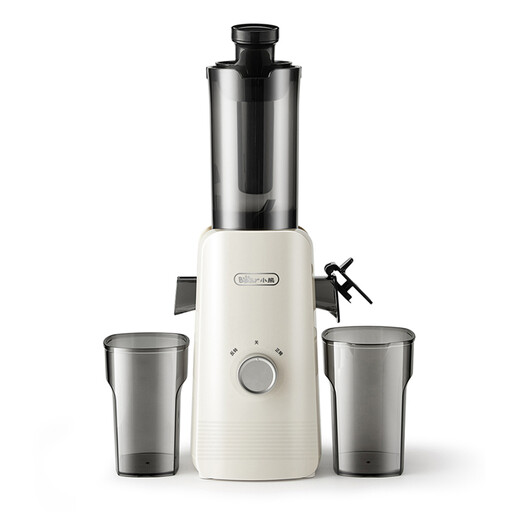
Why does it suit this profile? This model is aimed at households looking for a compact slow juicer for regular single servings and smaller family quantities. According to the product description, it features an 80-mm feed chute, 130 watts of power and a maximum operating time of up to 15 minutes per use.
The product description lists three main components for assembly and cleaning. The limited operating time should be factored in when preparing larger quantities of juice.
80-mm feed chute, separate juice and pulp containers, and a compact design for smaller kitchens.
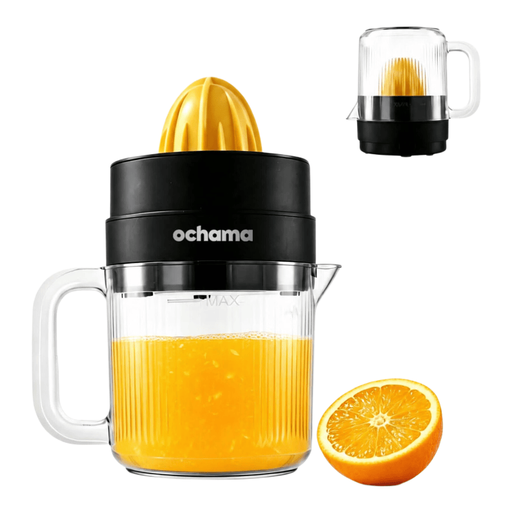
Why does it suit this profile? This electric citrus press is designed for oranges, lemons, mandarins and similar fruits. Its 1.4-litre capacity is suitable for several glasses, while the automatic pressing function reduces the physical effort required.
Its clearly defined area of use prevents unrealistic expectations of an all-purpose fruit and vegetable juicer. According to the safety information, the appliance is not designed for ice cubes or hard pips.
Bladeless pressing system, removable parts and a 1.4-litre juice container for citrus fruit.
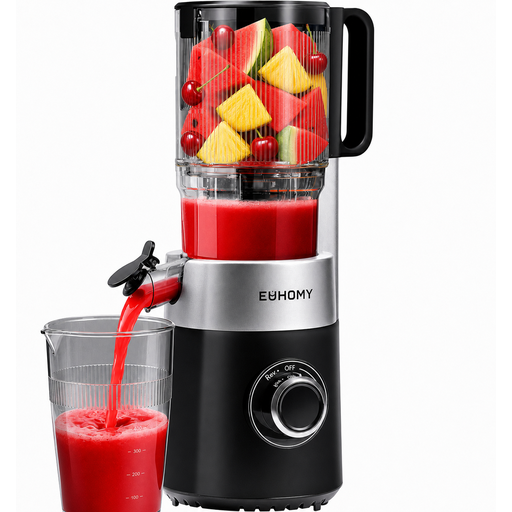
Why does it suit this profile? According to the product description, this cold-press juicer is designed for whole or large pieces of fruit and vegetables. Its 1.8-litre capacity and 135-mm feed chute are aimed at families and users who prepare multiple servings.
The wide opening can reduce preparation time, but it should not be interpreted as approval for every whole fruit. The claim of juice yields of up to 99 per cent comes from the supplier’s product description.
135-mm feed chute, 1.8-litre capacity, 220-watt motor and multi-stage filtration system according to the manufacturer’s specifications.
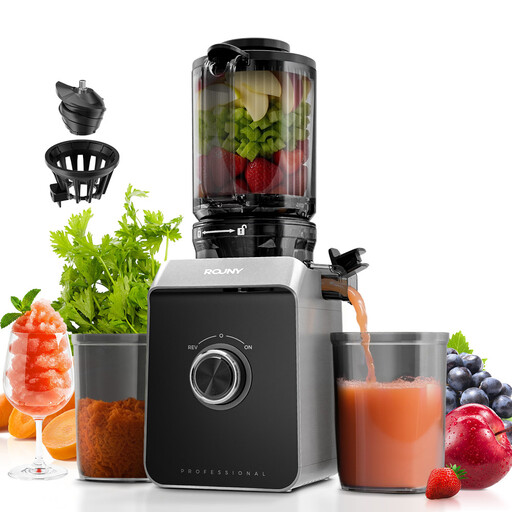
Why does it suit this profile? This model combines a large feed chute with a filter-free design. It may appeal to households looking for a juicer that is easy to clean while remaining versatile enough for fruit, vegetables and frozen produce.
According to the description, the filter-free design is intended to reduce blockages. The maximum noise level is specified as no more than 75 dB and should be considered in relation to your own living conditions before purchase.
130-mm feed chute, 1.8-litre capacity, reverse function and filter-free design according to the product specifications.
Our full selection includes juicers, slow juicers and citrus presses with different capacities, feed-chute sizes and cleaning systems.
Wash fruit and vegetables before processing and remove unsuitable pips or hard parts. Ingredients should be prepared in accordance with the instructions. With a centrifugal juicer, fibrous fruits such as mango, banana or avocado may be unsuitable. Even with slow juicers, not every ingredient is intended for the pressing chamber.
For ongoing costs, the main factors are motor power, operating time and cleaning. A 30-watt citrus juicer used for short periods consumes less electricity than a 600-watt centrifugal juicer. Actual costs depend on your electricity tariff, operating time and frequency of use. You should also factor in the time required for cutting, pressing and rinsing.
For mixed juices made from apples, carrots, cucumber or leafy greens, a slow juicer or cold-press juicer is generally more suitable than a dedicated citrus press. Before buying, check which ingredients are permitted and the maximum operating time.
Service life depends on the materials, motor, maintenance and correct use. Overloading the appliance, processing unsuitable hard ingredients or failing to clean it properly can accelerate wear. The specified operating time per use should be observed.
That depends on how you plan to use it. Anyone who prepares fresh juice regularly and keeps suitable ingredients on hand may benefit from owning a juicer. For occasional orange or lemon juice, a compact citrus press with a smaller capacity is often sufficient.