
Lieferung heute & morgen

Qualitätsgarantie

Willkommens-Angebote freischalten: KOSTENLOSE Lieferung | Bis zu 80 % RABATT | Kostenlose 30-Tage-JoyPlus-Testphase
App herunterladen
Fresh juice made from fruit and vegetables is easy to prepare with the right appliance. However, the choice ranges from slow juicers and centrifugal juicers to electric citrus presses and portable juicers. Focusing solely on wattage or polished marketing claims does not automatically lead to a model that suits your everyday routine.
A powerful motor can be helpful when processing hard ingredients. On its own, however, wattage says little about how much juice actually ends up in the glass. The appliance design, filter, auger, rotational speed and ingredient preparation also affect juice yield. A cold-press juicer, for example, usually works more slowly than a centrifugal juicer, but depending on the recipe, it can produce a different consistency.
A juicer with a large feed chute can reduce the time needed to chop apples and other fruit. However, the chute does not replace an inspection of the removable components. Fine filters or hard-to-reach corners can increase cleaning time. Anyone planning to use the appliance every day should therefore look for a well-designed construction and components that are easy to rinse.
An electric citrus press is designed for oranges, lemons and similar fruit. It does not process leafy greens or hard carrots like a fruit and vegetable juicer. Conversely, a centrifugal juicer may be less convenient for the occasional orange than a compact juicer. The ingredients approved for each model are therefore a more important selection criterion than general marketing promises.
For individuals, 300 to 400 ml may be sufficient. Families are generally better served by a juice container holding approximately 0.8 to 1.8 litres, depending on the desired quantity and how often you want to refill it. A large feed chute reduces chopping when used with suitable ingredients. It does not mean that every piece of fruit can be inserted whole. Pips, peels and hard components must be removed in accordance with the operating instructions.
An easy-to-clean juicer should have as few removable components as possible or offer a clearly described quick-cleaning process. With models that use a filter, rinsing it immediately is particularly advisable before pulp dries on. Dishwasher compatibility should only be assumed when it is expressly stated in the product specifications.
A BPA-free juicer may appeal to buyers who pay close attention to the materials used in parts that come into contact with juice. This designation should be based on the manufacturer’s information and should not automatically be applied to every component. For electrical appliances intended for German households, 220–240 V, a stable base, an undamaged cable and disconnecting the appliance from the power supply before cleaning or disassembly are also important.
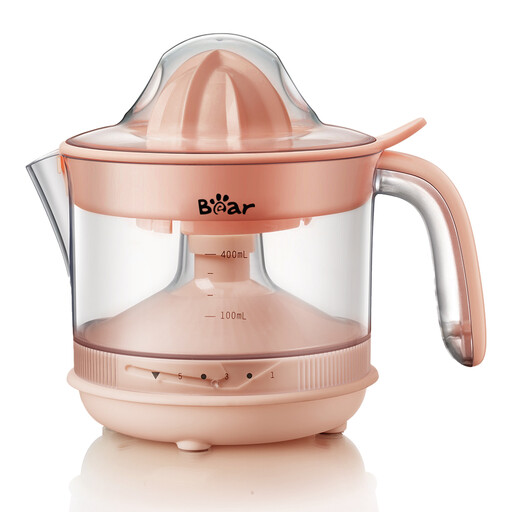
Why does this model fit the bill? This electric citrus press is designed for oranges and lemons. With a 400 ml capacity, it is well suited to smaller households or individual servings.
The product specifications describe a removable design, five adjustable pulp settings and blade-free operation. This clearly limits the appliance to citrus fruit rather than implying universal use.
30 W, 400 ml, 50 rpm, manufacturer-specified BPA-free materials and a non-slip base.
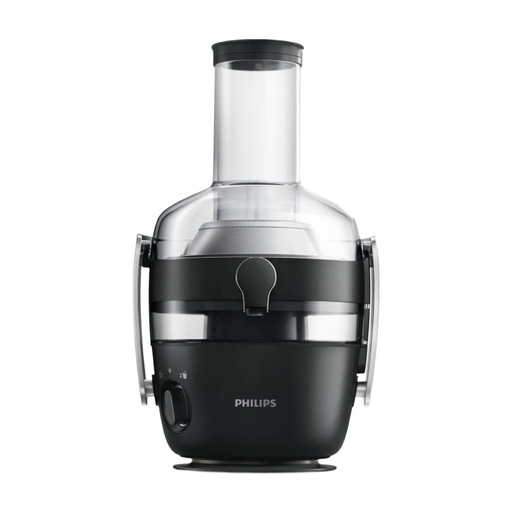
Why does this model fit the bill? This centrifugal juicer combines a 1-litre juice container, a 2.1-litre pulp container and an 8 cm feed chute for regular household quantities.
The clearly stated container sizes make the intended volume easy to assess. The manufacturer also specifies QuickClean Plus and dishwasher-safe removable parts.
1000 W according to the product data, 2 speed settings, drip stop and FiberBoost function.
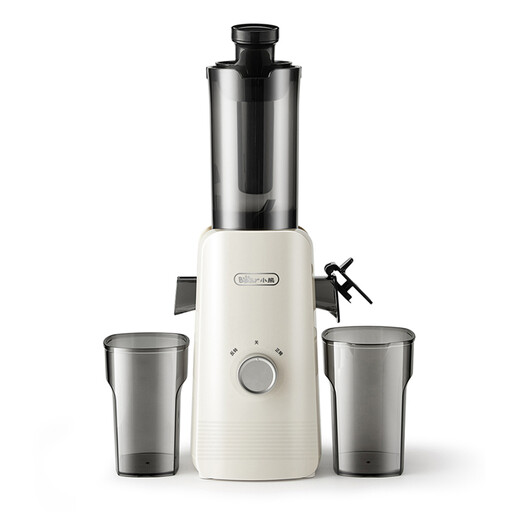
Why does this model fit the bill? This slow juicer is an interesting option for households that regularly juice fruit and vegetables and prefer a 0.8-litre capacity.
The 80 mm feed chute and three described main components provide concrete guidance for operation and cleaning. The maximum operating time is specified as 15 minutes per use.
130 W, 80 mm feed chute, separate juice and pulp containers, plus a cleaning brush.
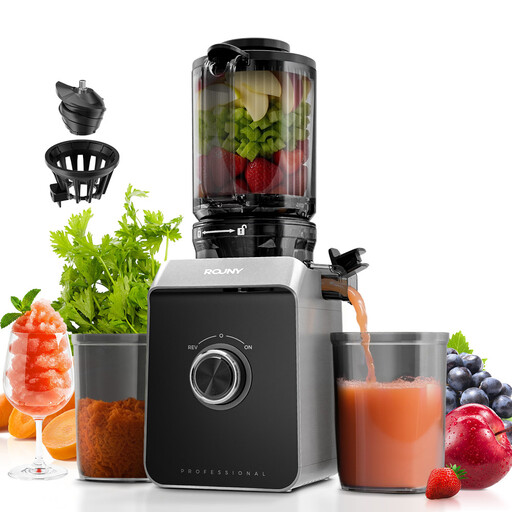
Why does this model fit the bill? With a 1.8-litre capacity and 130 mm feed chute, this cold-press juicer is designed for households that want to prepare larger quantities.
The specifications mention a filter-free design and water-cleaning function. Even so, hard stones, ice cubes and ingredients not approved by the manufacturer should be avoided.
150 W, 50 rpm, reverse function, 1.8-litre capacity and manufacturer-specified BPA-free materials.
We have put together a current selection of juicers that can be compared by features, capacity, cleaning requirements and electrical safety specifications.
Wash fruit and vegetables before juicing and remove pips, tough peels and unsuitable components as instructed. Bananas, avocados and very fibrous ingredients can cause blockages in some centrifugal juicers. With a portable juicer, use small, soft pieces and observe the maximum fill line.
The motor housing must not be immersed in water. Unplug the appliance before opening, cleaning or moving it. Blades and filters present a risk of cuts and should be handled with care.
For regular citrus drinks, an electric citrus press is usually sufficient. It is designed for halved fruit and does not require a centrifugal chamber. Apples, carrots and leafy greens, on the other hand, require a slow juicer or centrifugal juicer.
Service life depends on how the appliance is used and cleaned, the ingredients processed and whether the recommended operating times are observed. The appliance should not be run beyond its stated maximum operating time. Cleaning the filter, auger and seals after every use, while avoiding hard ingredients that have not been approved, can help limit everyday wear.
Energy consumption depends on motor power and operating time. During short use, a 1000 W centrifugal juicer does not automatically consume more electricity than a 130 W slow juicer operated for longer. For a fair comparison, consider wattage and actual daily operating time together.