If worktop space is limited
If you want to make pear juice regularly but have limited worktop space or cupboard clearance, compare the appliance’s length, width and height – not just its width.


First, measure the available worktop space and clearance above it. Then decide whether quick juicing or your preferred juice texture matters more. A compact centrifugal juicer may suit a quick single serving; a slim slow juicer uses a different pressing method, but still needs room for its height, containers and cleaning. Check the dimensions of the specific model, and don’t assume that all models will produce the same amount or clarity of pear juice.
If you want to make pear juice regularly but have limited worktop space or cupboard clearance, compare the appliance’s length, width and height – not just its width.
If you pay attention to how much pulp is in your juice, consider the pressing method and filter, as well as how much cleaning is involved. Hurom notes that ingredients and how they are stored can affect the amount of pulp.
If you usually make a single glass, check how much preparation and cleaning the specific model requires. Manufacturers’ claims about cleaning times aren’t a guarantee for every use.
A good fit if: You want to make a serving quickly and are looking for an appliance that’s easy to store away.
Things to consider: Centrifugal juicers and slow juicers process ingredients differently. A faster process doesn’t prove that a particular amount or texture of pear juice will be produced.
A good fit if: You prefer the pressing method and have enough room for the appliance’s height and its juice and pulp containers.
Things to consider: Slow juicers work more slowly; even a fine filter doesn’t guarantee juice free of particles.
ETM TESTMAGAZIN describes centrifugal juicers as faster and slow juicers as slower. When choosing a juicer for pears, worktop space, your preferred texture and the effort involved in preparation and cleaning are still key.
| Consideration | What to check when buying | Who should pay particular attention? |
|---|---|---|
| Worktop space and storage | Compare the appliance’s length, width and height with your worktop, cupboard clearance and the space needed for containers. | If I can’t make a permanent space for a tall or deep appliance in my small kitchen, I compare its full dimensions. Around 36% of consumers put available space first. |
| Pear juice and texture | Check the pressing method and filter of the specific model; prepare the pears according to the appliance instructions. | If the amount of pulp in my pear juice matters to me, I check the filter and preparation method without assuming a particular result. Around 29% of consumers prioritise their preferred pear juice texture. |
| Cleaning | Check the instructions: which parts are dishwasher-safe, and how easy is it to reach the filter and pulp outlet? | If I want to minimise hand-washing after each glass, I check the parts list for that exact version. Around 21% of consumers prioritise the amount of cleaning involved. |
| Preparation and speed | Check the feed chute, spout height and containers; also follow the instructions for preparing pears. | If I want to make individual servings quickly, I consider the whole process, from adding the fruit to pouring the juice into a glass. Around 14% of consumers put preparation speed first. |
A slim juicer may still be too tall or too deep for the space you have in mind.
Measure its length, width and height, and allow room for the containers and access to the feed chute.
Hurom’s pear recipe says to wash, core and cut the fruit into bite-sized pieces. A larger feed chute doesn’t override those recipe instructions.
Compare the appliance instructions with the preparation you’re happy to do as part of your everyday routine.
Washing, coring and cutting the pears take extra time.
Manufacturers’ cleaning claims don’t automatically apply to every type of pear, and which parts are dishwasher-safe varies by model.
Check the instructions for your exact version, paying particular attention to the filter and pulp outlet.
Parts that need to be washed by hand still mean extra cleaning.
The HR1832/00 centrifugal juicer and the slim HR1889/70 slow juicer let you compare two designs using specific models.
The H70ST is a slow juicer with a 1,8-litre hopper and a fine filter. Allow for its height and the fact that it needs to be cleaned by hand.
The MES25C0 is a centrifugal juicer with a 73-mm feed chute and two speed settings.
The Sam 78275 slow juicer is another option you can assess by checking its dimensions.
The MultiJuice 7 SJ7000GY is a centrifugal juicer with settings for ingredients of different firmness and a larger pulp container.
The Joybuy options below include centrifugal and slow juicers with different-sized feed chutes. Which one suits your kitchen depends on its dimensions and how you want to use it; check the instructions for preparing pears for the specific appliance.
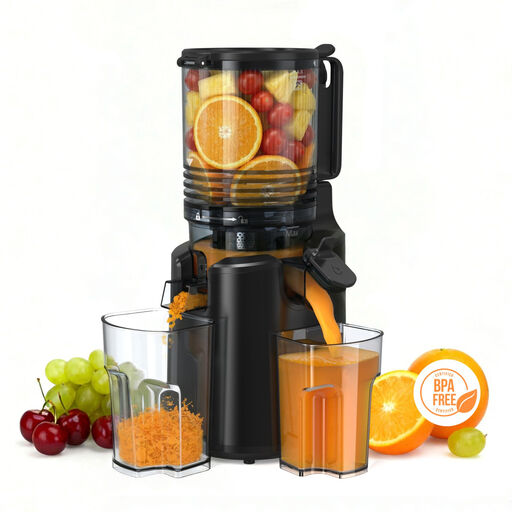 No image available
This model may be worth considering if you want to try this pressing method; measure the space available for the appliance first.
The product title lists a 130 mm feed tube, 1,8 l capacity, 150 W, 50 RPM and a reverse function. According to the description, removable parts can be rinsed under water.
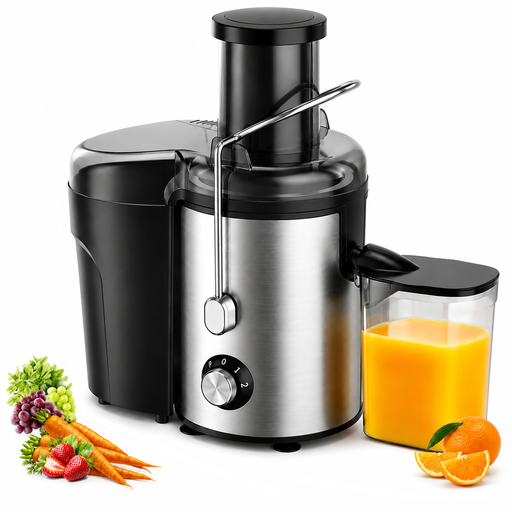 No image available
This model may be relevant if you’re comparing centrifugal juicers with a 75-mm feed chute.
The product title lists 600 W, a 75-mm feed chute and a stainless steel housing.
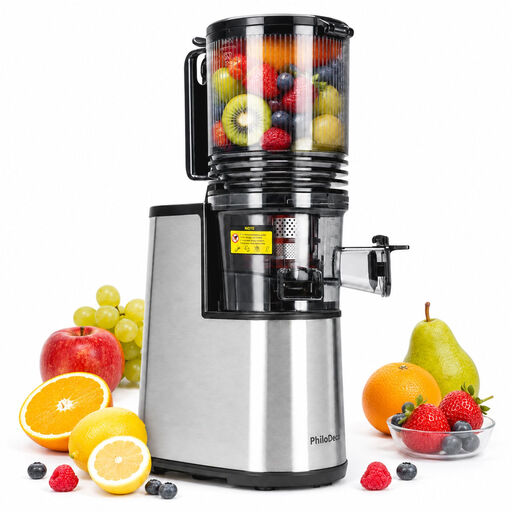 No image available
If you’re looking for a slow juicer with a large feed chute, you can assess this model by checking the chute size and the space available.
The product title lists a 110-mm feed chute, 40 Nm and a reverse function.
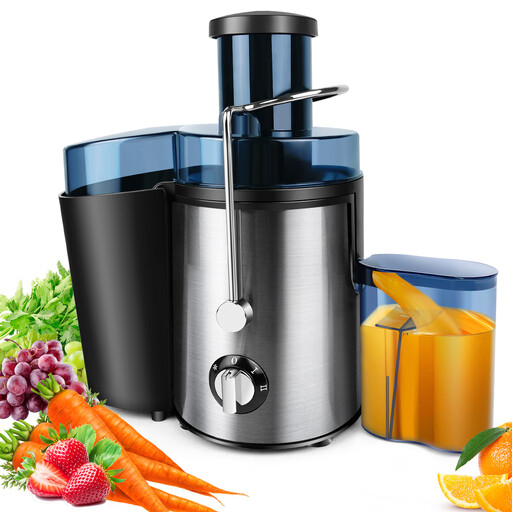 No image available
This model is worth considering if you’re comparing centrifugal juicers with two speed settings for ingredients of different firmness.
The product title lists 1000 W, a 65-mm feed chute and a 500 ml capacity. The description mentions removable parts and a cleaning brush.
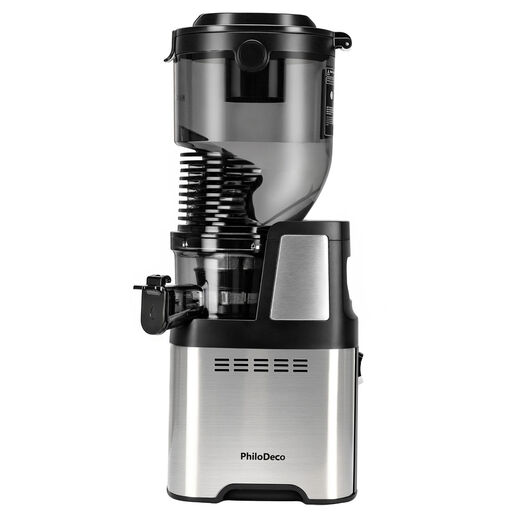 No image available
If you’re considering a slow juicer with separate outlets, check whether the appliance and containers will fit on your worktop.
The product title lists a 9,5-cm feed chute and separate outlets. The description mentions a reverse function and removable parts for hand-washing.
Follow the instructions for your appliance. Hurom’s pear recipe says to wash and core the fruit, then cut it into bite-sized pieces; a large feed chute doesn’t override those recipe instructions.
No. A slow juicer doesn’t guarantee juice free of particles. Hurom notes that the ingredients and the filter used can affect the amount of pulp.
It depends on the model. Philips describes the removable parts of the HR1832/00 as dishwasher-safe; COMPUTER BILD criticised the tested Hurom H70-ST because none of its parts were dishwasher-safe. Check the instructions for your exact version before cleaning.
In Germany, old electrical appliances must be taken to an authorised collection point, such as a municipal collection centre. Retailers have take-back obligations in certain circumstances; returning an appliance to a retailer without buying a new one only applies to appliances where no external dimension exceeds 25 cm.