
Lieferung heute & morgen

Qualitätsgarantie

Willkommens-Angebote freischalten: KOSTENLOSE Lieferung | Bis zu 80 % RABATT | Kostenlose 30-Tage-JoyPlus-Testphase
App herunterladen
A dead car battery is more than just an annoyance—it means downtime, lost time, and potential uncertainty. A reliable car jump starter is therefore a wise investment for any vehicle owner. However, the market is flooded with devices making bold promises. To make an informed decision, it's essential to know the typical pitfalls and understand the crucial technical features.
As your Joybuy Product Recommendation Officer, I'll help you separate marketing hype from facts and find a device that truly fits your needs.
Many buyers focus on the wrong metrics or overlook critical details. This often leads to a device that fails at the crucial moment. Pay special attention to these three points:
To make the right choice, you should focus on the following objectively measurable criteria. These determine the actual performance and reliability of your device.
The starting current, often referred to as "Cranking Amps" (CA), indicates how much current the device can deliver for several seconds to turn over the engine. A petrol engine up to 2.0 litres of displacement typically requires 200–300 A, while a large diesel engine may require 600 A or more.
The capacity in milliampere-hours (mAh) is also relevant. It determines how many start attempts are possible or how many times you can charge your smartphone with the integrated jump starter power bank. A higher capacity offers more reserves but is not the sole determinant of starting power.
It's important to distinguish between two main categories:
Modern jump starters should have a range of protection mechanisms to ensure safe use, even for novices. Indispensable features include:
Instead of making a one-size-fits-all recommendation, we have selected products tailored to specific user profiles and their requirements.
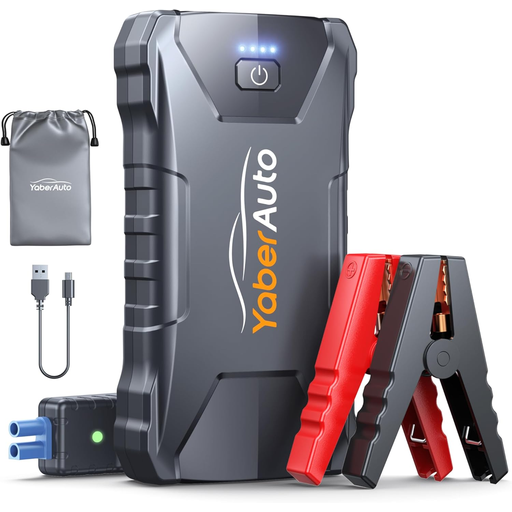
Why this device fits: Ideal for drivers of small to mid-size cars looking for a compact and straightforward emergency solution. The device is small enough for the glove compartment and offers practical added value for everyday use with its power bank function, without breaking the bank.
The device features 10 built-in safety protections, including reverse polarity protection, and is clearly specified for petrol engines up to 7.0L and diesel engines up to 5.5L, allowing for a realistic performance assessment.
Very compact design and low weight (0.34 kg). Integrated LED flashlight with 3 modes (Light, SOS, Strobe) for added safety during breakdowns in the dark.
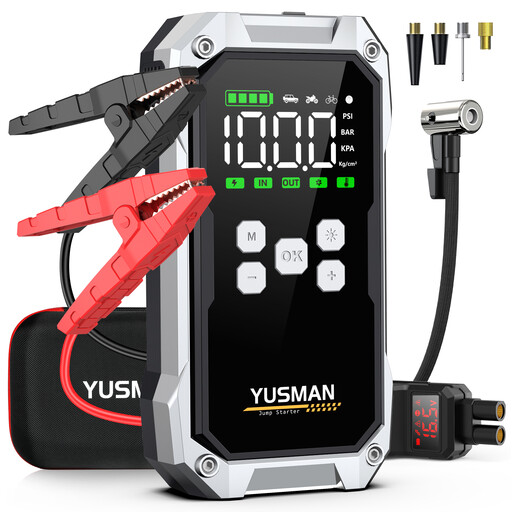
Why this device fits: Perfect for pragmatic drivers who appreciate an all-in-one tool for breakdowns. The combination of a powerful jump starter and a 150 PSI air compressor covers the two most common causes of breakdowns: a dead battery and flat tyres.
The high peak current of 5000 A is backed by a clear suitability for large engines (up to 10.0L diesel). The smart clamp system with audible and visual warnings minimises user error.
Integrated mini-compressor for inflating car tyres, bicycle tyres, or balls. The LCD screen displays real-time tyre pressure, ensuring precise application.
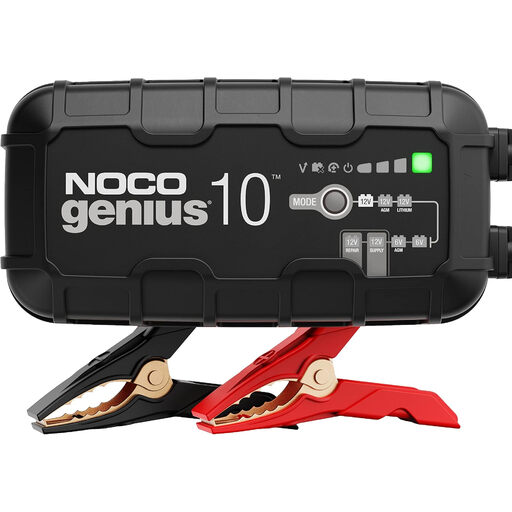
Why this device fits: This device is not a jump starter, but a smart charger. It is the right choice for owners of classic cars, motorcycles, or RVs who want to maintain and preserve their batteries over the winter or during long periods of inactivity.
It directly addresses the pitfall of battery incompatibility by being explicitly designed for various 6V and 12V battery types (AGM, Gel, EFB, Lithium). The integrated thermal sensor prevents charging errors.
Functions as a charger, battery maintainer, and desulfator. It can recover deeply discharged batteries (down to 1V) and extend battery life through automatic sulfation detection.
We have compiled a complete, up-to-date list of products that fully meet these strict selection criteria and UK safety regulations.
1. How often do I need to charge a jump starter power bank? It is recommended to fully charge most lithium-based jump starters every 2 to 3 months, even if they are not used. This ensures that the internal battery remains in good condition and the device is ready for an emergency. Please refer to the manufacturer's specific instructions.
2. Can I use a jump starter to revive a completely dead battery? Some modern battery boosters have a "Boost" or "Force" function that allows starting batteries with very low residual voltage (sometimes down to 0 volts). However, this is a manual override of the safety systems and should be used with caution. For the gentle recovery of deeply discharged batteries, a smart car battery charger is often the better choice.
3. Is a jump starter with a compressor a good idea? For users looking for a multifunctional emergency tool, a jump starter with a compressor is very practical. It saves space in the boot compared to carrying two separate devices and covers the most common causes of breakdowns. However, for someone who exclusively needs a powerful jump starter for a large engine, a specialised device without a compressor may be more compact and lighter.