
Lieferung heute & morgen

Qualitätsgarantie

Willkommens-Angebote freischalten: KOSTENLOSE Lieferung | Bis zu 80 % RABATT | Kostenlose 30-Tage-JoyPlus-Testphase
App herunterladen
A dead car battery is more than just an annoyance—it means lost time, missed appointments, and relying on the help of strangers. A portable jump starter promises independence and peace of mind. But the market is flooded with devices making bold claims. Many drivers invest in a jump starter, only to find it's unsuitable or unreliable when it matters most.
As your Joybuy Product Recommendation Officer, I'm here to help you identify the common pitfalls and make an informed decision. We'll focus on the facts that truly matter, so you can find the right emergency device for your vehicle.
Marketing claims can be misleading. Pay close attention to these three points to avoid a bad buy:
To choose the right device, you should focus on verifiable technical specifications. These three criteria are essential for reliable performance.
The most important question is: Is the device compatible with my engine? The required power depends on the engine type (petrol or diesel) and its displacement (in litres).
Modern jump starters are often multifunctional tools. Consider which additional features offer real value for you.
A good jump starter must be safe and easy to use. Look for the following features:
Here are some recommendations tailored to different user profiles and their specific requirements.
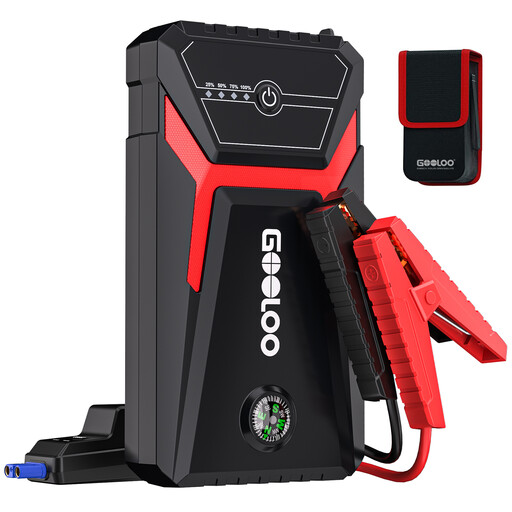
Why This Fits Their Persona: Ideal for drivers of small to mid-size petrol cars who need a reliable and straightforward emergency solution without a large budget. Its compact design fits easily in the glove compartment.
The device clearly states its compatibility (up to 6.0L petrol / 4.0L diesel), preventing the purchase of an underpowered unit. It also lists 10 specific safety features instead of just vaguely mentioning "safety."
Solid baseline performance for common cars; comprehensive safety package with smart clamps; excellent value for money.
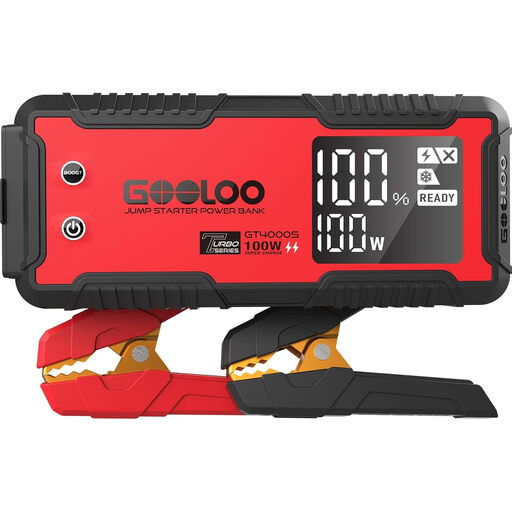
Why This Fits Their Persona: Perfect for owners of large SUVs, motorhomes, or diesel vehicles. For users who value high performance, durability, and especially ultra-fast recharging to always be ready for action.
Instead of just advertising a high peak current, the focus is on the verifiable 100W two-way fast-charging feature. This allows a full recharge in about 1.2 hours—a concrete, measurable advantage.
Massive power reserves for engines up to 10L diesel; 100W PD fast charging (Input & Output); 3.2-inch screen for clear status updates.
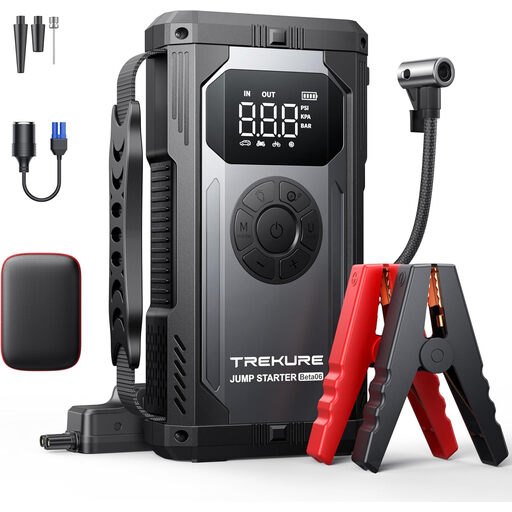
Why This Fits Their Persona: The solution for campers, off-road drivers, and anyone who wants a single device for multiple emergencies. It combines extremely high jump-starting power with a fully-featured air compressor for maximum self-sufficiency on the go.
The integrated compressor isn't just mentioned; it's specified with concrete performance data (150 PSI, 35 L/min). This shows it's a serious feature, not a weak gimmick.
Very high peak current (5500A) for all petrol and large diesel engines (up to 10.0L); powerful 150 PSI compressor with auto-stop; large LCD screen.
We have compiled a complete, up-to-date list of products that fully meet these strict selection criteria and rigorous safety standards.
1. How often do I need to charge a jump starter? Even when not in use, the lithium-ion battery is subject to a slight self-discharge. Most manufacturers recommend checking and fully charging the device every 3 to 6 months. This ensures it delivers full power in an emergency and extends the battery's lifespan.
2. Can I use a jump starter power bank to start a diesel vehicle? Yes, but only if the device is designed for it. Diesel engines require a much higher starting current than petrol engines. Pay close attention to the manufacturer's specifications regarding compatibility with diesel engines and the maximum displacement (e.g., "suitable for up to 7.0L diesel"). A device designed for small cars will likely not work on a diesel SUV.
3. Is using a portable jump starter safe for my car's electronics? Yes, as long as you use a high-quality device with smart safety features. A crucial feature is reverse polarity protection, which prevents damage if the clamps are accidentally connected to the wrong battery terminals. Other protection mechanisms like short-circuit, over-current, and over-voltage protection ensure that your vehicle's sensitive electronics are not damaged. Always follow the manufacturer's instructions.