
Lieferung heute & morgen

Qualitätsgarantie

Willkommens-Angebote freischalten: KOSTENLOSE Lieferung | Bis zu 80 % RABATT | Kostenlose 30-Tage-JoyPlus-Testphase
App herunterladen
A dead car battery is more than just an annoyance—it means lost time, missed appointments, and potential uncertainty, especially in bad weather or remote locations. A jump starter power bank, also known as a jump starter or battery booster, promises a quick and straightforward solution. However, the market is flooded with devices whose advertised performance specs often promise more than they can deliver. Many buyers invest in a unit that fails at the critical moment.
This guide will help you identify the truly important features and avoid common purchasing traps. We focus on the technical facts that make the difference between a reliable tool and a useless accessory.
Before you make a purchasing decision, you should be aware of the most common misconceptions that lead to disappointment.
To make an informed choice, focus on these three technical specifications. They are the foundation of a reliable portable jump starter.
The peak current, measured in Amperes (A), is the maximum current the device can deliver for a short moment to turn the engine's starter motor. A small car might need 800A, while a large diesel engine may require 2000A or more.
A reliable 12V jump starter is based on high-quality lithium-polymer or lithium-ion cells that remain powerful even at low temperatures. Even more important are the integrated protection mechanisms. Look for the following features, often implemented through "smart clamps" (intelligent jumper cables):
Modern devices are often multifunctional. While the jump-starting function is the priority, useful additional features offer real value, especially for outdoor activities or as part of an emergency kit.
Here are recommendations tailored to specific user profiles that take the above criteria into account.
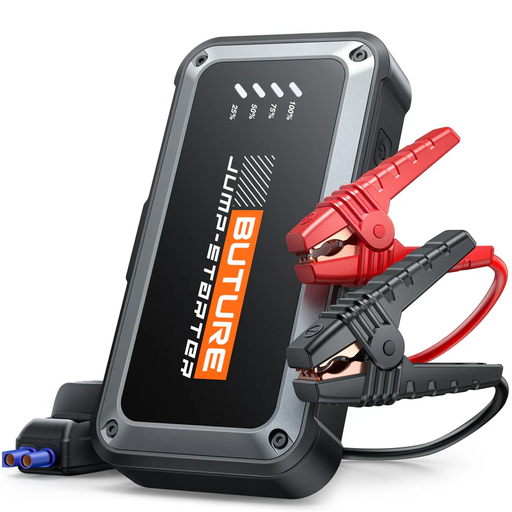
Why This Fits Their Persona: Ideal for owners of SUVs, RVs, vans, or vehicles with large-displacement engines who need a completely reliable emergency solution that works even in extreme temperatures.
This device avoids the trap of insufficient power with a high 3000A peak current and a clear compatibility rating for engines up to 9.0L gas and 8.5L diesel. It is explicitly designed as a high-performance jump starter.
Combines high starting power with 10 intelligent safety features and a robust, shock-resistant housing. The multifunctional LED light with a wide-angle design is a practical extra for breakdowns and camping.
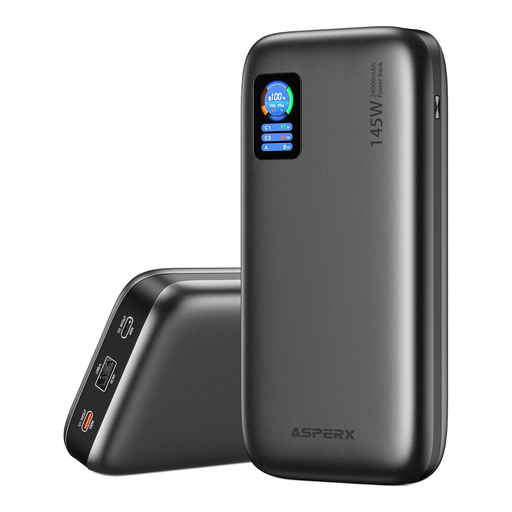
Why This Fits Their Persona: Perfect for business travellers, digital nomads, and tech enthusiasts whose priority is fast-charging high-performance devices like laptops (e.g., MacBook Pro), tablets, and multiple smartphones simultaneously.
This product resolves any confusion: it is not a jump starter power bank. It is a specialised high-performance power bank that focuses on maximum charging power for electronics and doesn't attempt to offer an inadequate jump-starting function.
Offers an extremely high output of up to 100W on a single USB-C port, which is essential for fast-charging demanding laptops. The smart TFT display shows charging power and remaining time in real-time.
We've compiled a complete, up-to-date list of products that fully meet these strict selection criteria and safety standards.
Even when not in use, the battery will slowly discharge. To ensure full performance in an emergency, it is recommended to fully charge the device every 3 to 6 months. Many models have a charge level indicator that shows you the current status at a glance.
Yes, but only if the model is designed for it. Pay close attention to the manufacturer's specifications regarding compatibility with diesel engines and the corresponding displacement. A jump starter for a diesel engine requires a significantly higher peak current than one for a comparable gasoline engine. A device specified only for gasoline engines will likely fail on a diesel.
Yes, modern, high-quality devices are very safe, provided they are used correctly. Look for models with intelligent jumper cables that offer protection features like reverse polarity, short-circuit, overheat, and overload protection. These mechanisms prevent damage to the vehicle's electronics and the device itself, even in case of accidental misuse.