
Lieferung heute & morgen

Qualitätsgarantie

Willkommens-Angebote freischalten: KOSTENLOSE Lieferung | Bis zu 80 % RABATT | Kostenlose 30-Tage-JoyPlus-Testphase
App herunterladen
A dead car battery is more than just a nuisance—it means lost time, missed appointments, and potential dependence on roadside assistance. A portable jump starter, often called a jump box or a booster pack, promises a quick and straightforward solution. However, the market is flooded with products whose technical specs often create more confusion than clarity. Many drivers invest in a device that fails at the critical moment.
As your Joybuy Product Recommendation Officer, I'll help you see through the marketing hype. We'll focus on the facts so you can make an informed decision and find a reliable jump starter for your car. Before you make a choice, you should be aware of the three most common pitfalls:
To avoid a bad purchase, you should focus on the technical data that truly counts. These three parameters are non-negotiable for the function and safety of a portable car jump starter.
The Peak Amps is the maximum current the device can deliver for a short burst. It's crucial for overcoming the initial resistance of the engine's starter motor. The required current depends directly on the engine type and displacement:
Always check the manufacturer's specifications for the maximum recommended engine size (in litres) for both petrol and diesel engines.
The capacity determines how many start attempts are possible or how many times you can charge your smartphone with the power bank jump starter. As mentioned, watt-hours (Wh) are the more reliable unit of measurement. They are calculated by multiplying the capacity in amp-hours (Ah) by the nominal voltage (V). A higher Wh number means more stored energy and thus more endurance. For a 12V jump starter, a value from 40 Wh is a good benchmark for solid performance.
A high-quality jump starter must have comprehensive protection mechanisms to safeguard both the user and the vehicle's electronics. Look for the following integrated safety features:
Modern devices often signal a connection error with a visual or audible alert.
Based on the criteria above, we have curated a selection of products suitable for different user profiles and vehicles.
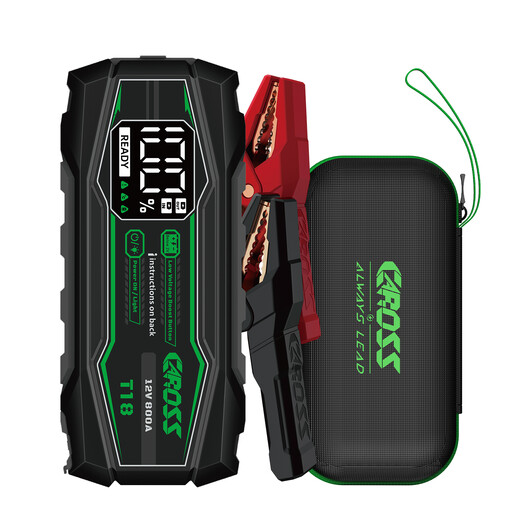
Why This Fits Their Persona: This compact device is a pragmatic solution for drivers of common petrol and smaller diesel vehicles. It offers enough power for everyday emergencies without breaking the bank, and its small footprint makes it easy to store in the glove compartment.
The device advertises a realistic peak current of 800A, which is appropriate for the specified vehicle class (up to 6.0L Petrol / 3.0L Diesel). It includes essential safety features like spark-proof technology and reverse polarity protection.
Features a "Boost" function for deeply discharged batteries and a clear LED display. A protective case is included in the box.
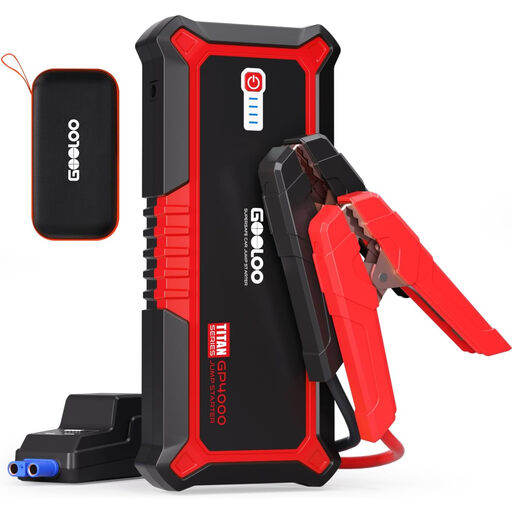
Why This Fits Their Persona: Anyone driving a vehicle with a large displacement engine needs a jump starter with high power reserves. With 4000A of peak current, this model is specifically designed to meet the demands of large petrol and diesel engines up to 10.0L, as found in SUVs, vans, or RVs.
The high power rating isn't an empty promise here, but a necessity for the target audience. The device combines its high peak current with a robust build and comprehensive safety features, including heavy-duty metal clamps.
Very high starting power for large engines. The "BOOST" button enables starting even with very weak batteries. Also serves as a power bank with a fast-charging function.
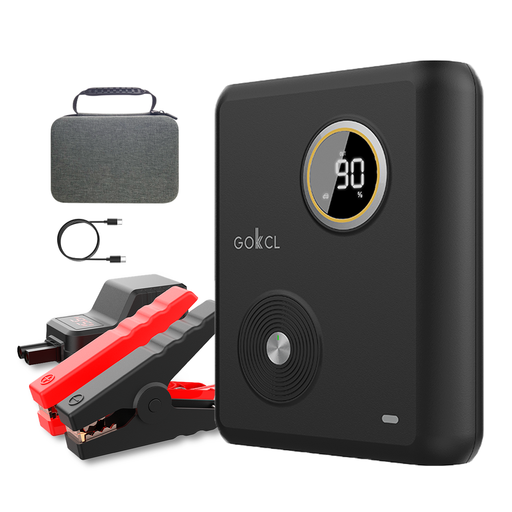
Why This Fits Their Persona: For users who value longevity, minimal maintenance, and innovative technology. The sodium-ion battery offers an exceptionally long standby time and a high cycle life, making it a "buy it once, use it for years" solution.
This device sidesteps the usual marketing traps by focusing on its superior battery technology. The low self-discharge rate (~1% per month) makes the advertised long standby time credible and solves the problem of many lithium starters that need frequent recharging.
Extremely wide operating temperature range (-40°C to 80°C), high inherent safety (no fire risk if damaged), and PD60W fast charging for laptops and other devices.
We've compiled a complete, up-to-date list of products that fully meet these strict selection criteria and safety regulations.
Most manufacturers recommend charging the device every 3 to 6 months, even if it's not used. This is necessary because lithium-ion batteries are subject to self-discharge. Regular charging ensures that the portable car booster is ready for an emergency and helps maintain the battery's lifespan. Models with sodium-ion technology have a significantly lower self-discharge rate and require less frequent charging.
Yes, many modern jump starters have a "Boost" or "Force Start" function. Normally, the device checks the car battery's voltage before delivering power. If the battery is too deeply discharged (e.g., below 2V), it won't be detected. The boost function bypasses this safety check and manually releases power to give a car battery a jump start even when it's almost completely dead. However, this feature should be used with caution and exactly according to the instructions.
Not necessarily. The peak current must match your vehicle's requirements. An oversized unit for a small car offers no practical advantage and can be an indicator of marketing exaggeration. More important than an extremely high peak value is a balanced combination of a realistic starting current, sufficient battery capacity (in Wh), and comprehensive safety features.