
Lieferung heute & morgen

Qualitätsgarantie

Willkommens-Angebote freischalten: KOSTENLOSE Lieferung | Bis zu 80 % RABATT | Kostenlose 30-Tage-JoyPlus-Testphase
App herunterladen
A dead car battery is more than just an annoyance—it means being stranded, often at the most inconvenient time. A Jump Starter Power Bank, also known as a portable jump starter, promises a quick and easy solution. However, the market is flooded with devices whose marketing claims often suggest more than their technology can deliver. As your Joybuy Product Recommendation Officer, I'm here to help you separate fact from fiction and make an informed decision.
Many buyers invest in a jump starter that fails at the critical moment. This is often due to three common marketing traps:
To ensure your emergency jump starter works reliably, you should carefully examine three core technical parameters.
Choosing the right device doesn't depend on marketing buzzwords, but on clearly defined technical specifications. These three points are crucial for a safe and effective car jump starter.
The peak current (Peak Amps) indicates the maximum current the device can deliver for a short burst. More important, however, is the cranking current (Cranking Amps), which is needed to actually turn over the engine.
Always check the manufacturer's specifications for compatibility with your vehicle's engine displacement.
The capacity of a power bank with jump starter functionality determines how many start attempts are possible and how many times you can charge your smartphone or tablet. A high capacity is particularly useful for longer trips, camping, or as a buffer for unforeseen events. Look for ratings in watt-hours (Wh), as they are more meaningful than mAh alone because they account for voltage. A capacity between 12,000 and 20,000 mAh (at 3.7V) is a good benchmark for most use cases.
A reliable 12V jump starter must have intelligent safety clamps (Smart Clamps). These are essential and should offer at least the following protection features:
These features make operation safe even for novices and protect both your investment and your vehicle.
Based on these objective criteria, we have identified products suitable for different user profiles and their specific needs.
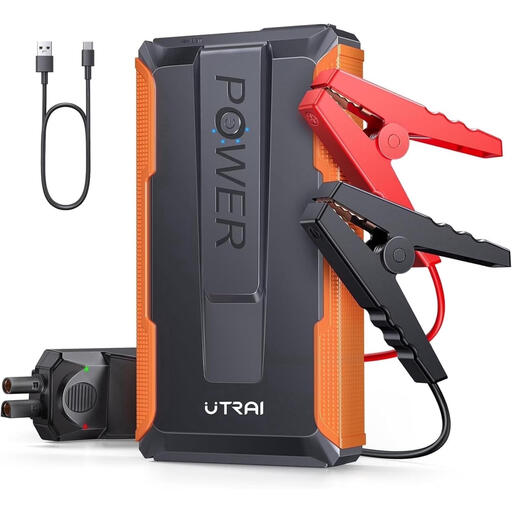
Why it's a match: This portable jump starter is a versatile solution for drivers who want to be prepared for anything. It offers enough power for most petrol and many diesel vehicles, combining this with the features of a solid power bank and an emergency flashlight. Ideal for daily use and travel.
The UTRAI jump starter clearly specifies a peak current of 2000 A and its suitability for engines up to 7.5L (petrol) or 5.5L (diesel). The smart clamps with audible alerts and LED indicators prevent user errors like reverse polarity, making it safe to use.
The combination of high starting power, a 13,200 mAh power bank with Quick Charge 3.0, and a robust, fire-resistant housing makes it a reliable companion for emergencies and everyday life.
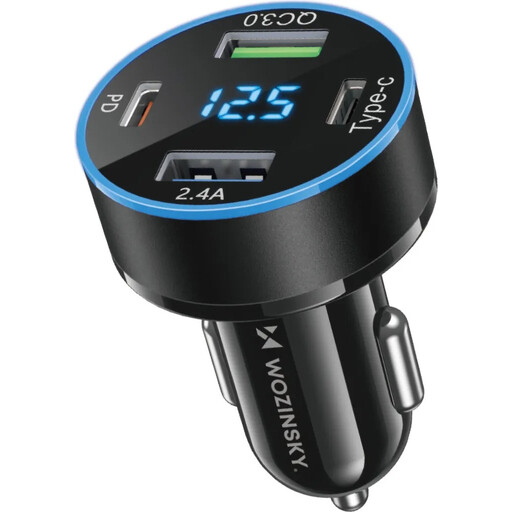
Why it's a match: For commuters who use their vehicle as a mobile office, a constant power supply for their smartphone, tablet, and GPS is essential. This charger perfectly complements a jump starter power bank by handling daily charging needs without draining the emergency reserve.
Instead of using the jump starter power bank for everyday charging and reducing its capacity for an emergency, this dedicated charger provides a stable and powerful supply. The display provides transparency about the charging status and the car battery's voltage.
Four charging ports (2x USB-C, 2x USB-A) with 50W of total power allow for simultaneous charging of multiple devices. The integrated voltage display is a useful tool for monitoring the vehicle's electrical system.
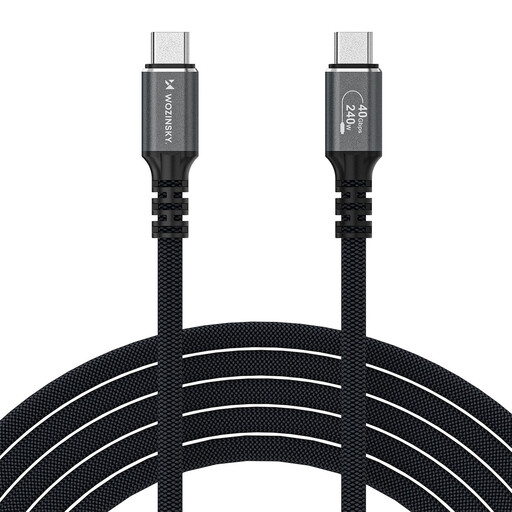
Why it's a match: This user knows that a device's performance is only as good as its weakest link. A high-quality charging cable is crucial for quickly and safely charging a powerful power bank with jump starter functionality or other modern devices.
Subpar charging cables are a common point of failure. They can throttle charging speeds or pose a safety risk. This cable is designed for high power (up to 240W) and ensures that the jump starter power bank and other devices are charged efficiently and safely.
Support for up to 240W Power Delivery, a robust design with a nylon braid and aluminium housing, and future-proof compatibility (Thunderbolt 4, USB 4) guarantee a durable and reliable connection.
We've compiled a complete, up-to-date list of products that fully meet these strict selection criteria and safety standards.
How often should I charge a jump starter power bank? To preserve the battery's lifespan, it is recommended to fully charge the device every 3 to 6 months, even if it hasn't been used. Always check the manufacturer's specific instructions in the user manual.
Can I start any car with a 12V jump starter? No, its suitability depends on your vehicle's engine. Check the jump starter's specifications, particularly the peak current and the recommended maximum engine displacement (in litres). Diesel engines typically require significantly more starting power than petrol engines of a comparable size due to their higher compression.
What do the different lights on the smart clamps mean? Typically, a solid green light indicates a correct and safe connection, ready for starting. A flashing light or a beeping sound often indicates an error, such as reverse polarity (incorrectly connected clamps) or a car battery voltage that is too low. Always consult your device's user manual for accurate troubleshooting.