A dead car battery is a common cause of breakdowns. A jump starter power bank, also known as a jump starter or booster pack, offers a standalone solution for starting your engine without needing a second vehicle. These devices combine the function of a traditional jump starter with that of a portable power bank for charging electronic devices. Selecting the right model depends on specific technical parameters that must be matched to your vehicle type and individual usage needs.
Buyer's Guide: What to Look for in a Portable Jump Starter
The functionality of a car jump starter is defined by key metrics. Understanding these parameters is essential for making an informed purchasing decision.
1. Peak Current (Peak Amps)
The peak current, measured in amperes (A), is the maximum current the device can deliver for a short burst to power the vehicle's starter motor. This value is the most critical factor for compatibility with your engine.
- Gasoline Engines: Small to mid-size engines (up to approx. 3.0-litre displacement) typically require a peak current of 400 A to 800 A.
- Diesel Engines: Diesel engines have a higher compression ratio and therefore require a significantly higher starting current. For diesel engines, especially those with larger displacement (over 2.0 litres), models with 1500 A or more are recommended.
- Large-Displacement Engines: SUVs, vans, or boats with large-displacement gasoline or diesel engines require devices with a peak current of 2000 A or more.
2. Battery Capacity (mAh)
The capacity of the internal lithium-ion battery is specified in milliampere-hours (mAh). It determines two key aspects:
- Number of Jump-Starts: A higher capacity allows for more starting attempts on a single charge.
- Power Bank Functionality: The capacity defines how many times you can charge external devices like smartphones, tablets, or cameras. Models ranging from 10,000 mAh to 20,000 mAh offer a substantial power reserve.
3. Safety Features
Modern 12V jump starters are equipped with integrated protection mechanisms to ensure safe operation. Standard features include:
- Reverse Polarity Protection: Prevents damage to the device and the vehicle's electronics if the clamps are accidentally connected to the wrong battery terminals.
- Spark-Proof Technology: The clamps are not energised until they are correctly connected to a battery. This prevents sparks if the clamps touch each other.
- Overheat, Overcharge, and Short-Circuit Protection: These mechanisms protect the device's internal battery and ensure a long lifespan.
4. Ports and Additional Features
The versatility of a jump starter power bank is evident in its ports and extra features.
- USB Outputs: USB-A ports are standard. Models with Quick Charge (QC) technology allow for faster charging of compatible devices. A USB-C port often serves as both an input and an output.
- LED Display: A screen that shows the device's charge level and the status of the jump-starting process enhances ease of use.
- Integrated LED Light: A light with multiple modes (flashlight, SOS, strobe) is a useful tool for breakdowns in the dark.
Our Selection of Jump Starters for 2026
Based on the technical criteria above, we present three models with different performance profiles.
CAROSS 1500A 12V Portable Jump Starter
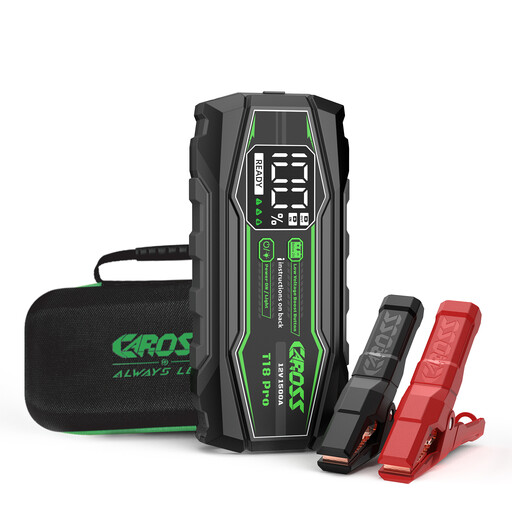
- Why we recommend this product: With 1500 A of peak current and a 16,000 mAh capacity, this model offers balanced performance for a wide range of vehicles. The boost function for deeply discharged batteries and the clear 2.3-inch display provide excellent utility.
- Advantages:
- Peak Current: 1500 A
- Battery Capacity: 16,000 mAh Lithium-Ion
- Safety: Spark-Proof, Reverse Polarity Protection
- Display: 2.3-inch digital screen
- Charging Function: QC 18W Fast Charging
- Accessories: Includes protective case
- Who it's for: Drivers of mid-range gasoline and diesel vehicles, SUVs, and motorcycles looking for a reliable all-round solution for car battery jump-starting.
CAROSS 2000A 12V Portable Jump Starter
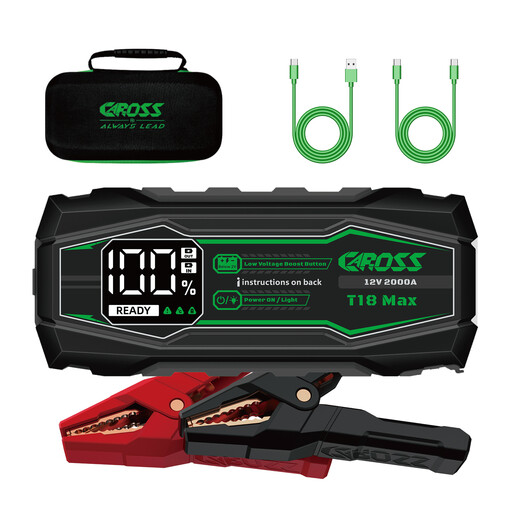
- Why we recommend this product: With 2000 A of peak current and a 20,000 mAh capacity, this device is designed for demanding applications and large-displacement engines. It offers maximum power reserves for vehicles where less powerful units would reach their limits.
- Advantages:
- Peak Current: 2000 A
- Battery Capacity: 20,000 mAh Lithium-Ion
- Safety: Spark-Proof, Reverse Polarity Protection
- Display: 2.3-inch digital screen
- Charging Function: QC 18W Fast Charging
- Accessories: Includes protective case
- Who it's for: Owners of large SUVs, vans, motorhomes, and vehicles with large-displacement diesel engines. Also ideal for boat owners and users who prioritise having a maximum power reserve.
CAROSS 800A 12V Portable Jump Starter
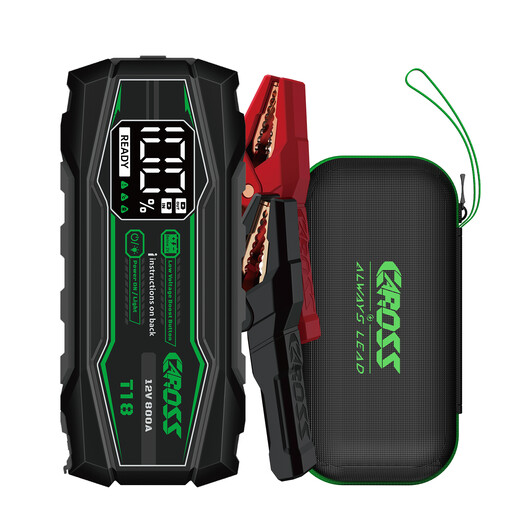
- Why we recommend this product: This model focuses on compactness and portability without compromising on essential safety features. The 800 A peak current is designed for most gasoline engines up to 6.0 litres and smaller diesel engines up to 3.0-litre displacement.
- Advantages:
- Peak Current: 800 A
- Battery Capacity: 10,000 mAh Lithium-Ion
- Compatibility: Suitable for gasoline engines up to 6.0 L and diesel engines up to 3.0 L
- Safety: Spark-Proof, Reverse Polarity Protection
- Display: LED indicator for charge status
- Charging Function: QC-enabled USB output
- Accessories: Includes protective case
- Who it's for: Drivers of small and compact cars, motorcyclists, and owners of ATVs or lawn tractors who prefer a lightweight and handy jump starter for occasional use.
Thinking Beyond Power
Beyond ensuring your power supply, protecting other electronic components in your vehicle is also important. The displays of navigation systems or dashcams are often exposed to scratches and impacts during daily use. A suitable screen protector can preserve readability and longevity. You can find a selection of solutions in our Monitor Protection category.
Frequently Asked Questions (FAQ)
1. How often does a jump starter power bank need to be charged? It is recommended to fully charge the device after each use. Even when not in use, the charge level should be checked regularly, and the device should be recharged approximately every three months, as specified by most manufacturers, to maintain battery lifespan and ensure it is ready for use.
2. Can I use a jump starter on a deeply discharged battery? Yes, many modern devices feature a "Boost" or "Override" function. This function bypasses the automatic voltage detection, making it possible to jump-start batteries with very low residual voltage (sometimes below 2 volts). It is typically activated via a separate button and should be used according to the manufacturer's instruction manual.
3. What should I pay attention to when connecting the jump starter? Following the correct procedure is crucial for safety. First, connect the red clamp to the positive (+) terminal of the car battery. Then, connect the black clamp not to the negative terminal, but to an unpainted, solid metal part in the engine bay (a ground point), such as the engine block. This minimises the risk of sparking near the battery. After a successful start, disconnect the clamps in the reverse order: first the black clamp, then the red one.


