
Lieferung heute & morgen

Qualitätsgarantie

Willkommens-Angebote freischalten: KOSTENLOSE Lieferung | Bis zu 80 % RABATT | Kostenlose 30-Tage-JoyPlus-Testphase
App herunterladen
A dead car battery is more than just an annoyance—it means lost time, missed appointments, and potential reliance on roadside assistance. A portable car jump starter, also known as a booster pack, promises a quick and straightforward solution. However, the market is cluttered and filled with technical specifications that often confuse more than they clarify. Many devices fail to live up to their marketing promises.
As your Joybuy Product Recommendation Officer, I'm here to help you identify the crucial features and avoid common purchasing traps. This guide focuses on the objective facts you need to make an informed decision.
Before we dive into recommended models, it's essential to understand the most common marketing pitfalls that often lead to a poor purchase.
To make the right choice, you should focus on three core areas. These parameters determine whether a booster pack is suitable for your vehicle and your needs.
The required power depends directly on your engine. As a rule of thumb:
All devices mentioned here are designed for standard 12V electrical systems, as found in cars, motorcycles, and most recreational boats.
A modern portable jump starter often doubles as a versatile power bank. Pay attention to the following features:
A high-quality jump starter must have intelligent safety clamps (Smart Clamps). These protect against the most common user errors and prevent damage to the vehicle's electronics. Indispensable safety features include:
For use in regions with cold winters, an operating temperature range of at least -20°C to +60°C is advisable to ensure functionality on cold days.
Based on the objective criteria above, we have compiled a selection of devices suitable for different user profiles and vehicles.

Why This Fits Their Persona: Ideal for drivers of compact and mid-size cars with gasoline engines. The device is extremely compact and lightweight, fits easily in the glove compartment, and provides a solid set of essential features for emergencies without breaking the budget.
Avoids the trap of an oversized peak current. Its 1200A rating is realistically sized for most common gasoline engines, so you're not paying for unused power reserves.
Very compact design and low weight (approx. 330g). Integrated LCD display for easy monitoring of the charge level.
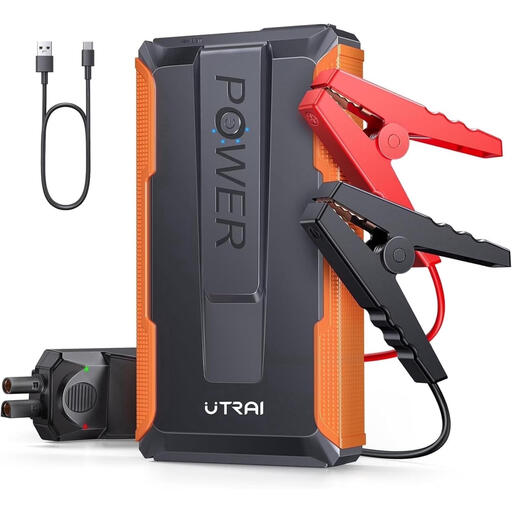
Why This Fits Their Persona: An all-rounder for commuters looking for a reliable device with useful extra features. The 2000A output covers larger gasoline and common diesel engines, while the Quick Charge 3.0 power bank function and USB-C port offer real-world value for daily use.
Escapes the useless power bank trap. Thanks to Quick Charge 3.0 and USB-C, its charging function is not just a gimmick but a practical solution for rapidly charging mobile devices.
A good balance of jump-starting power and modern power bank functionality. The wide operating temperature range (-20°C to +60°C) ensures it works in winter.
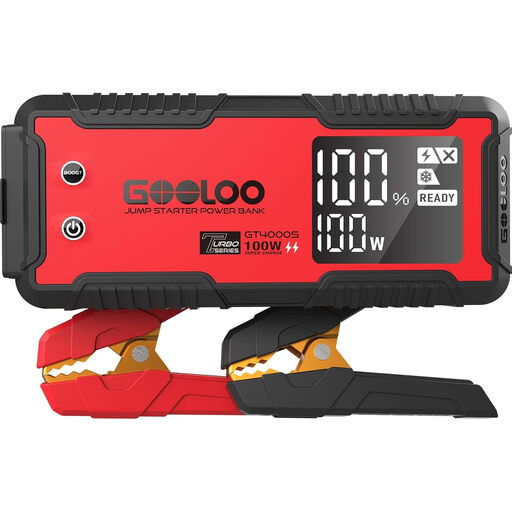
Why This Fits Their Persona: This powerhouse is designed for demanding tasks. With 4000A of peak current, it reliably starts large gasoline and diesel engines (up to 10.0L according to the manufacturer), making it the top choice for owners of SUVs, RVs, or light-duty trucks.
Bypasses the poor winter performance trap. Its high power and specified operating range ensure that even a large, cold diesel engine gets the necessary starting power.
Extremely high jump-starting power. Offers 100W two-way fast charging, which means the unit itself recharges very quickly and can even charge laptops.
We have compiled a complete, up-to-date list of products that fully meet these strict selection criteria and safety regulations.
Even if you don't use it, it's recommended to fully charge the jump starter every 3 to 6 months. This maintains the health of the lithium-ion battery and ensures the device delivers its full power in an emergency. Most models have an LED indicator or a display that shows the current charge level.
Yes, it's possible, provided the device has sufficient power. As described above, diesel engines require a higher cranking current. For a diesel vehicle, choose a model with a peak current of at least 2000A, and more for larger engines. Always check the manufacturer's specifications for the maximum recommended engine displacement for diesel vehicles.
Yes, when used correctly and with a modern device featuring intelligent safety clamps, the process is safe. Integrated reverse polarity, short-circuit, and over-voltage protection prevent power surges that could damage sensitive electronic control units (ECUs). It is crucial to choose a device with these certified safety features and to follow the manufacturer's instructions precisely.