
Lieferung heute & morgen

Qualitätsgarantie

Willkommens-Angebote freischalten: KOSTENLOSE Lieferung | Bis zu 80 % RABATT | Kostenlose 30-Tage-JoyPlus-Testphase
App herunterladen
A click, a stutter, then silence—a dead car battery is more than just an annoyance, especially when you have important places to be. Instead of waiting for roadside assistance, a portable jump starter offers a fast, independent solution. However, the market is flooded with devices boasting a wide range of specifications. This guide will help you understand the technical features and find the right jump starter for your needs.
As your Joybuy Product Recommendation Officer, I have gathered the relevant information to provide you with a factual basis for your decision.
Choosing the right device depends on your vehicle and your individual needs. Three criteria are particularly crucial.
The peak current, measured in amperes (A), is the maximum current the device can deliver for a short burst to start the engine. A larger engine, especially a diesel, requires a higher cranking current than a small petrol engine.
Always check the manufacturer's specifications for compatibility with your engine's displacement (in litres) for both petrol and diesel types. All common models are designed as 12V jump starters for standard passenger car batteries.
The capacity of the internal battery, often stated in watt-hours (Wh) or milliampere-hours (mAh), determines how many jump-start attempts are possible on a single charge or how many times you can charge your smartphone. Many modern devices are a combination of a jump starter and power bank.
Additional features can significantly increase its utility:
A high-quality portable jump starter should have comprehensive safety features to prevent damage to the device and the vehicle's electronics. The most important ones include:
Based on the criteria mentioned, here are three models that cover a range of different needs.
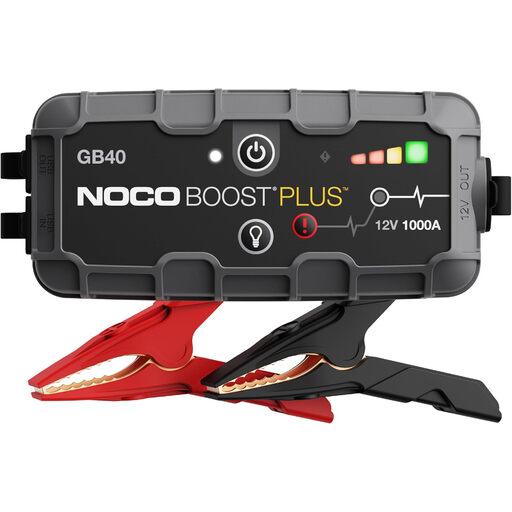
Why It Stands Out: The Noco jump starter GB40 is a very compact and lightweight device, distinguished by its patented safety technology. Weighing just 1.1 kg, it fits easily into the glove box.
Pros:
Who It's For: Drivers of small to mid-size cars (petrol or diesel), motorcyclists, and boat owners looking for a reliable and extremely compact portable jump starter for emergencies.

Why It Stands Out: This model from WOLFBOX offers a very high peak current of 3000 A, making it ready for large engines. The 65W fast-charging function ensures the device itself is quickly ready for use again.
Pros:
Who It's For: Owners of SUVs, vans, motorhomes, or vehicles with large-displacement engines. Also ideal for users who value the ability to quickly recharge the jump starter itself.
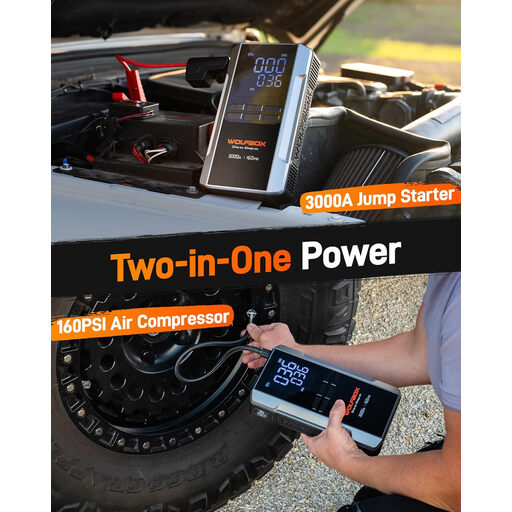
Why It Stands Out: This device combines the high power of the 3000A model with an integrated air compressor. It is the comprehensive emergency solution for breakdowns that go beyond a dead battery.
Pros:
Who It's For: For any driver looking for an all-in-one solution for the most common breakdowns. Especially practical for families, campers, and anyone who wants to be prepared for anything on long journeys or in remote areas.
The models presented here cover a broad spectrum of use cases. If you are looking for more specific solutions or complementary accessories, you can find more products in our category.
? Discover our full range of 12V Battery Cables and Jump Starters.
1. How often should you charge a jump starter power bank? It is recommended to check the device's charge level every 3 to 6 months and fully recharge it if necessary. Even when not in use, the battery will slowly discharge. Regular maintenance ensures the jump starter is ready to go in an emergency.
2. Can I use a jump starter to revive a deeply discharged battery? Many modern jump starters feature a "Boost" or "Override" function. This is specifically designed to start batteries whose voltage is so low that the device doesn't automatically detect them. The exact procedure can be found in the user manual of the respective device.
3. What is the difference between a jump starter for petrol and diesel engines? Diesel engines have a higher compression ratio and therefore require a significantly higher current to start (cranking current) than petrol engines of a comparable size, especially in cold temperatures. A jump starter for diesel engines must therefore be able to deliver a higher peak current (Amps). Always check the manufacturer's specifications for the maximum engine size for both fuel types.