
Lieferung heute & morgen

Qualitätsgarantie

Willkommens-Angebote freischalten: KOSTENLOSE Lieferung | Bis zu 80 % RABATT | Kostenlose 30-Tage-JoyPlus-Testphase
App herunterladen
A dead car battery is more than just an annoyance—it means lost time, missed appointments, and often, a dependency on roadside assistance services. A jump starter power bank, also known as a battery booster or 12V jump starter, promises a quick and straightforward solution. However, the market is flooded with devices boasting impressive numbers and grandiose promises. Many drivers invest in a unit that fails at the critical moment.
As your Joybuy Product Recommendation Officer, I'm here to help you see through the marketing hype. We'll focus on the facts so you can make an informed decision and avoid the most common pitfalls.
Before we look at recommended models, let's understand the typical issues that lead to a poor purchase.
To find the right portable jump starter, you should focus on three verifiable criteria instead of marketing buzzwords.
The peak current (Peak Amps, A) is a starting point, but the crucial question is: What engine displacement is the device designed for? Pay close attention to the manufacturer's specifications for compatibility with petrol and diesel engines. A good rule of thumb:
The function as a power bank for your car is a practical added benefit. Instead of just looking at the mAh rating, check the available USB ports. A modern USB-C port with Power Delivery (PD) can not only fast-charge your smartphone but also allows for rapid recharging of the jump starter itself. Models with a built-in jump starter with compressor offer additional utility for on-the-go tyre maintenance.
A high-quality battery booster must have intelligent protection electronics, usually integrated into the jumper cable clamps. Look for the following safety features:
Here are some recommendations tailored to different needs and vehicle types.
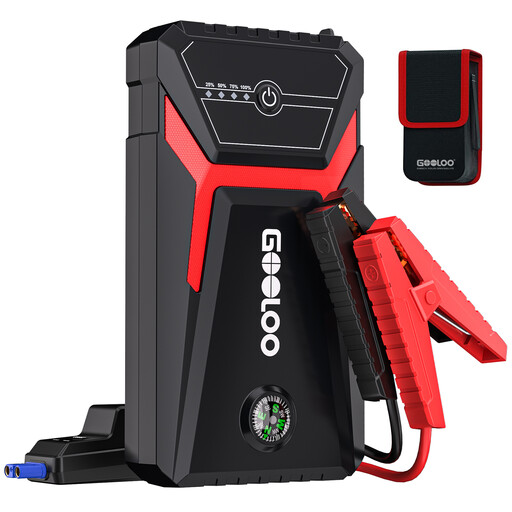
Why This Fits Their Persona: Ideal for drivers of compact and mid-size cars who need a reliable and straightforward solution for emergencies. The device provides enough power for most common petrol and smaller diesel engines without making you pay for unused capacity.
It avoids the "peak current bluff" by offering a realistic 1500A output for engines up to 6.0L petrol and 4.0L diesel, which is more than sufficient for most daily-driver vehicles in the UK and Europe.
Compact design and 10 built-in safety features, including reverse polarity protection. The dual USB outputs make it a useful power bank.
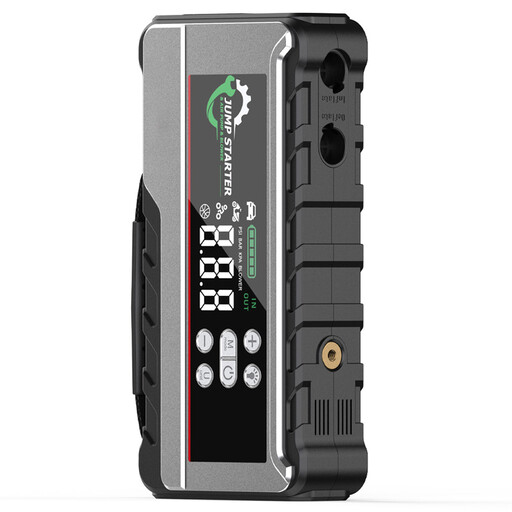
Why This Fits Their Persona: Perfect for families, campers, and anyone who values an all-in-one device for the road. It combines a powerful jump starter with a practical compressor for tyres and a blower for air mattresses.
This device sidesteps the misleading capacity trap by offering genuine added value with PD65W Fast Charging. It can not only be recharged quickly but can also power laptops on the go.
5-in-1 functionality: Car Jump Starter, 150 PSI Compressor, Air Blower, PD65W Power Bank, and LED Light. High practical value that eliminates the need to buy multiple separate devices.
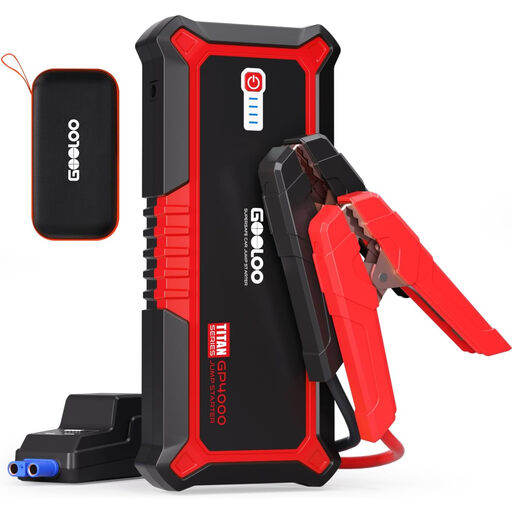
Why This Fits Their Persona: Designed for owners of SUVs, vans, RVs, or vehicles with large-displacement diesel engines. Anyone needing maximum starting power and reliability, even in the cold, will find the performance reserves they need here.
This model avoids the insufficient power trap. With 4000A of peak current and a design rated for diesel engines up to 10.0L, it delivers the necessary force even when weaker devices would give up.
Massive power reserves and a "BOOST" function for deeply discharged batteries. The robust, all-metal clamps and durable housing are built for longevity.
We have compiled a complete, real-time updated list of products that fully meet these strict selection criteria and UK/EU safety regulations.
Even when not in use, the battery will slowly lose its charge. Most manufacturers recommend fully charging the power bank every 2 to 3 months. This ensures it's ready for an emergency and extends the life of the internal battery. Modern devices with low self-discharge rates may allow for longer intervals.
Yes, but it's crucial to choose the right model. Diesel engines require a significantly higher cranking current than petrol engines due to their higher compression. When selecting a device, pay specific attention to the manufacturer's stated maximum engine displacement for diesel engines. A unit rated for a 6.0L petrol engine might struggle with a 2.0L diesel engine, especially in cold temperatures.
Modern, high-quality jump starters are equipped with intelligent safety cables (Smart Clamps). These contain protection circuits against reverse polarity, short circuits, over-voltage, and overheating. As long as you use a device with these certified safety mechanisms and follow the manufacturer's instructions, the risk of damaging your vehicle's electronics is minimal. You should absolutely avoid devices without these certified protection features.