
Lieferung heute & morgen

Qualitätsgarantie

Willkommens-Angebote freischalten: KOSTENLOSE Lieferung | Bis zu 80 % RABATT | Kostenlose 30-Tage-JoyPlus-Testphase
App herunterladen
A dead car battery is more than just a nuisance—it can derail your plans and leave you stranded at the worst possible moment. A modern jump starter, also known as a battery booster, promises a quick and straightforward solution. However, the market is flooded with devices boasting impressive numbers and bold claims. As your Joybuy Product Recommendation Officer, I'm here to help you separate the wheat from the chaff and navigate the common purchasing traps.
Many buyers invest in a device that fails in an emergency or is overkill for their needs. Pay close attention to these three common pitfalls:
jump starter power bank function.portable jump starter is only useful if it's ready to go in an emergency. Inexpensive models can self-discharge within a few months, rendering them useless when you need them most.To make an informed decision, you should focus on the parameters that are crucial for reliable performance. Marketing buzzwords are secondary.
The peak current (Peak Amps) is the maximum energy the device can deliver for a fraction of a second. More important for the starting process, however, is the cranking current (Cranking Amps), which must be sustained for several seconds to turn the engine over.
A simple rule of thumb for guidance:
The capacity, specified in milliamp-hours (mAh), determines how many start attempts are possible and how many times you can charge your smartphone or tablet. A higher capacity means more reserves, but often also a larger and heavier device. Check the specifications for the USB outputs (e.g., QC3.0 for fast charging) if the power bank function is important to you. Every device featured here is a 12V jump starter, suitable for all common cars, motorcycles, and many boats.
A modern portable jump starter should have comprehensive protection circuits. The following are essential:
Also, look for sturdy clamps and solid housing construction. A device designed for emergencies must be able to withstand some rough handling in the trunk.
Instead of presenting an overwhelming list, we have selected models that meet specific user profiles and avoid the pitfalls mentioned earlier.
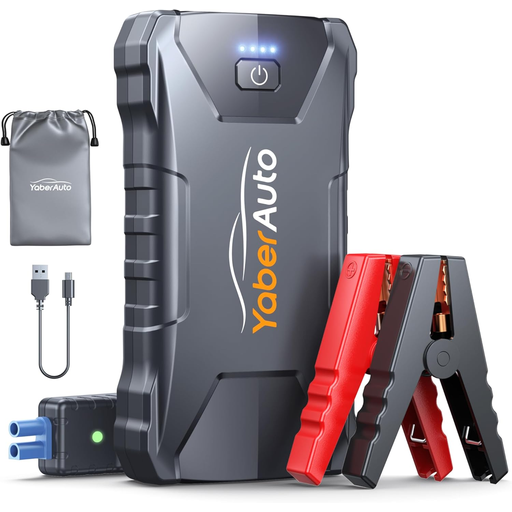
Why This Fits Their Persona: Ideal for drivers of small and compact cars who need an extremely lightweight and space-saving solution. At just 340g, this device fits easily into the glove compartment or even a motorcycle bag, while still offering enough power for most petrol engines.
Avoids the pitfall of an oversized purchase. The power is realistically rated for petrol engines up to 7.0L and diesel up to 5.5L, which is more than enough for most cars, without making you pay for unused power.
Extremely compact and lightweight: At 0.34 kg, it's one of the most portable devices available. Comprehensive safety features: Offers 10 protection mechanisms, including reverse polarity protection.
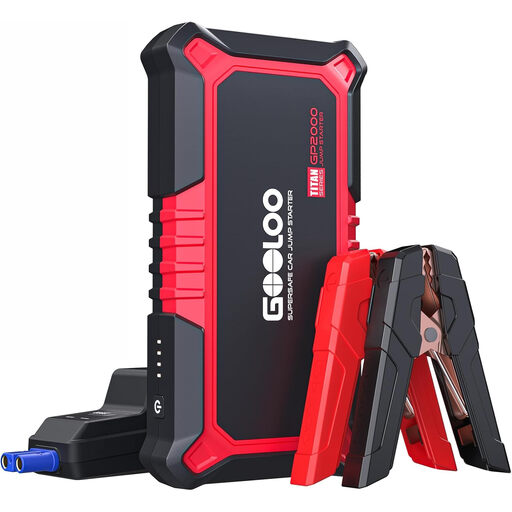
Why This Fits Their Persona: A balanced choice for drivers of larger vehicles like SUVs, vans, or diesel sedans. With 2000A peak current, it offers enough reserve power for engines up to 8.0L petrol or 6.0L diesel, without the bulk of a professional-grade unit.
The performance specs are realistic and cover a wide range of common vehicles. The power bank function is made practical with two USB ports, one of which is fast-charging capable, making it more than just a marketing gimmick.
Strong All-Around Performance: Reliably starts even larger engines. Long Standby Time: Up to 24 months according to the manufacturer, minimizing worries about self-discharge.
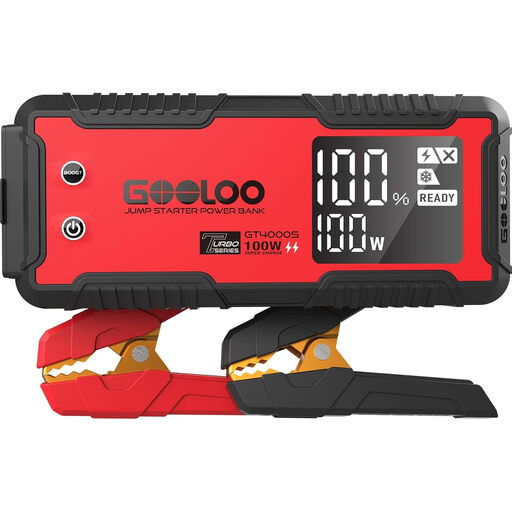
Why This Fits Their Persona: For owners of RVs, pickup trucks, boats, or vehicles with large-displacement diesel engines (up to 10.0L). This device offers massive power reserves and extremely fast recharging, making it attractive for frequent use.
Here, the high 4000A peak current isn't a marketing gimmick but a necessity for the target audience. The 100W fast charging (in both directions) is a tangible advantage that drastically reduces waiting time and bypasses the slow-recharging trap.
Enormous Power: Reliably starts almost all 12V vehicle engines. 100W Two-Way Fast Charging: Fully charges the device in about 1.2 hours and can even serve as a fast charger for laptops.
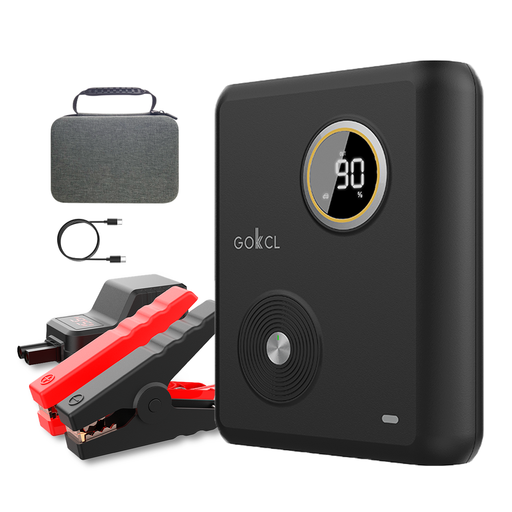
Why This Fits Their Persona: For users who prioritize maximum operational safety and minimal maintenance. Ideal for infrequent drivers or owners of secondary and seasonal vehicles (RVs, boats) where the device may sit unused for long periods but must work instantly in an emergency.
Directly addresses the self-discharge trap. According to the manufacturer, the sodium-ion technology allows for a standby time of up to 5 years and extremely low self-discharge. The problem of a dead helper in an emergency is solved here through technology.
Innovative Battery Technology: Extremely long standby time and high cycle life (≥ 6,000 cycles). Wide Temperature Range: Operates reliably from -40°C to 80°C and can be safely stored in the car.
We've compiled a complete, up-to-date list of products that fully meet these strict selection criteria and all relevant safety regulations.
This heavily depends on the model and the battery technology used. Standard lithium-ion devices should ideally be checked every 3 to 6 months and recharged as needed to maintain battery health. Models with very low self-discharge, such as those with sodium-ion batteries, require much less frequent charging according to manufacturer specifications. Always follow the manufacturer's recommendations.
Yes, many modern jump starters feature a "Boost" or "Override" function. If the vehicle's battery is so discharged that the jump starter doesn't automatically detect it (often below 2-3 volts), this function can be manually activated to supply power to the clamps anyway. This feature should be used with caution and exactly according to the instructions, as it often bypasses some of the automatic safety checks.
Not necessarily. A cranking and peak current that matches your engine is what's crucial. An oversized device for a small car's engine offers no practical advantage during the starting process but is typically more expensive, larger, and heavier. Choose a device whose performance class matches your largest vehicle for an efficient and cost-effective solution.