
Lieferung heute & morgen

Qualitätsgarantie

Willkommens-Angebote freischalten: KOSTENLOSE Lieferung | Bis zu 80 % RABATT | Kostenlose 30-Tage-JoyPlus-Testphase
App herunterladen
A dead car battery is more than just an annoyance—it means wasted time, missed appointments, and the stress of being stranded, especially in the cold or in remote locations. While a portable jump starter, also known as a jump starter power bank, promises a quick and self-sufficient solution, the market is flooded with devices making exaggerated claims. Many drivers invest in a jump starter only to find it's useless at the critical moment.
As your Joybuy Product Recommendation Officer, I'm here to help you identify the common pitfalls and make an informed decision. We'll focus on the facts so you can find a reliable device that's genuinely compatible with your vehicle.
Marketing claims can be misleading. Pay close attention to these three points to avoid a bad purchase:
To make the right choice, you should focus on verifiable technical data. These three factors are crucial for performance and safety:
The current required to start your vehicle depends directly on its engine.
The capacity, measured in milliampere-hours (mAh), is primarily relevant for its function as a jump starter power bank. A higher capacity means you can charge your smartphone, tablet, or GPS device more times. For the jump-starting function alone, it is less meaningful than the quality of the battery cells and the efficiency of the electronics. However, a good device should offer enough capacity to allow for multiple start attempts without needing an immediate recharge.
A modern portable car starter must offer comprehensive safety features. Look for the following protection mechanisms, which are often implemented via a "smart clamp":
The clamps themselves should be robust, made of solid material, and have a strong spring for a secure connection.
Based on objective criteria, we have identified several models that offer a suitable solution for different user profiles.
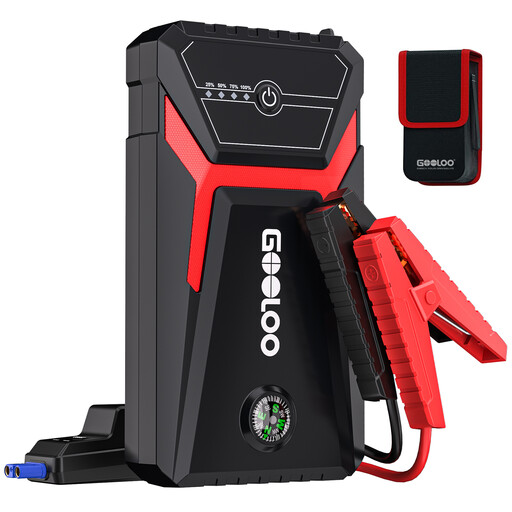
Why it's a good fit: Ideal for owners of small to mid-size cars with gasoline or smaller diesel engines. It provides a solid set of essential features for emergencies without breaking the bank.
Instead of just advertising a high peak current, the manufacturer specifies clear engine size limits (6.0L Gas / 4.0L Diesel). Additionally, it integrates 10 safety protection features according to the manufacturer, which minimises the risk of damage from incorrect use.
Excellent value for a comprehensive set of safety features. The compact design and included carrying case make it easy to store in the vehicle.
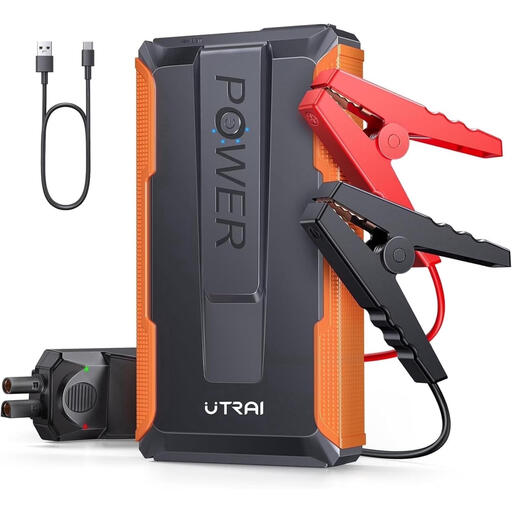
Why it's a good fit: A powerful all-round solution for drivers of SUVs, vans, or larger diesel passenger cars. Its robust construction and reliable power bank function make it a practical companion for daily use and longer trips.
This model features a smart clamp that not only protects against reverse polarity but also actively alerts the user to connection errors with an audible alarm and an LED indicator. The fire-resistant and shock-proof casing also addresses concerns about long-term durability.
High starting power (2000A Peak) for engines up to 7.5L Gas/5.5L Diesel. Charging via a modern USB-C port is convenient and up-to-date.
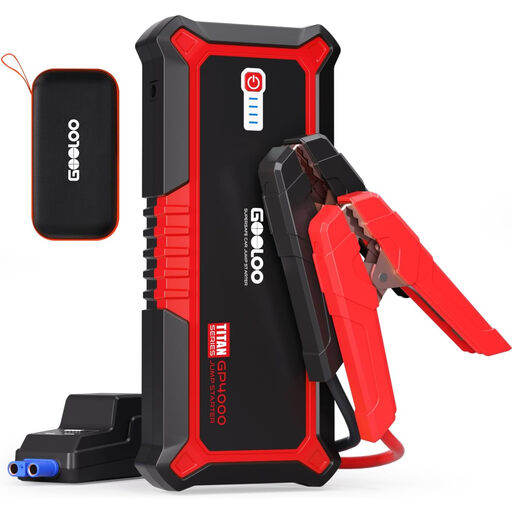
Why it's a good fit: For drivers of vehicles with large displacement engines, such as vans, RVs, or high-performance SUVs. It offers maximum power reserves that ensure a reliable start even in extremely cold temperatures or with deeply discharged batteries.
This device delivers very high, verifiable power (4000A Peak for all gasoline and up to 10.0L diesel engines), thus avoiding the trap of empty promises. The "BOOST" function for deeply discharged batteries is a distinct feature often missing or unreliable in cheaper models.
Massive power reserves for maximum reliability. The robust construction and high-quality metal clamps are designed for durability and frequent use.
We have compiled a complete, up-to-date list of products that fully meet these strict selection criteria and rigorous safety standards.
To preserve the battery's lifespan and ensure the device is ready in an emergency, it is recommended to fully charge it every 3 to 6 months, even if it hasn't been used. High-quality models have a low self-discharge rate, but regular maintenance is essential.
When used correctly and with a device that has the necessary safety features (especially reverse polarity and short-circuit protection), the risk of damage is extremely low. These protection mechanisms prevent the most common user errors. Always read the manufacturer's user manual before the first use.
Not necessarily. An extremely high peak current is useless if it cannot be sustained for the duration of the jump-start process or if the safety features and clamp quality are subpar. It is more important that the device's power matches your vehicle's engine size and type (gasoline/diesel) and that it has reliable safety features.