
Lieferung heute & morgen

Qualitätsgarantie

Willkommens-Angebote freischalten: KOSTENLOSE Lieferung | Bis zu 80 % RABATT | Kostenlose 30-Tage-JoyPlus-Testphase
App herunterladen
A dead car battery in winter or a flat tire on your way to a holiday—these breakdowns are more than just an annoyance. They cost time, stress, and often money for a roadside assistance service. A jump starter with a compressor promises to be an all-in-one solution for these exact problems. However, the market is flooded with devices making lofty promises. As your Joybuy Product Recommendation Officer, I'm here to help you separate the wheat from the chaff and avoid the common purchasing pitfalls.
Many devices look powerful at first glance but prove to be inadequate in practice. Pay close attention to these three points to avoid a bad investment:
To find the right device, don't be dazzled by marketing terms. Instead, focus on verifiable technical specifications.
The most important question is: Does the car jump starter match your engine?
A modern device often doubles as a jump starter power bank. The capacity determines how many jump-start attempts are possible or how many times you can charge your smartphone. As mentioned, a value in watt-hours (Wh) is the more reliable metric here. Also, check the available ports (e.g., USB-A, USB-C) to ensure they are compatible with your electronic devices.
A good portable car compressor is defined by two key values:
Not every driver needs the same car emergency kit. Your choice should be based on your vehicle, driving profile, and personal requirements.

Why This Fits Their Persona: Ideal for drivers of large vehicles like SUVs, vans, or diesel cars who are looking for a single, powerful solution for any conceivable emergency. This device offers the necessary power and versatility for maximum self-sufficiency.
This unit avoids the pitfall of being underpowered. With 4500A of peak current and rated for engines up to 9.0L gas / 8.0L diesel, it offers real performance reserves. The 150 PSI compressor is designed for practical, real-world use.
5-in-1 functionality (jump starter, compressor, power bank, LED light) and 10 built-in safety protections for secure operation.
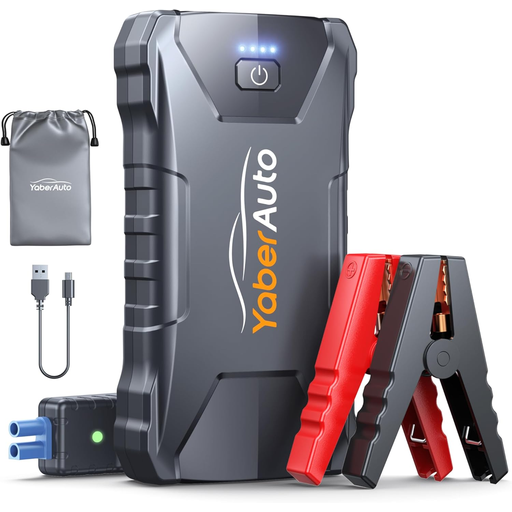
Why This Fits Their Persona: Perfect for drivers of standard passenger cars who need a reliable and, above all, compact jump starter. Anyone who already owns a separate compressor or values a minimal footprint in the glove box will find this a focused solution.
This device focuses on its core competency: jump-starting. It avoids the trap of a weak add-on compressor, instead delivering solid starting power (2000A) for most common engines (up to 7.0L gas).
Extremely compact and lightweight (0.340 kg), it fits easily in the glove compartment. Also serves as a 13800 mAh power bank.
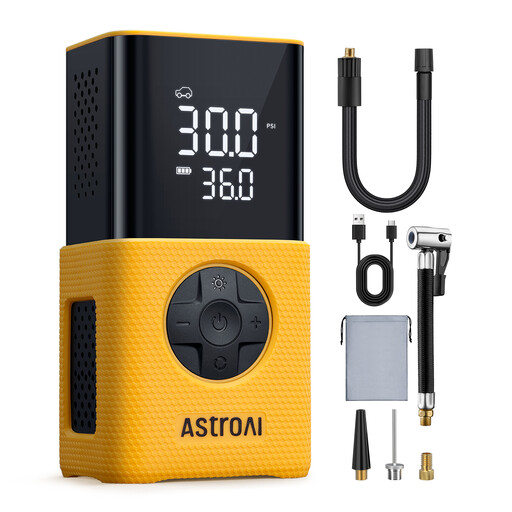
Why This Fits Their Persona: For anyone who primarily needs a reliable, cordless solution for checking and correcting tire pressure on a car, motorcycle, or bicycle. If you don't need a jump-start function, this is a specialized and highly functional tool.
This device is no compromise. As a dedicated compressor, it is designed to do one job exceptionally well: inflate tires quickly and accurately. It bypasses the pitfall of an underperforming combo unit.
Cordless and highly portable (460 g). Features a digital display with precise pressure measurement and an auto-shutoff function for easy handling.
We have compiled a complete, up-to-date list of products that fully meet these strict selection criteria and all relevant safety regulations.
To maintain battery life and ensure the device is ready in an emergency, it is recommended to fully charge it every 3 to 6 months, even if it hasn't been used. Most devices have a battery level indicator.
That depends on the device's power output. Check the manufacturer's specifications for suitability with diesel engines and the maximum displacement (e.g., "suitable for diesel up to 8.0L"). Devices with high peak and cranking currents, like the BUTURE model mentioned above, are specifically designed for such demanding tasks.
Yes, modern devices are equipped with comprehensive safety features. The most important is reverse polarity protection. It prevents damage to the unit and the vehicle's electronics if you accidentally connect the clamps to the wrong battery terminals. An audible or visual alarm will alert you in this case. Nevertheless, always read the user manual carefully before the first use.