
Lieferung heute & morgen

Qualitätsgarantie

Willkommens-Angebote freischalten: KOSTENLOSE Lieferung | Bis zu 80 % RABATT | Kostenlose 30-Tage-JoyPlus-Testphase
App herunterladen
A dead car battery or a flat tire always happens at the worst time—usually at night, in bad weather, or in a remote location. A jump starter with a compressor promises to be a reliable solution for both problems. But the market is flooded with devices making grandiose claims. Many drivers invest in one of these multi-function devices only to find it doesn't deliver the expected performance in an emergency.
As your Joybuy Product Recommendation Officer, I'll help you separate the wheat from the chaff. We'll highlight the most common pitfalls and show you which technical specifications truly matter, ensuring your car emergency kit works when it counts.
Many devices look convincing at first glance, but the details often hide flaws that render them useless. Pay close attention to these three points to avoid a bad buy:
To make the right choice, don't be dazzled by marketing terms; focus on the hard facts. Here are the three most important technical features you need to check before buying.
The most important value for a car battery jump starter is the starting current, not the peak current. This value indicates how much current the device can consistently deliver over several seconds.
A good portable car compressor is characterized by two key metrics:
The capacity of the internal battery, specified in milliampere-hours (mAh), determines how many times you can jump-start your car or charge your phone. A value of 8,000 mAh or more is a solid baseline. For frequent drivers or campers, models with 15,000 mAh or more are a worthwhile option.
Also, look for integrated protection circuits. The following are essential:
These features prevent damage to the device and your vehicle's electronics, making it safe for non-experts to use.
Based on the criteria above, we have identified a few models that represent a suitable solution for specific user groups.
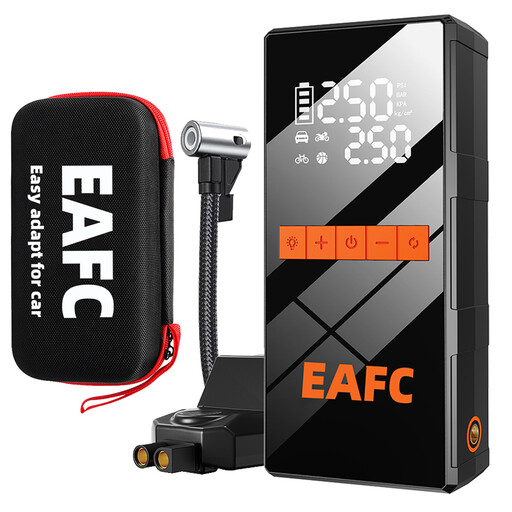
Why This Fits Their Persona: This 4-in-1 device offers a solid basic setup for drivers of gasoline engines up to 4.0L and smaller diesel vehicles up to 2.0L. It's a pragmatic all-in-one solution for everyday breakdowns without breaking the bank.
With a 600A starting current and clear specifications for engine sizes, it avoids the trap of unrealistic performance claims for standard passenger cars. The 150 PSI compressor with auto-shutoff also prevents over-inflating tires.
Compact 4-in-1 design (jump starter, compressor, power bank, LED light). Smart safety clamps with reverse polarity protection.

Why This Fits Their Persona: Anyone driving a large vehicle with a diesel engine (up to 8.0L) or a large-displacement gasoline engine (up to 9.0L) needs significant power reserves. This model is designed for demanding starting procedures and offers reliability even in extreme temperatures.
It bypasses the pitfall of insufficient starting current by providing high power specifically for large engines. The honeycomb cooling technology also addresses the problem of overheating during power-intensive use.
High peak current of 4500A for large engines. 10-stage protection mechanism and a wide operating temperature range (-20°C to 60°C).
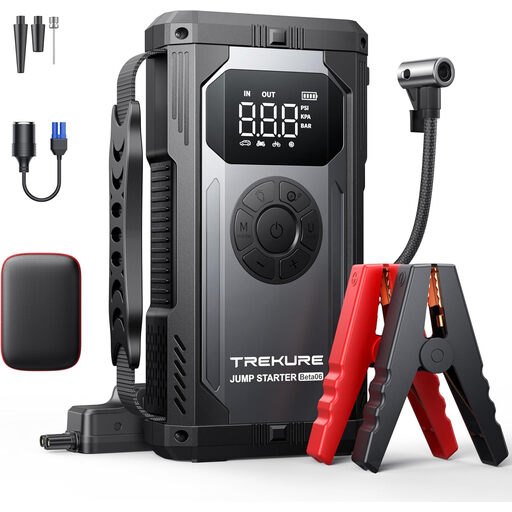
Why This Fits Their Persona: For users who travel off the beaten path, a self-sufficient power supply is crucial. This device not only serves as a jump starter but also, thanks to its high battery capacity and DC output, as a power source for coolers or other 12V devices.
It avoids the unreliable battery trap with a high capacity of 23,800 mAh. The additional DC cigarette lighter adapter makes it a true mobile power station, not just a simple jump starter.
Very high starting power (5500A) for almost all vehicles. Large 23,800 mAh battery and a 12V DC output for powering camping accessories.
We have compiled a complete, up-to-date list of products that fully meet these strict selection criteria and safety standards.
To ensure it's always ready, it's recommended to fully charge the device every 3 to 6 months, even if it hasn't been used. While lithium-ion batteries have a low self-discharge rate, they still lose charge over time. Regular charging maintains the battery's lifespan.
Yes, but it's crucial to choose a model with a sufficiently high starting current. Diesel engines require significantly more power than gasoline engines. Pay attention to the manufacturer's specifications for maximum engine displacement for diesel vehicles and, when in doubt, always opt for the more powerful device.
Modern jump starters feature smart clamps with integrated safety functions. Typically, a green LED light on the cables indicates a correct connection. In case of reverse polarity (red and black cables swapped), a red warning LED will light up, and the device will not supply power, preventing any damage.