
Lieferung heute & morgen

Qualitätsgarantie

Willkommens-Angebote freischalten: KOSTENLOSE Lieferung | Bis zu 80 % RABATT | Kostenlose 30-Tage-JoyPlus-Testphase
App herunterladen
A dead car battery on a cold morning or a flat tire on your way to a holiday—these mishaps are more than just annoying. They cost time, stress, and often a lot of money for roadside assistance. A jump starter with a compressor promises to be the solution, acting as a multifunctional car emergency kit. But the market is flooded with devices making bold promises, many of which turn out to be useless in practice.
As your Joybuy Product Recommendation Officer, I'm here to help you separate the wheat from the chaff. Instead of falling for marketing hype, we'll focus on the facts. In this guide, I'll show you the three most common traps to avoid when buying and which technical specifications really matter, so you can make an informed decision.
Many devices look convincing at first glance but fail in an emergency due to fundamental flaws. Pay close attention to these three points to avoid a bad purchase:
You don't need to be a technician to make the right choice. Focus on these three verifiable metrics to objectively assess a device's performance.
The most important function is jump-starting. The required power depends directly on your vehicle's engine.
A useful compressor must meet certain minimum requirements.
The versatility as a power bank with jump starter and compressor depends on the battery and its ports.
Based on these objective criteria, we have identified several models that represent a suitable solution for different user profiles.
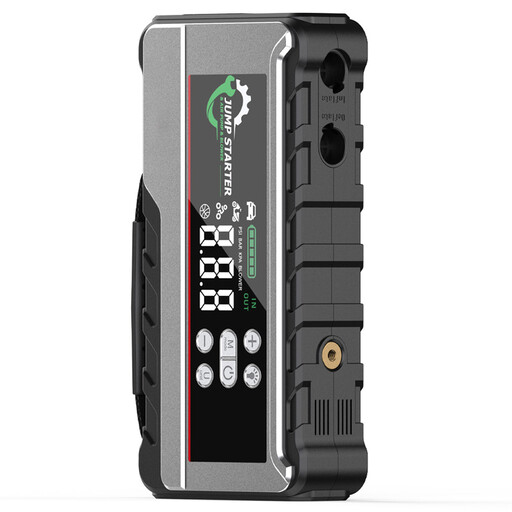
Why This Fits Their Persona: Ideal for families, campers, and anyone who wants a single, powerful device for all eventualities. It combines a jump starter, compressor, and a laptop-capable power bank.
The compressor delivers up to 10 Bar / 150 PSI, making it suitable for car tires. The PD65W USB-C port is modern and charges laptops quickly, setting it apart from devices with outdated technology.
True multifunctionality: High peak current of 3000A, a powerful compressor, and a fast PD65W charging function for laptops in one robust package.
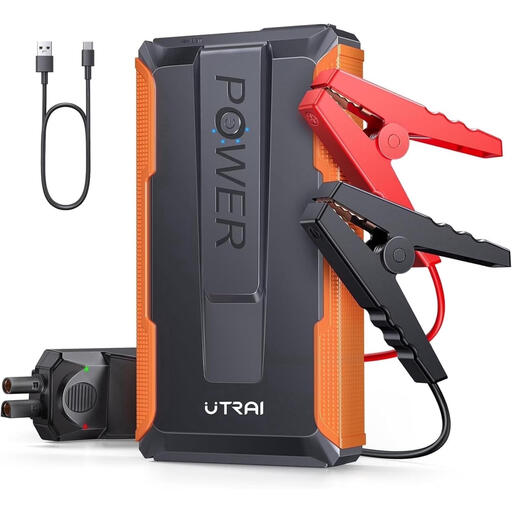
Why This Fits Their Persona: Perfect for owners of large-displacement vehicles (SUVs, vans, diesels) or for drivers in cold regions where reliable starting power is the top priority.
This device avoids the "weak engine" trap by focusing on one core function: high starting power. Its suitability for diesel engines up to 5.5L is a clear indicator of its power reserves, unlike models with exaggerated amp ratings.
High peak current of 2000A for reliable starts on large engines. The smart clamps with protection features minimise user error.
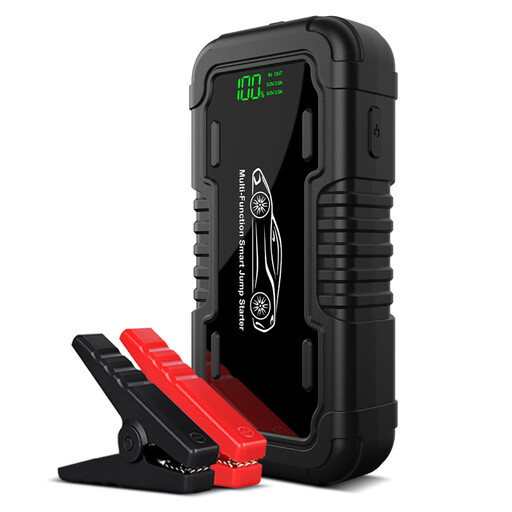
Why This Fits Their Persona: A balanced choice for drivers of standard passenger cars who need a reliable, compact portable jump starter and a capable power bank for their mobile devices.
This model avoids the "slow charging trap" with its QC3.0 18W fast-charging output. The LCD display also clearly shows the battery level, so you won't be caught off guard by a dead booster.
A good balance of 2000A peak current, a large 20,000 mAh battery capacity, and modern fast-charging for smartphones and other devices.
We have compiled a complete, up-to-date list of products that fully meet these strict selection criteria and German safety regulations.
Even when not in use, the battery will slowly discharge. It is recommended to check the charge level every 2 to 3 months and recharge the device if necessary. Most manufacturers advise recharging at least every 3 months to ensure full performance in an emergency. Store the device in a place with moderate temperatures and avoid extreme heat or cold in the car.
Yes, it is possible, but it requires a device with sufficiently high peak and cranking current. Diesel engines have a higher compression ratio and, especially in the cold, require significantly more energy to start. Be sure to check the manufacturer's specifications for compatibility with engine displacement and type (e.g., "suitable for diesel engines up to 5.5L"). This is a crucial criterion when selecting a diesel jump starter.
Modern devices are equipped with numerous safety features. Look for models with "smart clamps." These protect against the most common user errors such as reverse polarity (connecting the positive and negative terminals incorrectly), short circuits, overheating, and overvoltage. An audible signal or an LED indicator will warn you of an incorrect connection. Nevertheless, always read the user manual carefully before the first use.