
Lieferung heute & morgen

Qualitätsgarantie

Willkommens-Angebote freischalten: KOSTENLOSE Lieferung | Bis zu 80 % RABATT | Kostenlose 30-Tage-JoyPlus-Testphase
App herunterladen
A flat car battery often strikes at the worst possible moment: before an early shift, in a supermarket car park, or during a trip with a motorhome and trailer. A jump starter can be a practical addition to your car emergency kit in these situations. However, it won't replace a damaged battery and isn't suitable for every vehicle.
Before buying a jump starter power bank, drivers shouldn't just focus on a high amp rating. What really matters is the correct 12-volt compatibility, the permissible engine size, the safety features, and how well it can be stored.
Figures like 2,000 A, 4,000 A or 8,000 A usually refer to the maximum peak current under certain conditions. On their own, they don't tell you whether a device can reliably support a large diesel engine. You should also check the manufacturer's specifications for:
A car booster for a small car has to meet different requirements to a mobile jump starter for an SUV, van or motorhome.
A high capacity doesn't automatically make a device a suitable 12V jump starter. Capacity mainly describes the stored energy and is relevant for the power bank function. For starting an engine, what counts is the peak current, cable quality, clamps and electronic control.
Someone who mainly wants to charge a smartphone may need a different balance of size and capacity compared to someone looking for a jump starter for petrol and diesel engines.
An LED light, USB ports and a tyre compressor can be useful in an emergency. However, they increase the size, weight and sometimes the maintenance required. With a jump starter that includes a compressor, buyers should also pay attention to hose length, pressure unit, automatic shut-off and the permitted operating time.
Most portable jump starters in this selection are designed for 12-volt vehicles. Depending on the model, this can include cars, motorcycles, SUVs, vans, ATVs or motorhomes. A 24-volt system for heavy lorries is not automatically compatible.
Compare the information on the product with your own vehicle:
A mobile jump starter should have a clear connection indicator and protective functions. The following are particularly important:
Protective features reduce the risk of incorrect operation, but they don't replace checking the terminals. Red goes to the positive terminal, black to the negative terminal or to the earthing point specified by the manufacturer.
Lithium batteries lose charge over long periods of inactivity. Many manufacturers recommend recharging the battery booster regularly, for example every three to six months. Check the charge level before a long trip and store the device in a dry place, protected from extreme heat.
A booster should not be used if the casing is damaged, the battery is swollen, or the vehicle battery is visibly leaking, damaged or frozen.
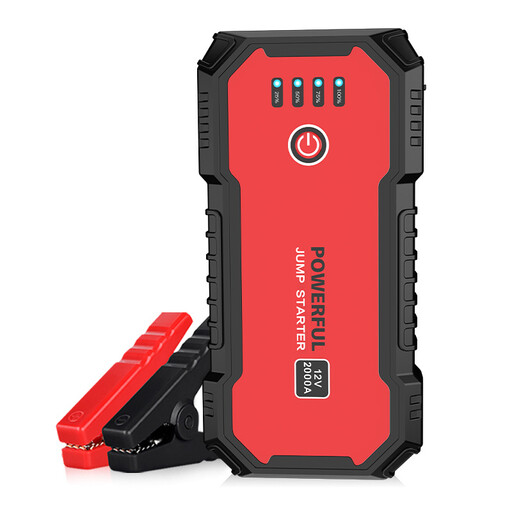
Why this product fits the profile: For cars, vans, SUVs and motorcycles when you need a compact emergency jump starter for your car with a power bank function.
The specifications mention 12-volt vehicles as well as separate usage ranges for petrol and diesel engines. This makes it easier to check compatibility before buying.
According to the product specifications: 1,500 A peak current, 14,000 mAh capacity, QC3.0 USB output and around 430 g weight.
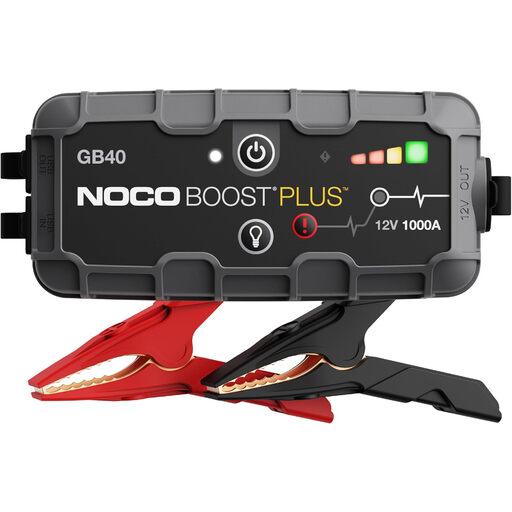
Why this product fits the profile: For drivers who value compact dimensions, defined protection technology and clearly described features.
The product description mentions UltraSafe technology with reverse polarity and spark-free connection, plus an IP65-certified housing.
According to the product specifications: up to 1,000 A peak current, up to 20 starting attempts per charge and an LED light with seven modes.
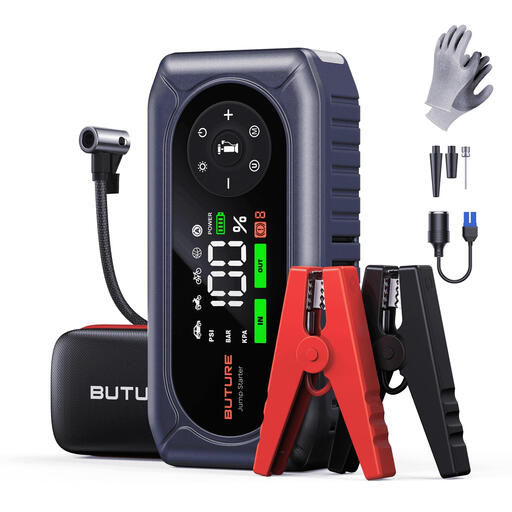
Why this product fits the profile: Suitable for travellers, campers and vehicle owners who want to combine jump starting, tyre inflation, light and power bank in one device.
The integrated pressure display, automatic shut-off and ten protective functions make the extra features more transparent than a simple marketing claim.
According to the product specifications: 4,500 A peak current, compressor up to 150 PSI, LCD display, four LED modes and support for petrol engines up to 9.0 litres.
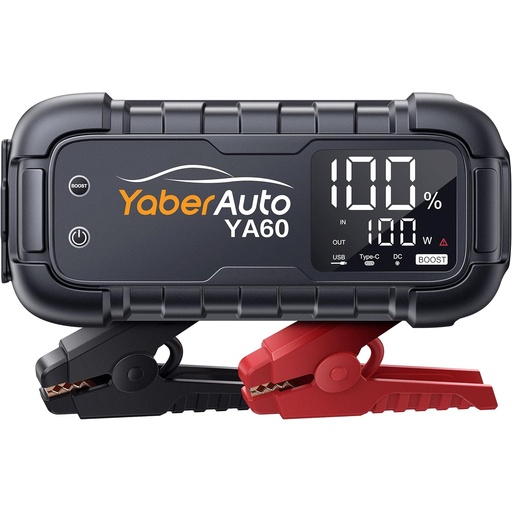
Why this product fits the profile: For larger 12-volt vehicles and users who also need fast charging and multiple outputs on the go.
The specifications state clear limits for petrol and diesel engines as well as ten protective functions. This makes it easier to match with an SUV, van or motorhome.
According to the product specifications: 8,000 A peak current, 65-watt two-way fast charging, 26,800 mAh, 150-watt DC output and a 600-lumen LED light.
We have put together a complete, regularly updated list of products that fully meet these strict selection criteria and the safety regulations in force in the EU.
Before starting, follow the instructions from the relevant manufacturer:
A jump starter is not intended for damaged, leaking or frozen batteries. If you are unsure or experience repeated starting problems, it is best to call roadside assistance or visit a qualified garage.
The actual lifespan depends on cell quality, charge cycles, temperature and storage. Recharge the device regularly according to the manufacturer's instructions and avoid consistently high temperatures inside the vehicle. Without knowing individual usage, it is not possible to give a reliable figure in years.
No. Always check the 12-volt system, engine type and capacity limit. A model suitable for up to 6.0 litres of petrol and 3.0 litres of diesel is not automatically suitable for a large diesel engine. Different requirements apply for 24-volt vehicles.
The energy needed for recharging is usually low compared to many breakdown costs. What matters more is the purchase price, a possible replacement battery and correct storage. Extra features such as a compressor or fast-charging ports can increase practical usefulness, but should match your actual needs.