
Lieferung heute & morgen

Qualitätsgarantie

Willkommens-Angebote freischalten: KOSTENLOSE Lieferung | Bis zu 80 % RABATT | Kostenlose 30-Tage-JoyPlus-Testphase
App herunterladen
A flat car battery always seems to happen at the worst possible moment: on the commuter car park, just before setting off on holiday, or during a night drive. A portable jump starter can be a practical alternative to a second vehicle or a breakdown service in these situations. However, jump starter power banks differ significantly in terms of starting current, engine compatibility, battery care and safety features.
The peak current stated on the packaging sounds impressive at first. But when choosing, it's not just the amp rating that matters – you also need to check the manufacturer's stated suitability for petrol and diesel engines. For example, a device with 1,500 A might be intended for petrol engines up to 6.0 litres and diesel engines up to 3.0 litres. A larger SUV, van or diesel vehicle may need a model with higher reserves.
Important: These figures refer to each manufacturer's product data. They are not a substitute for checking your own vehicle handbook.
A high capacity in mAh does not automatically make a power bank for car batteries a stronger jump starter. Capacity mainly describes how long USB outputs or other devices can be powered. For starting the engine, the peak current, cable quality and vehicle compatibility are what really count.
Reverse polarity, short circuits, overheating and overcharging are among the relevant risks when connecting to a vehicle battery. That's why a car jump starter should have intelligent protection features and clearly marked clamps. Storage is also important: lithium batteries should not be exposed to prolonged high heat inside a closed vehicle. Depending on the model, recharging every two to six months is recommended.
Compare three figures before you buy:
For many smaller cars, a compact 12V battery booster model is sufficient. For larger diesel engines or frequent use, devices with 3,000 A or more can make sense. A jump starter is generally designed only for 12V electrical systems. 24V systems and high-voltage batteries in electric vehicles are not automatically compatible.
The clamps must sit securely on the battery terminals. Look for:
Before attempting to start, connect the red clamp to the positive terminal and the black clamp to the negative terminal. The exact order and maximum cranking time depend on the instruction manual. Short starting attempts with a cooling pause in between are often recommended.
Many devices also serve as a jump starter power bank. USB-A and USB-C ports can charge smartphones, tablets or other small devices. An LED light with constant, SOS and flash modes is useful if you break down in the dark.
A jump starter with compressor also combines a mobile air pump. Check the maximum pressure, delivery rate, auto shut-off and recommended rest period. The figure "150 PSI" describes the maximum pressure, not necessarily the speed of inflating a car tyre.
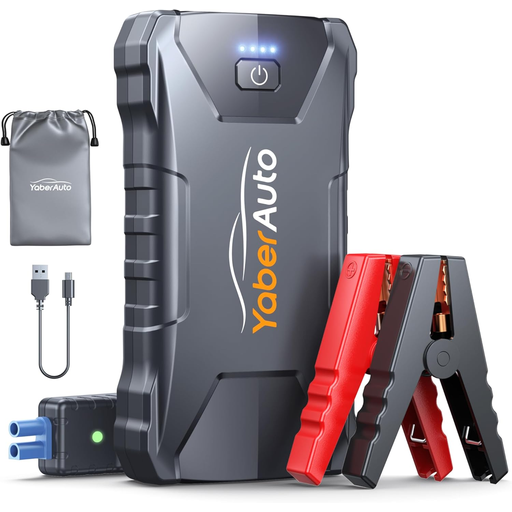
Why this product suits the profile: This compact device is designed for 12V vehicles and, according to the product specifications, is suitable for petrol engines up to 7.0 litres and diesel engines up to 5.5 litres. The 13,800 mAh capacity also supports mobile devices.
The details on engine size, 12V system and ten protection features make it easier to check compatibility before buying.
USB output, USB-C input, LED light with three modes and a stated weight of 0.34 kg.
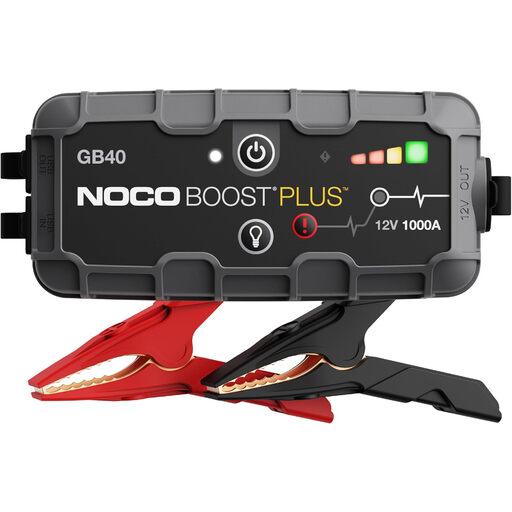
Why this product suits the profile: This model is designed as compact emergency equipment and, according to the product specifications, is intended for petrol engines up to 6.0 litres and diesel engines up to 3.0 litres.
The stated UltraSafe technology includes reverse polarity protection and a spark-proof design when connected correctly.
IP65-rated housing, 1.1 kg weight, USB charging function and LED torch with seven modes according to the manufacturer's description.
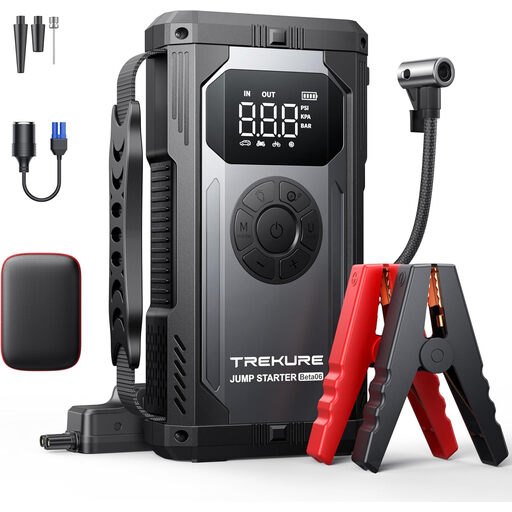
Why this product suits the profile: This device combines a car jump starter and tyre inflator. According to the product specifications, it is designed for petrol and diesel engines up to 10.0 litres.
The display, automatic compressor shut-off and ten protection features make the intended procedures clearer.
150 PSI compressor, 23,800 mAh battery capacity, USB outputs and 12V output for compatible accessories.
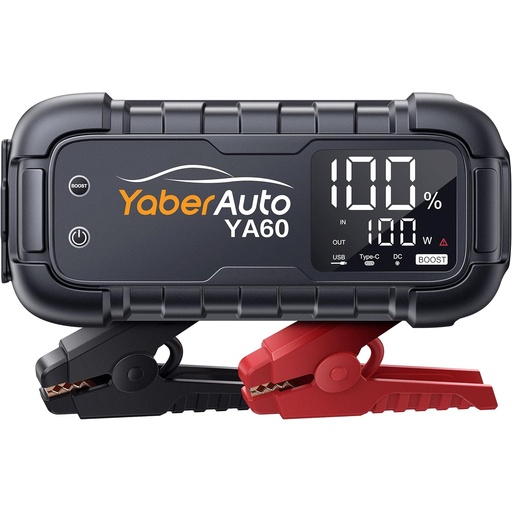
Why this product suits the profile: The combination of 8,000 A peak current, 65W USB-C and 150W DC output is aimed at users who want to power multiple devices while camping, travelling or in a van.
The product specifications state engine limits up to 12.0 litres for diesel as well as ten protection features, so you can check the scope of use in advance.
26,800 mAh battery, 65W fast charging, 600-lumen light and 150W DC output according to the product description.
A diesel jump starter should not be used on a damaged, leaking or frozen battery. If you can see visible damage, professional breakdown assistance is the safe option.
We've put together a complete, regularly updated list of products that fully meet these strict selection criteria and the safety regulations in force in the EU.
Usually, the red clamp goes on the positive terminal and the black clamp on the negative terminal. The exact procedure can vary depending on the vehicle and device. So read the instruction manual before connecting and pay attention to any warning signals from the intelligent clamps.
The lifespan depends on battery quality, temperature, charge cycles and storage. If you're not using it for a while, check the charge level regularly. Some manufacturers recommend recharging every two to three months, others at least every six months.
Apart from the electricity for recharging, there are normally no regular running costs. With devices that have a compressor, additional costs may arise from wear and tear or replacement parts. The key is to recharge the device after every use and only use compatible accessories.