
Lieferung heute & morgen

Qualitätsgarantie

Willkommens-Angebote freischalten: KOSTENLOSE Lieferung | Bis zu 80 % RABATT | Kostenlose 30-Tage-JoyPlus-Testphase
App herunterladen
A dead car battery is more than just an annoyance—it often means long waits and depending on a breakdown service. A modern jump starter power bank, also known as a jump starter or battery booster, offers an independent and quick solution. These compact devices are not only designed for car emergencies but also serve as a mobile power source for smartphones and other gadgets, thanks to their integrated power bank function.
This article serves as a guide. We'll explain the most important technical features and present a selection of devices to make it easier for you to choose a suitable portable jump starter.
Choosing the right model depends on your vehicle and your individual needs. Here are three key criteria you should consider.
The peak current, measured in Amperes (A), is the decisive value for a jump starter's performance. It indicates how much energy the device can deliver for a short time to start the engine.
Modern jump starters almost exclusively use Lithium-ion or Lithium-polymer batteries. This technology allows for high energy density in a lightweight and compact housing. Unlike old, heavy lead-acid starters, they fit easily into the glove compartment.
The capacity, often stated in milliampere-hours (mAh), is relevant for the additional functions. A higher capacity means you can not only jump-start a car multiple times but also charge your smartphone or tablet several times before the battery booster itself needs to be plugged in again.
Handling vehicle electronics requires care. High-quality car jump starters have built-in protection mechanisms that make them safe to use, even for novices. Look for the following features:
Modern devices thus offer significantly safer handling than traditional jumper cables.
Here is a selection of devices with different specialities, which can serve as a guide for your purchasing decision.
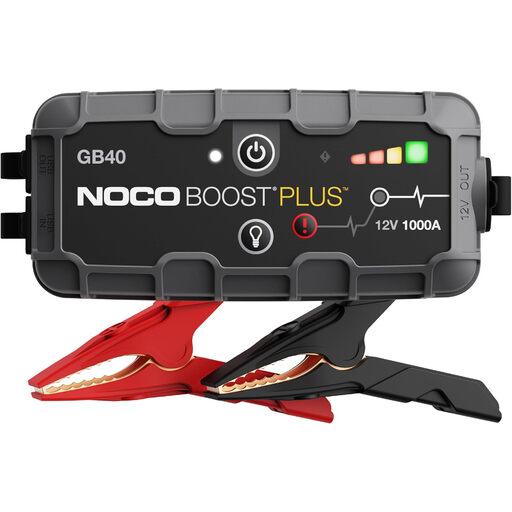
What sets this model apart The NOCO Boost GB40 is a compact jump starter with a peak current of 1000A. According to the manufacturer, it is designed for petrol engines up to 6.0 litres and diesel engines up to 3.0 litres. The patented UltraSafe safety system protects against sparks and reverse polarity. Weighing only 1.1 kg and featuring a robust, IP65-certified housing, it is designed for mobile use.
Pros
Who is it for? For drivers of standard cars (petrol or diesel) and motorcycles who are looking for a reliable, safe, and robust device for emergencies.
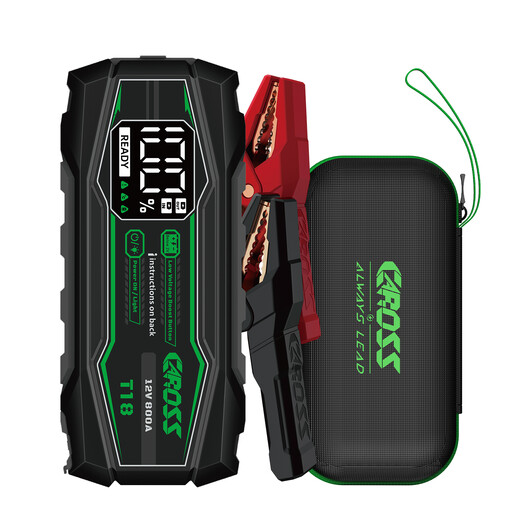
What sets this model apart This jump starter delivers a peak current of 800A and has a battery capacity of 10,000 mAh. A special feature is the 2.3-inch LED display, which clearly shows the battery status and operating mode. The "Boost" function is specifically designed for starting vehicles with very deeply discharged batteries. Thanks to the QC 18W fast charging function, mobile devices can be charged quickly.
Pros
Who is it for? For users who value a clear status display and simple operation. The fast charging function also makes it a useful power bank with jump-start capability for everyday use.
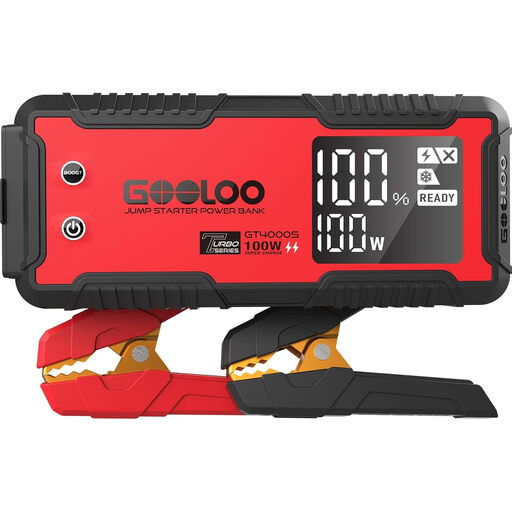
What sets this model apart With a very high peak current of 4000A, the GOOLOO GT4000S is designed for large engines—according to the manufacturer, for diesel up to 10.0 litres and all common petrol engines. The standout feature is the 100W two-way fast charging. The device itself can be fully recharged in about 1.2 hours and also serves as a powerful power bank that can even charge laptops.
Pros
Who is it for? For owners of vehicles with large engines (e.g., RVs, larger SUVs, vans) or users who need an extremely powerful and fast-charging power bank for various devices, including laptops.
The models presented here are just a sample of the available devices. Every vehicle and every user has different requirements. If you want to compare more models or discover a wider range of energy solutions for your vehicle, you can find more products in our category.
? Explore more options in the Lithium Car Battery category
1. How do you use a jump starter power bank safely? Usage is generally straightforward. First, turn off all consumers in the car (lights, radio). Connect the red clamp to the positive (+) terminal of the car battery and the black clamp to an unpainted metal part of the engine block or chassis (ground point). Then, turn on the jump starter and try to start the vehicle. After a successful start, remove the black clamp first, then the red clamp. Always follow the manufacturer's instructions.
2. How often does a jump starter power bank need to be charged? Even when not in use, the battery slowly discharges. Most manufacturers recommend fully charging the device every 3 to 6 months to ensure it is ready for an emergency and to maintain the battery's lifespan.