
Lieferung heute & morgen

Qualitätsgarantie

Willkommens-Angebote freischalten: KOSTENLOSE Lieferung | Bis zu 80 % RABATT | Kostenlose 30-Tage-JoyPlus-Testphase
App herunterladen
A dead car battery is more than just an annoyance—it means wasted time, missed appointments, and the stress of being stranded, especially in the cold or in remote locations. A Jump Starter Power Bank, also known as a Jump Starter or Battery Booster, promises a quick and self-sufficient solution. However, the market is crowded and full of technical promises that don't always deliver.
As your Joybuy Product Recommendation Officer, I'm here to help you identify the crucial features and distinguish marketing hype from real-world performance. We'll shed light on the most common pitfalls so you can make an informed decision and choose a reliable jump starter.
Many buyers are drawn to big numbers and flashy features that are often misleading in practice. Pay attention to these three points to avoid a bad purchase:
To find the right portable jump starter for your needs, you should focus on the following practical, real-world criteria.
The most important factor is whether the device delivers enough power for your vehicle. Pay close attention to the manufacturer's specifications regarding compatibility with gasoline and diesel engines. A good rule of thumb is:
The type of battery used has a direct impact on safety, reliability, and longevity.
Modern devices are often more than just a car booster. Useful additional functions significantly increase their value.
Based on these objective criteria, we have identified a few models that are particularly well-suited for specific user groups.
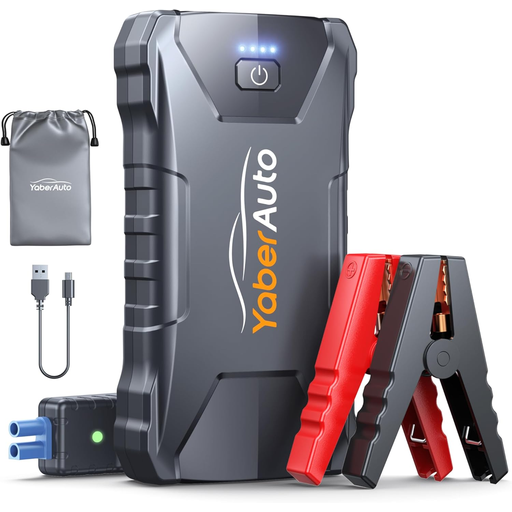
Why it's a good fit: Ideal for drivers of small to mid-size cars who need a compact and straightforward emergency solution. The device is extremely lightweight and fits into any glove compartment without getting in the way.
It focuses on the core function of jump-starting common engine sizes (up to 7.0L gasoline) and avoids exaggerated performance claims. The 13800mAh capacity is realistically sized for its emergency power bank function.
Extremely compact and lightweight design (0.34 kg). It offers all the necessary safety features and simple operation for emergencies.
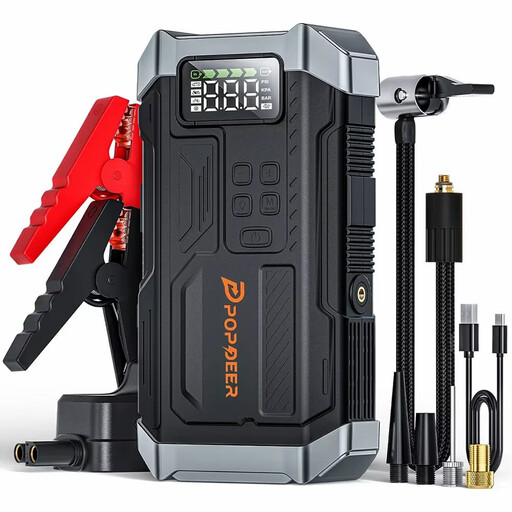
Why it's a good fit: The perfect solution for families, SUV owners, or campers. The combination of a powerful jump starter and a 150 PSI air compressor covers the two most common breakdown causes: dead batteries and flat tires.
The focus is on multi-functional utility, not just an abstract current rating. The performance specs (up to 10L Gas/8L Diesel) are designed for a wide range of vehicles, and the compressor provides clear, measurable added value.
4-in-1 functionality: A portable jump starter, an air compressor, a power bank, and an LED light in one device. This saves space and money compared to buying separate tools.
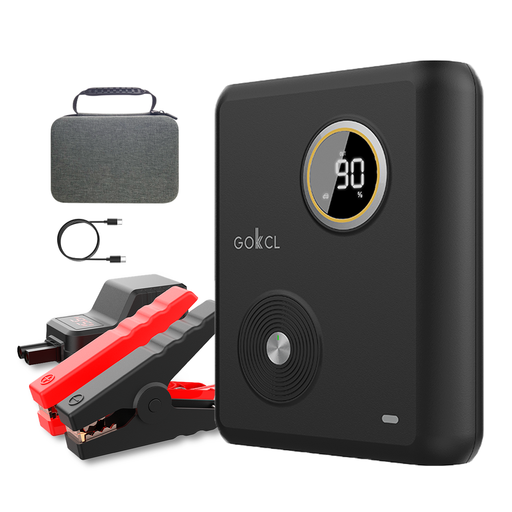
Why it's a good fit: For users who demand maximum reliability and safety under all conditions. Ideal for RV owners, outdoor enthusiasts, or anyone living in regions with extreme temperatures who needs a low-maintenance solution.
It sidesteps the battery technology pitfall by using a superior Sodium-Ion foundation. Its advantages (temperature resistance, cycle stability, safety) are objective and a clear differentiator from standard lithium devices.
Extreme operating temperature from -40°C to +80°C and very low self-discharge (approx. 1% per month according to the manufacturer). The device remains ready for use for years without constant recharging.
We have compiled a complete, up-to-date list of products that fully meet these strict selection criteria and safety regulations.
The charging frequency depends heavily on the battery technology used. For conventional lithium-ion models, it is recommended to check the charge level every 3 to 4 months and recharge the device if necessary. Models with very low self-discharge, such as those with sodium-ion batteries, can hold their charge for much longer periods according to manufacturer specifications. Nevertheless, a regular check every 6 to 12 months is advisable to ensure it's always ready for use.
Yes, but choosing the right model is crucial. Diesel engines have a higher compression ratio and therefore require a much stronger current pulse to start than gasoline engines. When selecting a product, explicitly look for the manufacturer's rating for diesel engines and compare it with your vehicle's engine displacement. A device rated for an "8.0L Diesel" will provide the necessary power reserves.
Many devices function as a power bank with jump-start capability, but not all can power a laptop. Standard USB-A ports are typically designed only for smartphones and smaller electronics. To charge a laptop, you need a model with a powerful USB-C Power Delivery (PD) output, ideally providing 60W or more, or a dedicated DC output with a suitable adapter. Check the technical specifications of the output port before purchasing.