
Lieferung heute & morgen

Qualitätsgarantie

Willkommens-Angebote freischalten: KOSTENLOSE Lieferung | Bis zu 80 % RABATT | Kostenlose 30-Tage-JoyPlus-Testphase
App herunterladen
A dead car battery is more than just an annoyance—it can derail your plans and lead to unexpected costs. A jump starter power bank promises a quick and simple solution. However, the market is flooded with devices whose technical specifications often create more confusion than clarity. As your Joybuy Product Recommendation Officer, I'll help you identify the crucial features and sidestep marketing traps so you can make an informed decision.
Before you invest, you should be aware of the most common issues that lead to a poor purchase. Many devices prove to be inadequate in an emergency because critical details were overlooked.
To make a reliable choice, focus on the following objectively measurable criteria. These define the true performance and safety of a device.
The most important value is the Starting Current (Cranking Amps). This indicates how much current the device can deliver for several seconds to start the engine.
A jump starter power bank should not be confused with a car battery charger.
Look for certified protection mechanisms. Non-negotiable features include:
Here is a selection of devices tailored to specific user needs that avoid the pitfalls mentioned above.
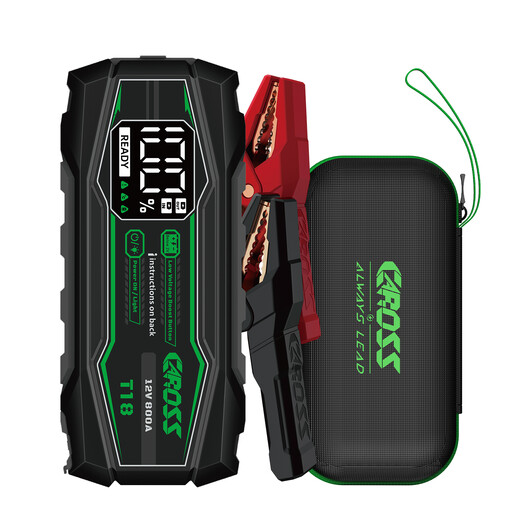
Why This Fits Their Persona: Ideal for drivers of small and compact cars looking for a reliable emergency solution without a large investment. The device is compact enough for the glove compartment and offers sufficient power for most common gasoline engines.
The device avoids exaggerated marketing claims and offers realistic specs with 800A peak current and 10,000 mAh capacity. Crucially, despite its affordable price, it integrates essential safety features (spark-proof and reverse-polarity protection).
Compact design with a digital display; Includes a boost function for deeply discharged batteries and a protective case.
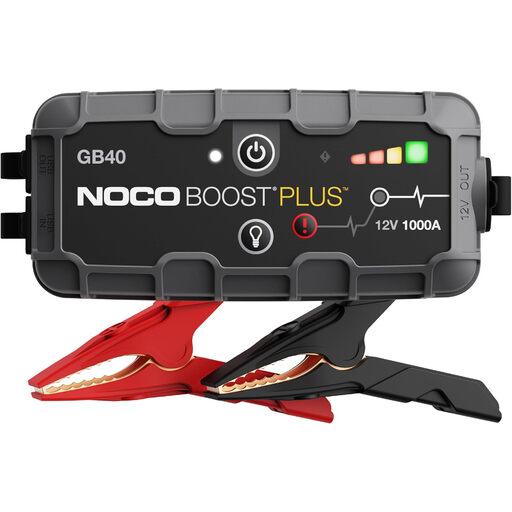
Why This Fits Their Persona: For drivers who value brand quality, certified safety, and durability. The GB40 is designed for gasoline engines up to 6.0L and diesel engines up to 3.0L, covering a wide range of everyday vehicles.
NOCO doesn't just advertise an amp rating, but its patented "UltraSafe" architecture. This focus on a verifiable, comprehensive safety system instead of a single, inflated metric builds trust and transparency.
Patented, spark-proof technology and reverse-polarity protection; Robust, IP65-rated water- and dust-resistant housing.
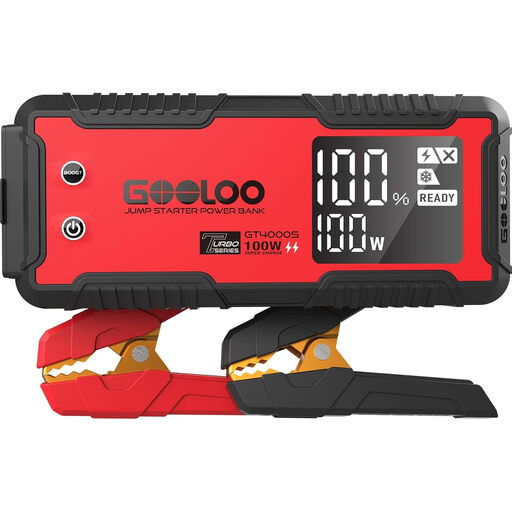
Why This Fits Their Persona: Engineered for the most demanding tasks. Perfect for owners of SUVs, vans, RVs, or boats with large-volume gasoline (all) or diesel engines (up to 10.0L). Its high capacity and 100W charging function also make it a versatile power source on the go.
Instead of just advertising the high 4000A figure, the manufacturer backs up the claim with specific engine size compatibility (10L diesel) and a tangible added benefit: the 100W bi-directional fast charging, which rapidly recharges the unit itself and other devices like laptops.
Extremely high starting current for large engines; 100W two-way fast charging via USB-C; Large 3.2-inch display for clear status indicators.
We have compiled a complete, up-to-date list of products that fully meet these strict selection criteria and all relevant safety standards.
1. How often do I need to charge a jump starter power bank? Most manufacturers recommend charging the device every 3 to 6 months, even if it's not used. Lithium-ion batteries have a low self-discharge rate, but regular charging ensures the power bank can deliver its full power in an emergency. Check the specific recommendations in your model's user manual.
2. Can I use a jump starter power bank to revive a deeply discharged battery? Some advanced models feature a "Boost" or "Force" function that allows them to start batteries with a very low residual voltage (below 2V). However, this is a manual override of the safety systems and should be used with caution. It is not a guarantee for reviving a faulty or sulfated battery. For reconditioning, an intelligent car battery charger with a repair mode is often the better choice.
3. What is the difference between a jump starter power bank and a car battery charger? The main difference lies in their function. A jump starter power bank delivers a very high current for a few seconds to operate the engine's starter motor. A car battery charger, on the other hand, delivers a low current over a long period (hours) to restore and maintain the battery's capacity. It cannot start a vehicle directly.