
Lieferung heute & morgen

Qualitätsgarantie

Willkommens-Angebote freischalten: KOSTENLOSE Lieferung | Bis zu 80 % RABATT | Kostenlose 30-Tage-JoyPlus-Testphase
App herunterladen
A dead car battery is more than just an annoyance—it means wasted time, missed appointments, and potential insecurity, especially in bad weather or remote locations. A portable jump starter, often called a Jump Starter Power Bank or Car Battery Booster, promises a quick and straightforward solution. But the market is flooded with devices boasting impressive-sounding numbers and features. Unfortunately, exaggerated advertising claims often lead to bad purchases that fail when you need them most.
As your Joybuy Product Recommendation Officer, I'm here to help you separate the wheat from the chaff. We'll shine a light on the most common pitfalls and show you which technical specs truly matter, so you can make an informed decision.
Many products lure you in with high numbers that mean very little in practice. Watch out for these three typical marketing traps to avoid paying for useless technology:
To make the right choice, focus on the following objectively measurable criteria. These determine whether a 12V jump starter is suitable for your vehicle and will work reliably in an emergency.
As mentioned, the peak current is a momentary maximum value. The starting current (or cranking amps) is the crucial figure. It indicates how much current the device can consistently deliver for 3-5 seconds to operate the engine's starter motor.
The capacity, specified in milliampere-hours (mAh), determines how many jump-starts are possible or how many times you can charge your smartphone. However, more important than the number itself is the underlying technology.
Modern devices are often more than just an emergency starter. An integrated jump starter with a compressor can be just as useful for a flat tire as the power bank function is for charging mobile devices. Consider which additional features are relevant to you:
Here are some recommendations based on objective features and suitable for different user profiles.
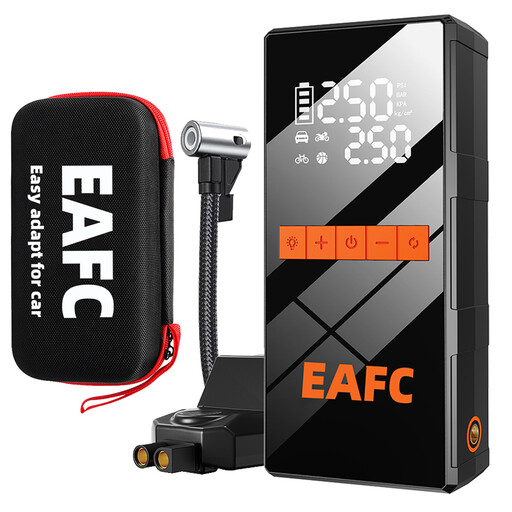
Why this model is a good fit: Ideal for drivers of small to mid-size cars looking for a cost-effective, multifunctional solution. It combines the core jump-starting function with a practical compressor and a power bank.
Instead of just advertising a high peak current, this device offers a clear 4-in-1 feature set. The value lies in its versatility, not in a single, exaggerated metric.
An integrated 150 PSI air compressor with automatic shut-off and an 8000 mAh power bank make it a useful tool for various breakdown and everyday situations.
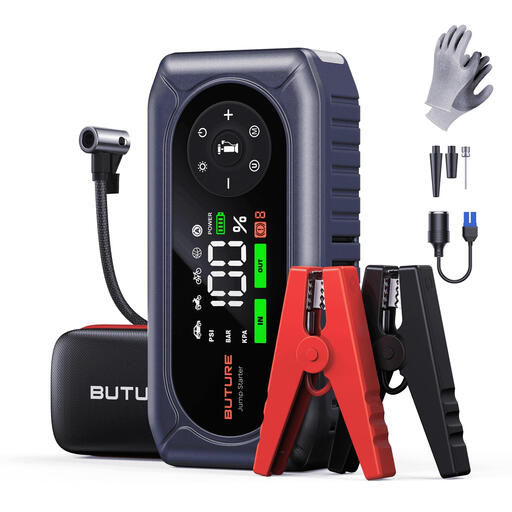
Why this model is a good fit: For families, commuters, and outdoor enthusiasts who need a powerful all-in-one device for larger vehicles (up to 9.0L gasoline, 8.0L diesel) and various emergencies.
It combines a high, specified peak current of 4500A with a digital compressor and 10 protection features. This eliminates the need to buy separate, specialised devices and provides a comprehensive set of safety features.
The digital 150 PSI air compressor with preset and auto-stop functions, along with the easy-to-read LCD display, allows for precise and simple operation with no guesswork.
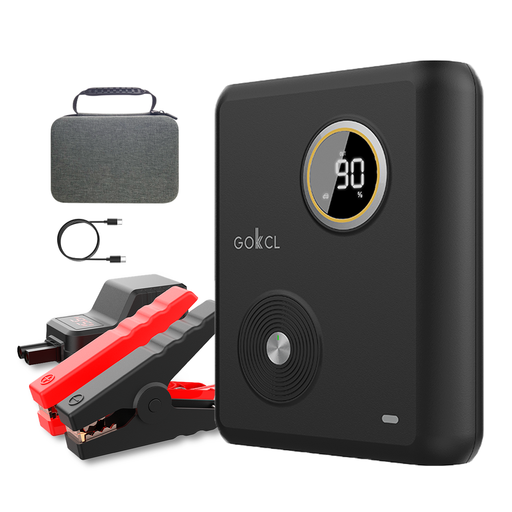
Why this model is a good fit: For users who prioritise maximum safety, longevity, and reliability, even under extreme conditions. Ideal for anyone who stores the device in their car and doesn't want to worry about constantly recharging it.
It bypasses the drawbacks of conventional lithium batteries (performance degradation in the cold, shorter lifespan). The sodium-ion technology offers objectively higher cycle stability and a wider operating temperature range.
According to the manufacturer, the device can be used in a temperature range of -40°C to +80°C (-40°F to +176°F) and has a standby time of up to 5 years. The technology is considered more fire-resistant and durable than lithium alternatives.
We have compiled a complete, up-to-date list of products that fully meet these strict selection criteria and rigorous safety standards.
Most manufacturers of lithium-ion devices recommend recharging the power bank every 3 to 6 months, even if it's not used. This prevents deep discharge and preserves the battery's lifespan. Models with sodium-ion technology have a significantly lower self-discharge rate and, according to manufacturers, need to be checked less frequently—sometimes only every few years. Always check the specific manufacturer's instructions.
Yes, many models are suitable for both diesel and gasoline engines. The crucial factor is that the device's power matches your engine's displacement. Diesel engines require higher compression and therefore a stronger starting current. When selecting a product, explicitly look for its suitability for diesel engines and compare the maximum supported displacement (e.g., "up to 8.0L Diesel").
Modern, high-quality devices are equipped with a range of protection mechanisms that make them very safe to use. These include:
Look for these safety features when making a purchase and always follow the manufacturer's user manual.