
Lieferung heute & morgen

Qualitätsgarantie

Willkommens-Angebote freischalten: KOSTENLOSE Lieferung | Bis zu 80 % RABATT | Kostenlose 30-Tage-JoyPlus-Testphase
App herunterladen
A dead car battery is more than just an annoyance—it means lost time, missed appointments, and a frustrating dependency on roadside assistance. A Jump Starter Power Bank, also known as a 12V Jump Starter, promises a quick and straightforward solution. However, the market is flooded with devices whose technical specs often overpromise and underdeliver. This guide will help you identify the crucial features, sidestep marketing traps, and make an informed purchasing decision.
Before you invest in a car jump starter, you should be aware of the typical issues that can lead to a bad purchase. Many products fail in real-world use due to exaggerated manufacturer claims or poor construction.
To find a reliable portable jump starter, focus on the following objective, measurable criteria. These define a device's performance and safety.
The most important value is the starting current, not the peak current. This indicates the amperage the device can consistently deliver over several seconds. Pay close attention to the manufacturer's specifications regarding compatibility with petrol and diesel engines. A jump starter for diesel engines generally requires a higher starting current because diesel engines have a higher compression ratio. A good car battery booster should provide clear information on the maximum engine displacement (in litres) for both engine types.
A power bank with jump-start capability is a multi-functional tool. In addition to its primary function, it should also serve as a useful power source for mobile phones, tablets, or other USB devices. Check the available ports (e.g., USB-A, USB-C) and their output power (in amps). A USB-C port has become standard for fast charging both the power bank itself and external devices.
A high-quality device features smart jumper clamps with integrated protection circuits. Indispensable features include:
An emergency jump starter with a built-in light is another practical feature that provides necessary visibility and safety during breakdowns after dark.
Here are some product recommendations tailored to specific user profiles and their needs.
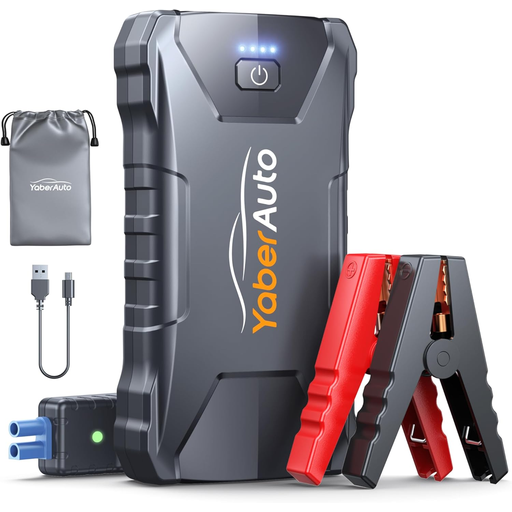
Why it's a good fit: Perfect for drivers of common passenger cars who need a reliable and compact emergency solution for the glove box. It combines a jump starter, power bank, and flashlight in one device.
The device provides clear engine compatibility ratings (up to 7.0L petrol/5.5L diesel) and features 10 smart safety functions that minimise the risk of incorrect use and damage to the vehicle's electronics.
Compact design (0.340 kg), integrated LED light with 3 modes (Solid, SOS, Strobe), and a USB output for charging mobile devices.
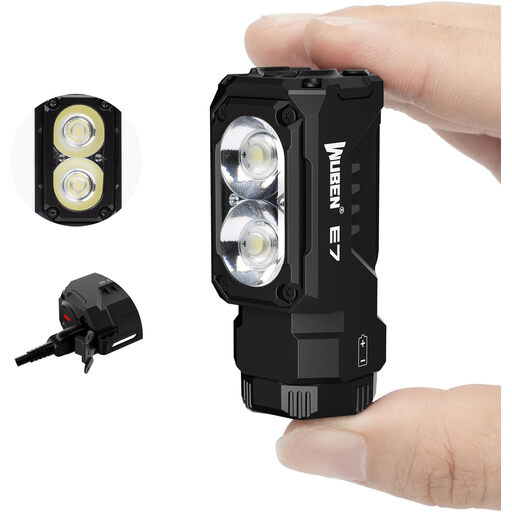
Why it's a good fit: A perfect addition to any emergency kit. Those who already own a jump starter often need a separate, powerful light source for repairs or outdoor activities.
Avoids the trap of weak, unreliable lights. With 1800 lumens, it provides immense brightness. The IP68 certification also guarantees dust and water resistance under demanding conditions.
Magnetic tail cap for hands-free work on your vehicle, 6 lighting modes, and convenient charging via USB-C.
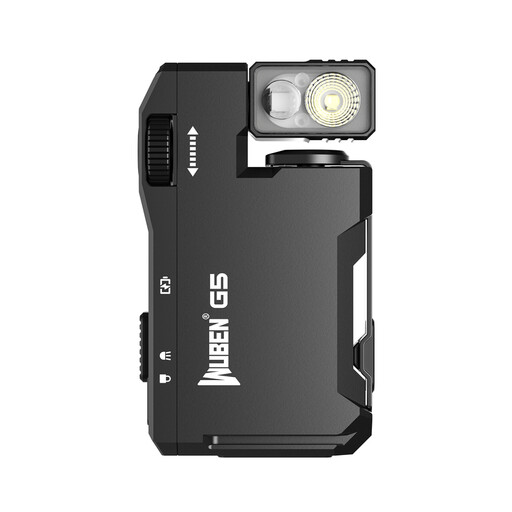
Why it's a good fit: For users seeking a rugged, tactical, and versatile lighting tool for demanding situations, whether during outdoor adventures, at work, or in emergencies at home.
The aluminum alloy construction and IP68 waterproof rating ensure long-term durability. The 1200-lumen brightness is a verified rating that guarantees powerful illumination.
Six different lighting modes for maximum flexibility, a long beam distance of up to 93 metres, and a modern USB-C charging system.
A powerful flashlight is an indispensable part of any emergency kit. We've curated a selection of models that stand out for their durability and modern charging technology.
1. How often do I need to charge a jump starter power bank? To maintain the battery's lifespan and readiness, it is recommended to fully charge the device every 2 to 3 months, even if it hasn't been used. Always follow the specific instructions provided by the manufacturer.
2. Can I use a jump starter power bank to start a diesel engine? Yes, this is possible, provided the device is designed for it. Diesel engines require higher cold cranking amps. Therefore, check the manufacturer's technical specifications before purchasing. Look for a model that is explicitly rated for diesel engines and the maximum recommended displacement (e.g., "suitable for diesel engines up to 5.5 litres").
3. Is using a car battery booster safe for my vehicle's electronics? Modern jump starters with smart safety clamps are safe for vehicle electronics. Features like reverse polarity, short-circuit, and overvoltage protection prevent damage that could be caused by improper handling. Therefore, always choose a model that explicitly lists these protective mechanisms.