
Lieferung heute & morgen

Qualitätsgarantie

Willkommens-Angebote freischalten: KOSTENLOSE Lieferung | Bis zu 80 % RABATT | Kostenlose 30-Tage-JoyPlus-Testphase
App herunterladen
A dead car battery is more than just an annoyance—it means lost time, missed appointments, and potential uncertainty, especially in the cold or in remote locations. A jump starter power bank, also known as a battery booster or jump starter, promises a quick solution. But the market is flooded with devices boasting impressive numbers and bold claims. Not all of them deliver, often leading to a costly purchase that fails when you need it most.
As your Joybuy Product Recommendation Officer, I'm here to help you see through the marketing hype and make an informed decision. We'll focus on the facts and uncover the most common pitfalls so you can find a reliable device.
Before you invest, you should be aware of the typical marketing exaggerations that often lead to disappointment.
To make the right choice, focus on these three objective criteria.
The most important value is the starting current, not just the peak current. Pay attention to the manufacturer's recommendations regarding engine displacement (in liters). As a general guide:
Most devices use lithium-ion batteries. Look for models with modern safety mechanisms. The following are essential:
Some newer models, such as those with sodium-ion technology, claim to offer even higher temperature stability and lower self-discharge, making them particularly attractive for permanent storage in a car.
A portable jump starter can do more than just start engines these days. Consider which additional features are practical for you:
Here are three recommendations tailored to the different needs of drivers.
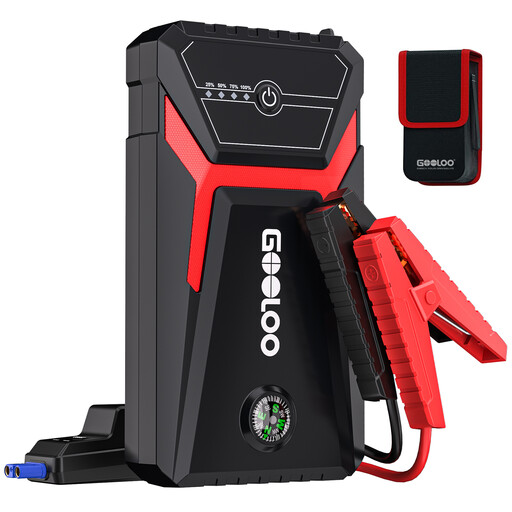
Why This Fits Their Persona: Ideal for drivers of compact and mid-size cars with gasoline or smaller diesel engines. It provides a reliable, essential kit for emergencies without breaking the bank. Perfect for commuters and as a first-time purchase.
It focuses on a realistic 1500A peak current that is practical for the specified engine classes (up to 6.0L gas / 4.0L diesel), rather than advertising with unrealistic numbers.
Compact design that fits easily in the glove compartment. It integrates all essential safety features and doubles as a power bank with two USB outputs.

Why This Fits Their Persona: For families, campers, and owners of SUVs or RVs who need a comprehensive emergency solution. This device combines a very powerful jump starter with a practical digital tire compressor.
The high peak current is justified by a genuine added function—the power bank with an air pump. Its value lies not just in the jump-start capability, but in the combination of two essential roadside tools.
Combines a jump starter for large engines (up to 9.0L gas / 8.0L diesel) with a 150 PSI digital compressor featuring auto-shutoff. The large LCD screen clearly displays all relevant information.
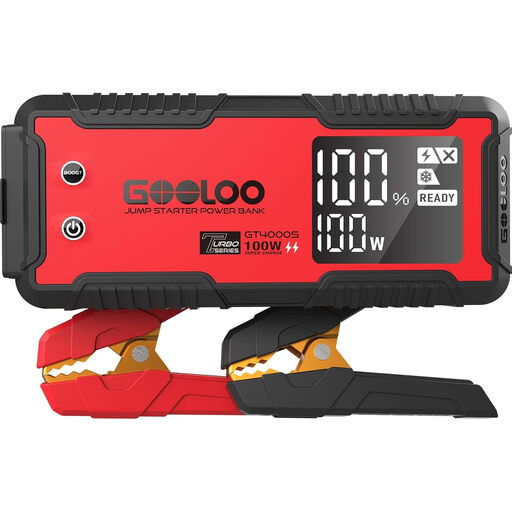
Why This Fits Their Persona: Designed for owners of vehicles with large-displacement engines, such as big SUVs, vans, or trucks. The extremely fast charging feature is a key advantage for anyone who depends on maximum readiness.
It addresses the pitfall of self-discharge and long charging times. Thanks to 100W fast charging, the device is fully charged in just over an hour and ready for action, minimizing the worry of a dead helper.
Massive power reserves for engines up to 10.0L diesel. The 100W two-way fast charging not only recharges the unit itself quickly but also allows it to charge laptops via its Type-C port.
We have compiled a complete, up-to-date list of products that fully meet these strict selection criteria and safety regulations.
Even when not in use, the device loses charge due to self-discharge. It is recommended to fully charge most lithium-ion-based jump starters every 3 to 6 months to maintain battery health and ensure full power in an emergency. Always check the specific manufacturer's instructions.
Yes, but not every device is capable. Diesel engines have a higher compression ratio and therefore require a significantly stronger starting current than gasoline engines of a similar displacement. When selecting a product, explicitly look for its suitability for diesel engines and compare the manufacturer's specifications for maximum engine size (diesel jump start). Models with a peak current of 2500A or more are often the safer choice.
Modern, high-quality jump starters are equipped with a range of safety features to ensure safe use. These include reverse polarity, short-circuit, overcharge, and overheat protection. These "smart" clamps prevent current from flowing if connected incorrectly, thus protecting your vehicle's sensitive on-board electronics from power surges and other damage.