
Lieferung heute & morgen

Qualitätsgarantie

Willkommens-Angebote freischalten: KOSTENLOSE Lieferung | Bis zu 80 % RABATT | Kostenlose 30-Tage-JoyPlus-Testphase
App herunterladen
A dead car battery is more than just an annoyance—it leaves you stranded, often at the worst possible time. A weak battery can easily fail, especially in winter. A car jump starter power bank, also known as a battery booster, promises a quick remedy. However, the market is crowded and full of products whose marketing promises often don't hold up in practice. Incorrect capacity ratings and unsuitable technologies lead to costly mistakes, leaving you with a useless device in an emergency.
This guide will help you identify the crucial features and avoid the typical pitfalls. We'll show you what really matters in a reliable 12V jump starter so you can make an informed decision.
Before you invest, you should be aware of the most common marketing traps and technical shortcomings that lead to disappointment.
To find a reliable jump starter that works even in critical situations, you should check three core parameters.
The peak current, measured in amperes (A), indicates the maximum energy the device can deliver for a short burst to start the engine. The right choice depends on your vehicle:
A higher peak current provides more reserve power, especially when used as a jump starter for winter, as cold temperatures further reduce battery performance.
The built-in battery technology is a key determinant of the device's reliability and lifespan.
Modern devices are often a combination of a jump starter and a portable charging station. A power bank with jump starter functionality should have useful ports. Look for PD 60W fast charging (Power Delivery). This allows you to quickly charge not only your smartphone but also laptops and—more importantly—get the jump starter itself ready for use again in a short time.
Here are some recommendations tailored to different user needs that avoid the pitfalls mentioned.
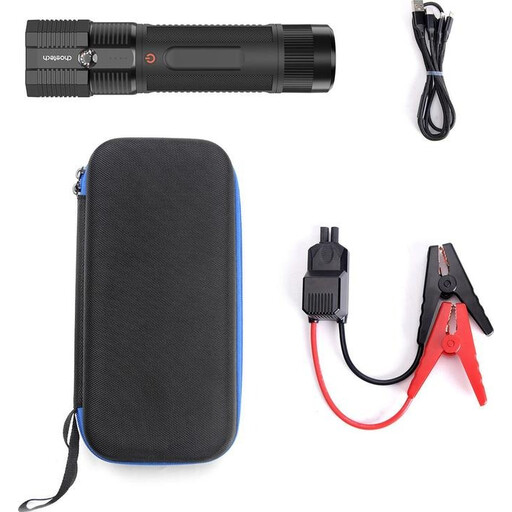
Why This Fits Their Persona: Ideal for drivers of small and compact cars who need a straightforward and space-saving emergency solution. The device combines a jump starter, power bank, and flashlight in a compact body that fits easily into the glove compartment.
The product specifies a clear peak current of 600 A, which is realistic and sufficient for smaller engines, instead of advertising inflated mAh values.
Very compact, flashlight-style design; integrated LED light for emergencies in the dark.
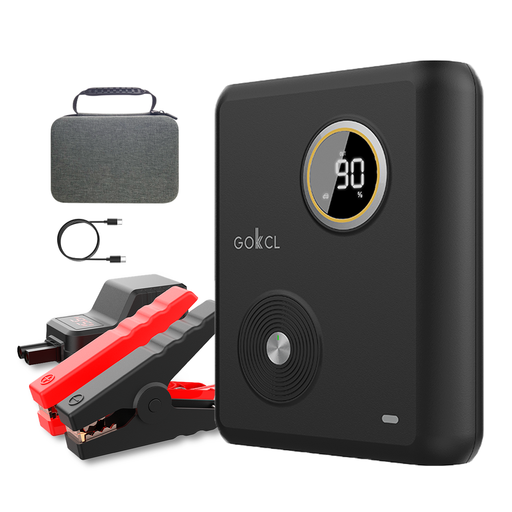
Why This Fits Their Persona: Perfect for drivers who demand maximum reliability, safety, and longevity. The sodium-ion technology makes the device resistant to extreme temperatures and ensures it's ready for immediate use even after long-term storage in the car.
It bypasses the weaknesses of lithium batteries by using a sodium-ion jump starter. The extremely low self-discharge and wide operating temperature range (-40°C to 80°C) are objective advantages over standard devices.
Extremely durable and low-maintenance with up to 5 years of standby time; PD 60W fast charging allows for rapid recharging of the device and laptops.
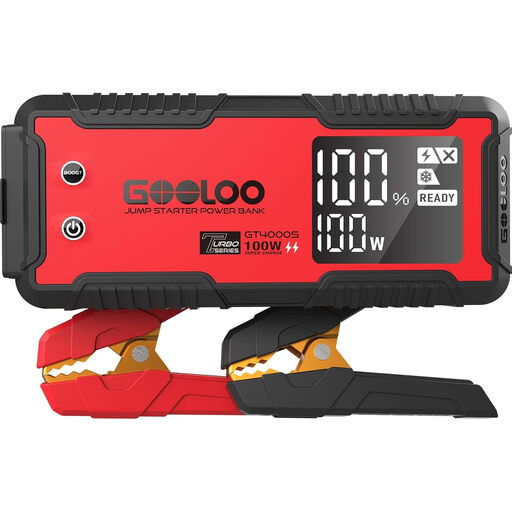
Why This Fits Their Persona: Designed for the most demanding tasks. With 4000 A of peak current, this device effortlessly starts large petrol and diesel engines (up to 10L) found in motorhomes, vans, or American pickup trucks. The 100W fast-charging feature is another plus for power users.
This model focuses on the most critical parameter for large engines: an extremely high and verifiable peak current. It delivers the necessary power where other devices with fictitious capacity ratings fail.
Enormous 4000 A starting power for nearly all 12V vehicles; very fast 100W two-way charging.
We have compiled a complete, up-to-date list of products that fully meet these strict selection criteria and UK safety regulations.
This largely depends on the battery technology used. Conventional lithium-ion models have a higher self-discharge rate and should be checked every 3 to 6 months and recharged if necessary. Models with sodium-ion jump starter technology have an extremely low self-discharge rate and, according to manufacturers, can often remain ready for use for several years without recharging.
Yes, but you must choose the right model. A jump starter for diesel engines requires a significantly higher peak current than for a comparable petrol engine because diesel engines have higher compression. Pay attention to the manufacturer's specifications for engine compatibility and choose a device with a sufficiently high ampere rating (often 2000 A or more).
Yes, if the device is designed as a power bank with jump starter functionality and has the appropriate ports. Look for models with a USB-C port that supports Power Delivery (PD), ideally with PD 60W fast charging or more. This level of power is sufficient to efficiently charge most modern laptops.