
Lieferung heute & morgen

Qualitätsgarantie

Willkommens-Angebote freischalten: KOSTENLOSE Lieferung | Bis zu 80 % RABATT | Kostenlose 30-Tage-JoyPlus-Testphase
App herunterladen
A flat 12-volt battery can catch commuters, families and travellers off guard. A jump starter power bank for your car needs to be ready to go in that moment, but you shouldn't choose one based on a high amperage rating alone. What really matters is vehicle compatibility, safety features, charge status and practical extras.
Figures like 3,000 or 7,000 A usually refer to the maximum peak current under specific conditions. On their own, they don't tell you whether the device is suitable for every engine. Buyers should always check which petrol and diesel engine sizes the jump starter is approved for.
A 12V jump starter for a small car doesn't need to meet the same requirements as one for a large diesel van or commercial vehicle. A heavily discharged, damaged or frozen battery can't be safely jump-started with every device either.
Milliamp-hours and watt-hours describe the stored energy, not automatically the starting power. When comparing a power bank with jump-start capability, several values are relevant:
Always consider the manufacturer's specifications in relation to your own vehicle.
An integrated compressor is handy if you can top up a tyre on the road. But if you're only looking for a mobile car battery jump starter, a simpler device can be more compact and lighter. An LED emergency light, USB ports and a display are useful, but they shouldn't replace checking the jump-start function itself.
Most cars, motorbikes, SUVs and vans run on a 12-volt system. A car jump starter isn't automatically suitable for 24-volt lorries or the high-voltage battery of an electric vehicle. With hybrid cars, a device can only support the 12-volt auxiliary battery, provided the product description explicitly states this.
Compare the maximum engine size separately by fuel type. Diesel engines often need different power reserves when starting than petrol engines. Figures like "up to 8.0 l petrol" or "up to 6.0 l diesel" are therefore more important than an isolated amperage number.
A car battery booster should have intelligent cable control. Look for the following:
Before starting, connect the red clamp to the positive terminal and the black clamp to the negative terminal or a suitable earth point. Always follow the instruction manual. Never jump-start a damaged, leaking or frozen battery.
A jump starter with a compressor should clearly display pressure units, the target value and automatic shut-off. Ratings up to 150 PSI describe the maximum possible pressure, not necessarily the speed at which it inflates a car tyre. Also pay attention to rest periods during compressor use, as the hose and housing can heat up.
For regular use on the go, fast USB-C charging, a charge level display and several LED modes are practical. When storing it in your car, also consider the temperature range specified by the manufacturer and a protected housing. The device shouldn't be left in direct sunlight or exposed to moisture for long periods.
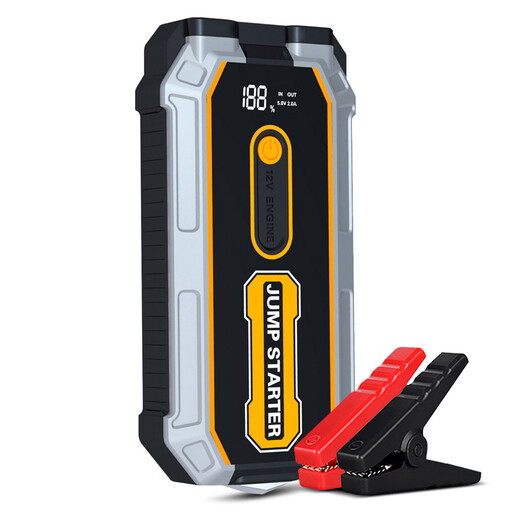
Why this product fits the profile: According to the product specs, this compact model delivers 1,200 A peak current, 12,800 mAh battery capacity and support for 12-volt petrol and diesel vehicles. At around 330 g, it's suitable for cars, motorbikes and smaller emergency kits.
The engine support and charge status details are clearly stated. Buyers should still check their own engine size before purchasing.
Lightweight design, LCD display, USB output and LED light with constant, flash and SOS modes.
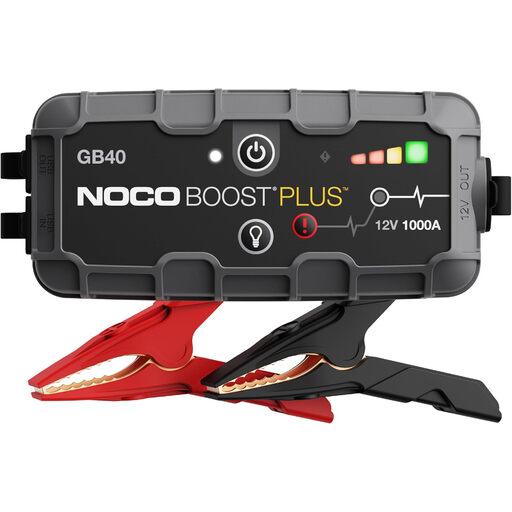
Why this product fits the profile: According to the product description, this model is designed for petrol engines up to 6.0 l and diesel engines up to 3.0 l. The compact design and IP65-rated housing make it suitable for storing in your vehicle.
The UltraSafe technology is described with reverse polarity and spark protection. The stated vehicle limit prevents it from being classed as a universal device.
1,000 A peak current, up to 20 jump starts according to the product spec, and a 100-lumen LED light with multiple modes.
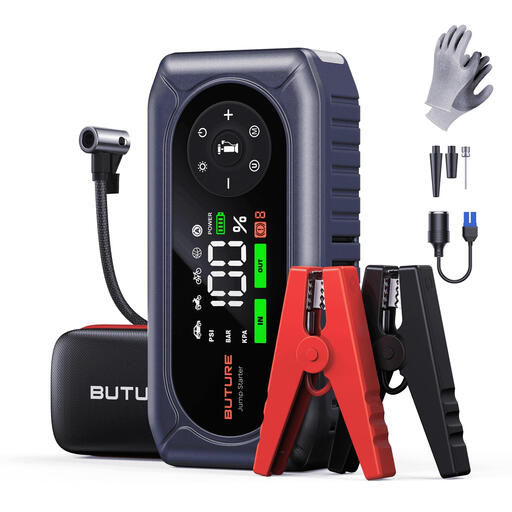
Why this product fits the profile: For SUVs, vans, motorbikes and campervans, this device combines 4,500 A peak current with a 150-PSI compressor and five preset pressure modes, according to the product specs.
The LCD shows battery level, tyre pressure and settings. The stated operating limit of the compressor and necessary cooling breaks should be observed.
Support for petrol engines up to 9.0 l and diesel engines up to 8.0 l according to the supplier, automatic pressure shut-off and multiple safety features.
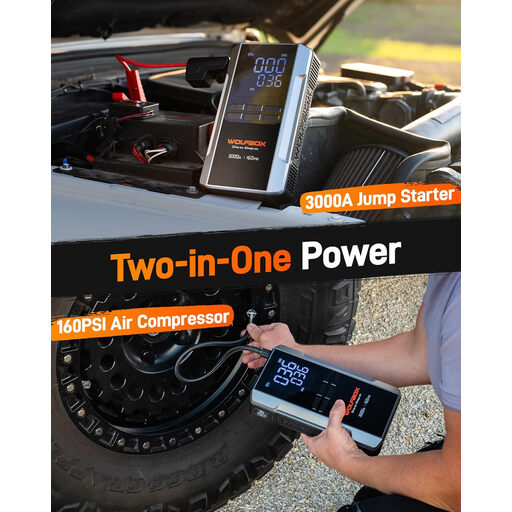
Why this product fits the profile: According to the product specs, this device combines 3,000 A peak current, 65 W PD charging and a 160-PSI compressor. That makes it ideal for long journeys, camping and regular use in the family car.
The display and ten stated safety features make it easy to monitor. Suitability for engines up to 8.0 l petrol and 6.0 l diesel should be checked against your vehicle.
65 W fast charging via USB-C, 59.2 Wh battery capacity, 160-PSI compressor and three-stage LED light according to the product data.
We've put together a full, regularly updated list of products that meet these strict selection criteria and the safety regulations in force across the EU.
Fully charge the jump starter power bank before first use. Then check the charge level every two to three months, or as recommended by the manufacturer. After actually jump-starting a car, recharge the device.
Switch off any electrical consumers before jump-starting. Only crank the engine for a few seconds at a time, and wait between attempts. Once the engine has started, disconnect the leads in the correct order. Keep the device away from fire, water and prolonged exposure to high heat.
That depends on your vehicle type, engine size and battery condition. For smaller petrol engines, models with around 1,000 to 1,500 A peak current may be sufficient, while larger diesels, SUVs or vans may need higher ratings from the manufacturer. The stated engine support is what matters, not just the amperage.
Only if it has a built-in compressor. A jump starter with a compressor can top up tyre pressure, but it won't repair a damaged tyre. Look for automatic shut-off, a pressure display and the recommended operating time.
The service life depends on the battery type, charge cycles, temperature and storage conditions. Regular recharging, dry storage and avoiding deep discharge can help maintain readiness. There's no one-size-fits-all answer for lifespan, so check the manufacturer's guidelines.