
Lieferung heute & morgen

Qualitätsgarantie

Willkommens-Angebote freischalten: KOSTENLOSE Lieferung | Bis zu 80 % RABATT | Kostenlose 30-Tage-JoyPlus-Testphase
App herunterladen
A dead car battery or a flat tyre always happens at the worst possible time—whether on your way to work, at the start of a holiday, or in the middle of the night. A jump starter with an air compressor promises to be a practical all-in-one solution for these exact emergencies. However, the market is flooded with devices making bold claims that often fail to deliver in practice.
As your Joybuy Product Recommendation Officer, I'm here to help you separate marketing hype from reality. Before you make a purchase, you need to know the three most common pitfalls that lead to disappointment and wasted money.
To find a reliable device that serves as a multi-function jump starter and car emergency kit, you should carefully examine three core parameters.
The peak current (Peak Amps) is the maximum current the device can deliver for a very brief moment to turn over the engine. A higher value is generally better, but it must be appropriate for your vehicle.
A good 12V portable air compressor isn't defined by its maximum pressure (given in Bar or PSI) alone. The crucial factor for practical use is the airflow rate, measured in litres per minute (L/min). A device with a high airflow rate will inflate a tyre noticeably faster and without the risk of overheating. A good car tyre inflator should be able to inflate a standard car tyre (e.g., from 1.5 to 2.5 Bar) in under 8 minutes.
The capacity of the internal battery, specified in milliamp-hours (mAh), determines how many jump-start attempts are possible and how often you can charge your electronic devices. Modern units act as powerful jump starter power banks.
Pay close attention to the charging ports. A USB-C port with Power Delivery (PD) is a clear sign of quality. With a 65W PD laptop power bank, you can quickly and efficiently charge not only your smartphone but also demanding devices like a notebook on the go.
Instead of making a one-size-fits-all recommendation, we have identified products that match specific user profiles and avoid the pitfalls mentioned.
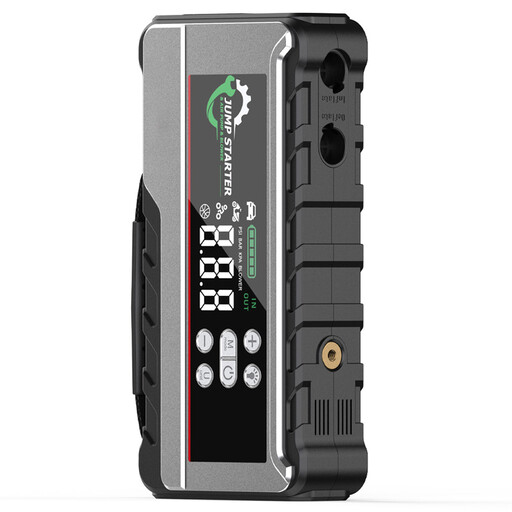
Why This Fits Their Persona: Ideal for drivers of SUVs, vans, and campers who want a single, powerful solution for any eventuality. This device combines very high jump-starting power with a full-featured compressor and fast laptop charging.
The high peak current of 3000 A is designed for large diesel engines. The 150 PSI compressor is fully functional, and the PD 65W charging feature offers real value beyond simple emergency use.
True multi-functionality: Combines a jump starter, tyre inflator, laptop power bank, and even an air blower function in one rugged unit.
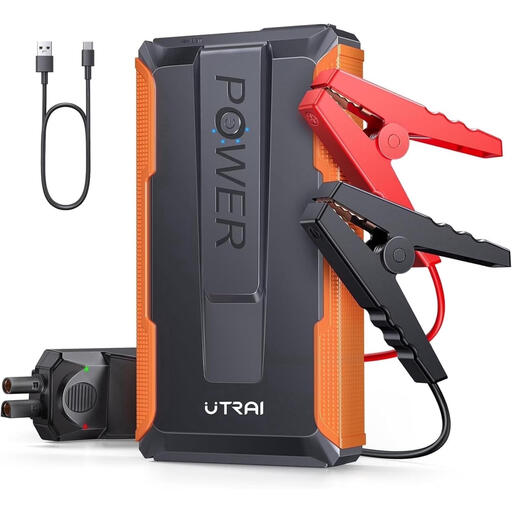
Why This Fits Their Persona: For drivers of large-engine vehicles who already own a separate compressor and place maximum value on reliable jump-starting power. The clear priority here is starting the engine.
This device focuses on one job and avoids compromises. The peak current of 2000 A provides a high safety margin for petrol engines up to 7.5L and diesel engines up to 5.5L, bypassing the trap of underpowered units.
High, focused jump-starting power in a compact and robust housing. The smart clamps with safety features minimise the risk of user error.
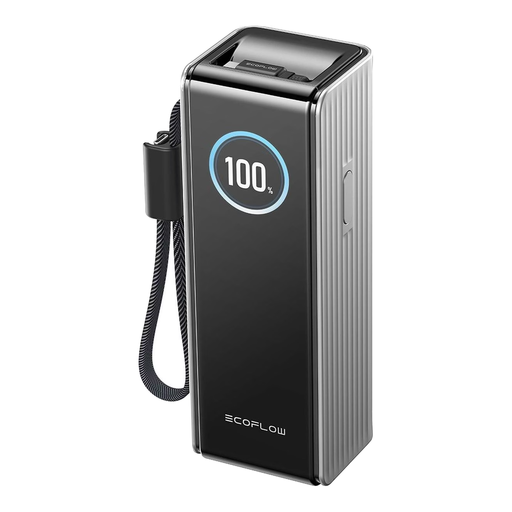
Why This Fits Their Persona: For users whose main concern is fast-charging high-end electronics like laptops, tablets, and cameras. The jump-start function is not relevant here; it's all about maximum mobile charging power.
As a specialised power bank, it bypasses the compromises of combo devices. It delivers an extremely high charging output of up to 170 W, where multi-function units often only offer standard charging capabilities.
Enormous charging power with up to 100 W per USB-C port. The integrated charging cables and informative TFT display offer superior convenience and control.
We have compiled a complete, real-time list of products that fully satisfy these strict selection criteria and UK safety regulations.
To preserve the battery's lifespan, it is recommended to fully charge the device every 3 to 6 months, even when not in use. Please refer to the manufacturer's specifications for the exact intervals. Regular charging ensures the unit is ready for an emergency.
No. As mentioned earlier, diesel engines require a higher starting power. When buying, look specifically for the "for diesel engines" label and a peak current of at least 1500 A. Models designed only for petrol engines will most likely fail on a diesel, especially in winter.
Yes, modern devices are designed for maximum user safety. Features like reverse polarity protection, short-circuit protection, over-temperature protection, and over-voltage protection are standard today. An audible or visual signal (LED) usually indicates if the clamps are connected incorrectly. As long as you follow the user manual, operation is straightforward and safe.