
Lieferung heute & morgen

Qualitätsgarantie

Willkommens-Angebote freischalten: KOSTENLOSE Lieferung | Bis zu 80 % RABATT | Kostenlose 30-Tage-JoyPlus-Testphase
App herunterladen
A dead car battery or a flat tire rarely happens at a convenient time. These breakdowns can cause significant stress, especially during the cold season or on your way to an important appointment. Instead of depending on help from others or roadside assistance, a multifunctional jump starter with an air compressor offers an independent and reliable solution. These devices combine the function of a car booster with a portable car air compressor and often double as a jump starter power bank.
This article serves as a guide. It explains the key criteria to consider when choosing such a device and presents a selection of models with different specializations.
Choosing the right device depends on your vehicle and individual needs. Three technical features are particularly important.
The peak current, measured in Amps (A), is the maximum current the device can deliver for a short burst to start an engine. A higher peak current is necessary to start larger engines, especially diesel engines.
Most jump starters use lithium-ion batteries. However, newer models are adopting alternative technologies like sodium-ion batteries, which can offer specific advantages. Pay attention to the specified operating temperature range. A device that works as reliably at -20°C as it does at +60°C provides year-round security and can be safely left in your vehicle. Equally important is the self-discharge rate, which indicates how long the device holds its charge when not in use.
An integrated compressor makes the device a versatile tool. Important features include:
Here is a selection of devices that cover different needs—from extreme weather resistance to maximum starting power.
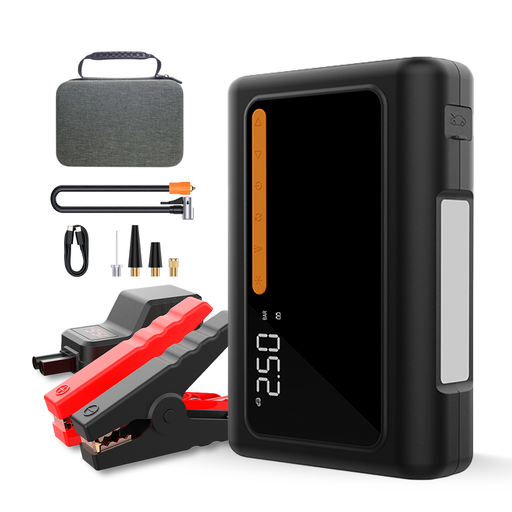
Why it stands out: The GK01 model uses sodium-ion battery technology. According to the manufacturer, this allows for exceptional longevity and a very wide operating temperature range, making it a particularly robust solution for year-round use.
Pros:
Who is it for? For vehicle owners who place the highest value on safety, durability, and reliability in extreme temperatures and are looking for a low-maintenance, all-in-one solution.

Why it stands out: The BUTURE BC02 combines a very high peak current with a fully-featured digital air compressor, making it a powerful 5-in-1 emergency tool.
Pros:
Who is it for? For owners of SUVs, RVs, vans, or other vehicles with large-displacement engines who need a powerful and versatile jumper cable alternative with a convenient tire inflator.
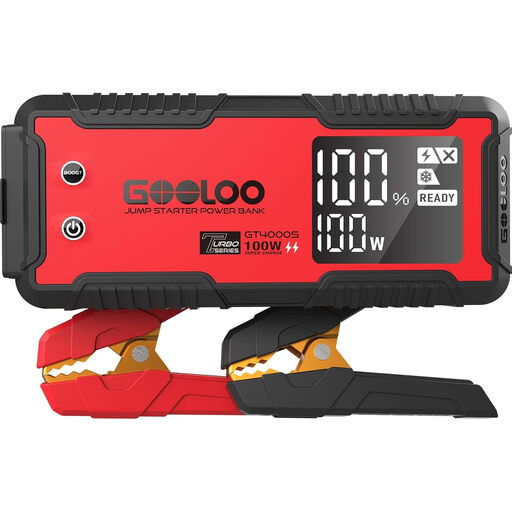
Why it stands out: The GOOLOO GT4000S specializes in maximum starting power and extremely fast recharging. It is a pure 12V jump starter without an integrated compressor.
Pros:
Who is it for? For professional drivers or owners of very large vehicles (e.g., heavy-duty pickups, boats, agricultural machinery) where pure starting power is the top priority and a separate compressor is already available or not needed.
The models presented cover specific use cases. If you are looking for a device with different specifications or for a smaller budget, you may find the right model in our broader selection.
? Discover more portable 12V battery starters on Joybuy
1. Can I leave a jump starter in my car permanently? That depends on the device's operating temperature range. Models designed for extreme temperatures (e.g., -20°C to +60°C or wider) can be left in the vehicle. Check the manufacturer's specifications for this information. Extreme heat in the summer can shorten the battery life of less robust models.
2. What is the difference between peak current and cranking current?Peak Current (Peak Amps) is the maximum current the device can deliver for a very brief moment (often less than a second). Cranking Current (Cranking Amps) is the current the device can sustain for a longer duration (several seconds) to crank the engine. Peak current is a good indicator of overall power, but both values are relevant for a successful jump-start.
3. How often does a jump starter power bank need to be recharged? This depends on the battery's self-discharge rate. High-quality devices have a low self-discharge rate and only need to be checked and recharged every 3 to 6 months to ensure they are ready for use. Some modern battery types, like sodium-ion, have a particularly low self-discharge rate of only about 1% per month.