
Lieferung heute & morgen

Qualitätsgarantie

Willkommens-Angebote freischalten: KOSTENLOSE Lieferung | Bis zu 80 % RABATT | Kostenlose 30-Tage-JoyPlus-Testphase
App herunterladen
A dead car battery or a flat tire always happens at the worst possible time—often on a cold morning or on the way to a holiday. A multifunctional jump starter with an air compressor promises a quick fix and independence from roadside assistance. However, the market is flooded with devices boasting impressive specs that don't always deliver in practice. Before you make a decision, it's crucial to understand the common pitfalls that can lead to a useless device in your glove box.
Common Pitfalls When Buying:
To find a reliable roadside emergency kit that won't let you down, you should carefully examine three core technical specifications.
The Peak Current (Peak Amps) indicates the maximum current the device can deliver for a short burst. More importantly, however, this value must match your engine's displacement and type.
A good electric tire inflator is defined not just by its maximum pressure but also by its efficiency.
The battery's capacity, measured in milliampere-hours (mAh), determines how many times you can jump-start a car or charge your smartphone before the device itself needs to be recharged.
Here are some models tailored to different user profiles and their specific requirements.
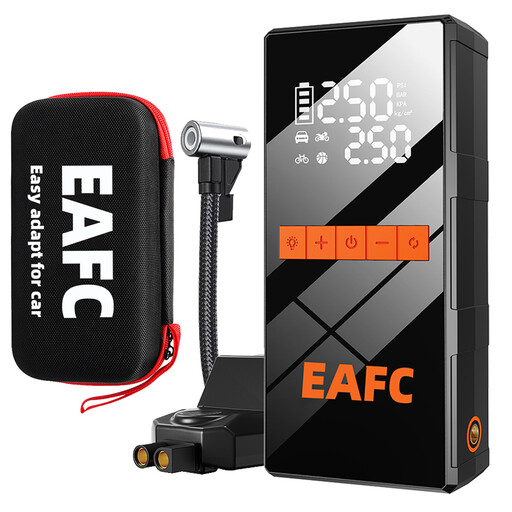
Why this model is a good fit: Ideal for drivers of compact and mid-size cars with gasoline engines who want a straightforward 4-in-1 emergency solution without paying for unused power reserves.
Its 1200A output is tailored for gasoline engines up to 4.0L, avoiding exaggerated marketing claims. The 150 PSI compressor with auto shut-off is practical and reliable for standard passenger car tires.
Combines a jump starter, compressor, power bank, and LED light in one compact unit. Operation is simple and focused on the essential functions needed for a typical roadside emergency.
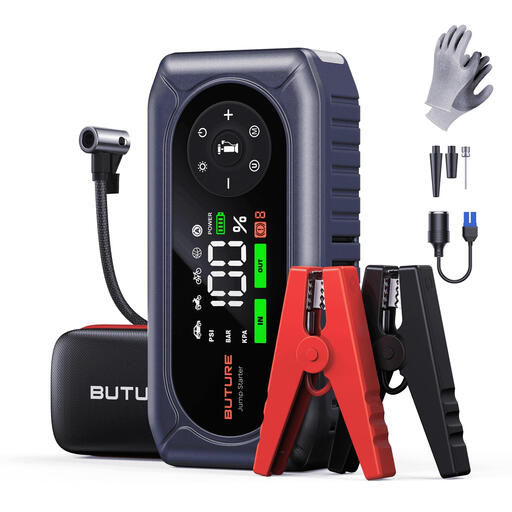
Why this model is a good fit: Designed for owners of large-displacement vehicles like SUVs, vans, or diesel cars who need high, reliable starting power, even in cold conditions.
With 4500A of peak current, it offers enough reserve power for diesel engines up to 8.0L. The compressor's honeycomb cooling technology reduces the risk of overheating during extended use, such as when inflating large SUV tires.
High compatibility with large engines. The clear LCD screen displays all relevant data, like battery status and tire pressure, in real-time, which enhances operational safety.
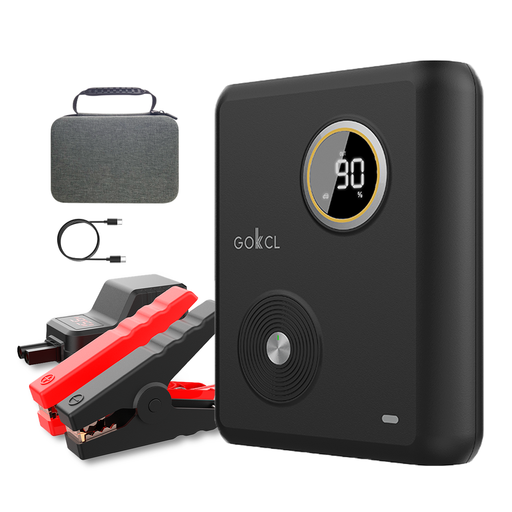
Why this model is a good fit: For users who value longevity, minimal maintenance, and extreme weather resistance. Its sodium-ion technology is a future-proof choice.
Directly addresses the problem of self-discharge. According to the manufacturer, it has a standby time of up to 5 years and extremely low self-discharge, making it a highly reliable emergency device.
The sodium-ion battery offers a high cycle life (up to 6,000 cycles, per the manufacturer) and a wide operating temperature range (-40°C to 80°C), making it safer and more durable than many lithium alternatives.
We have compiled a complete, up-to-date list of products that fully meet these strict selection criteria and rigorous safety standards.
Most manufacturers recommend charging the device every 3 to 6 months, even if it's not used. This compensates for the self-discharge of the lithium-ion battery and ensures the device is ready in an emergency. Models with sodium-ion technology have a significantly lower self-discharge rate and require less frequent charging.
Not necessarily. An extremely high peak current is only useful if you need to start a vehicle with a very large engine (e.g., a large truck or boat). For a standard passenger car, an oversized device is unnecessary and more expensive. It's more important that the device's power is appropriate for your vehicle's engine.
Yes, that is the main purpose of the integrated compressor. However, it can take several minutes depending on the tire size and the compressor's airflow rate. Check the operating instructions, as some models require a cool-down period after a certain amount of runtime to prevent overheating.