
Lieferung heute & morgen

Qualitätsgarantie

Willkommens-Angebote freischalten: KOSTENLOSE Lieferung | Bis zu 80 % RABATT | Kostenlose 30-Tage-JoyPlus-Testphase
App herunterladen
A dead car battery is more than just an annoyance—it brings your journey to a halt, often at the worst possible time. Whether on a cold winter morning or in a remote car park, relying on roadside assistance can cost you time and stress. A jump starter with a compressor offers an independent and versatile solution. It not only serves as a car battery booster in an emergency but also as a jump starter with an air pump for maintaining correct tyre pressure, and often even as a portable power source.
As your Joybuy Product Recommendation Officer, I have analysed the available information to provide you with objective guidance. This article explains the crucial criteria for selecting a suitable device and presents a selection of models with different specialisations.
Choosing the right model depends on your vehicle and your individual needs. The following three points will help you make an informed decision.
The peak current, measured in Amperes (A), is the maximum current the device can deliver for a short period. This is the critical value needed to start an engine with a dead battery.
The battery built into the device determines its reliability, longevity, and safety, especially in extreme cold.
A jump starter with an air pump is more than just an emergency tool.
Based on the criteria mentioned, we present three models that cover different needs.
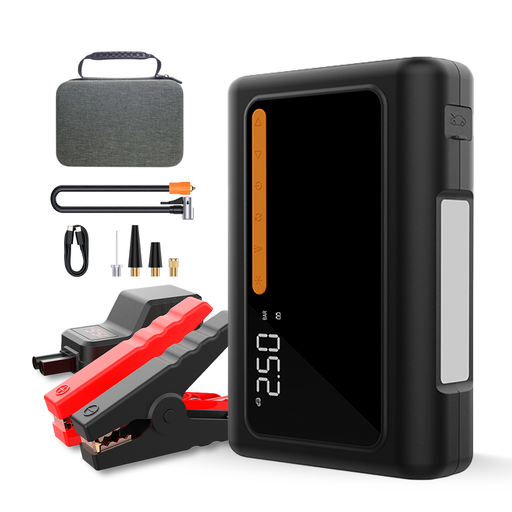
What Sets This Model Apart: The GOKKCL GK01 uses an innovative sodium-ion battery. According to the manufacturer, this technology provides exceptional longevity and an extremely wide operating temperature range, making the device particularly low-maintenance and safe for year-round storage in your vehicle.
Pros:
Who is this device for? For vehicle owners looking for an extremely durable, safe, and low-maintenance multifunctional device that can be left in the car all year round without worry.
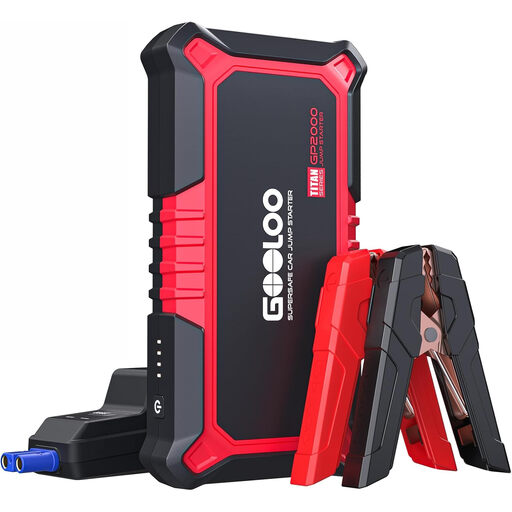
What Sets This Model Apart: The GOOLOO GP2000 is a compact and powerful car battery booster that focuses on its core competency: reliably starting vehicles. It is a great choice for users who already own a separate compressor.
Note: This model does not have a built-in compressor.
Pros:
Who is this device for? For users who need a powerful and portable solution for cars, SUVs, and motorcycles that is primarily focused on jump-starting and can do without an integrated air compressor.
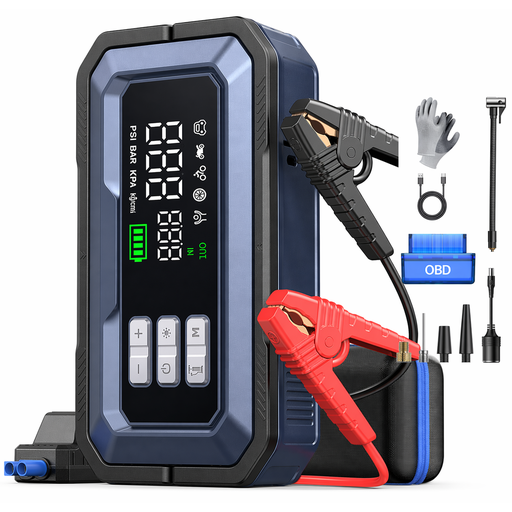
What Sets This Model Apart: The UTRAI 7000A is a powerhouse for demanding tasks. With an extremely high peak current, an integrated OBD2 fault code reader, and a 160W DC output, it is far more than just a portable jump starter—it's a comprehensive tool for professionals and enthusiasts.
Pros:
Who is this device for? For professional users, owners of RVs, boats, or large diesel vehicles, as well as tech-savvy users looking for an all-in-one device for emergencies, maintenance, and recreational activities.
The products presented here are a selection covering various use cases. If you are looking for other models, such as devices with an integrated inverter to power 230V appliances, you can find a broader overview in our corresponding category.
? Discover more models in the Jump Starter Inverter category here
1. How often do I need to charge a jump starter? The charging intervals depend on the battery technology. Common lithium-ion models should be recharged every 3 to 6 months to ensure they are ready for use. Models with sodium-ion technology have a significantly lower self-discharge rate and, according to manufacturers, require less frequent charging. Always follow the manufacturer's recommendations.
2. Can I start a truck with a 12V jump starter? It depends on the device's peak current. A standard 12V jump starter is designed for cars. For a truck jump starter (with a 12V system), you need a high-performance model with a very high peak current, like the UTRAI 7000A, which is explicitly specified for large diesel engines. Always check the engine compatibility in the product specifications.
3. Is it safe to use a portable jump starter? Yes, modern devices are equipped with intelligent safety clamps (Smart Clamps). These provide protection against reverse polarity, sparks, short circuits, and overheating. As long as the user manual is followed, they are safe for non-experts to use.