
Lieferung heute & morgen

Qualitätsgarantie

Willkommens-Angebote freischalten: KOSTENLOSE Lieferung | Bis zu 80 % RABATT | Kostenlose 30-Tage-JoyPlus-Testphase
App herunterladen
A dead car battery or a flat tire rarely happens at a convenient time. A multi-functional Jump Starter with Compressor promises to be a reliable solution for both problems. However, the market is flooded with devices whose advertised performance specs often overpromise and underdeliver. Misleading claims and design flaws mean many of these units fail when you need them most.
As your Joybuy Product Recommendation Officer, I'm here to help you correctly interpret technical specs and avoid marketing traps. This guide focuses on the objective criteria that define a reliable combination device, enabling you to make an informed decision.
Many buyers focus on the big numbers on the box without understanding their practical relevance. This often leads to disappointment. Pay close attention to these three points:
To find a durable and functional device, you should focus on verifiable technical data. These three criteria are crucial for making the right choice.
Peak current is an indicator, but the engine compatibility rating is more important. Ensure the manufacturer explicitly states the maximum supported engine size in litres (e.g., "up to 9.0L Petrol / 6.5L Diesel"). A 3000A jump starter is generally a good baseline for most cars and SUVs, but the manufacturer's official compatibility rating provides the ultimate assurance. Modern devices should also come standard with safety protections against reverse polarity, over-current, and short circuits.
A good portable 12V compressor or cordless tire inflator should not only have sufficient maximum pressure but also a solid airflow. A value of 35 L/min or more is a good sign that a tire can be inflated in a reasonable amount of time without the unit overheating. An automatic shutoff feature that stops at the preset pressure is also an important convenience and safety feature.
The quality of the built-in lithium-ion cells determines the device's lifespan and reliability. Look for a specified lifespan in charge cycles (e.g., 1000+ cycles). Useful additional features that round out a good car emergency kit include a built-in LED flashlight with different modes (light, strobe, SOS) and USB ports to use the device as a power bank for mobile phones or other electronic gadgets.
Instead of making a one-size-fits-all recommendation, we have identified products that suit different user profiles and requirements.
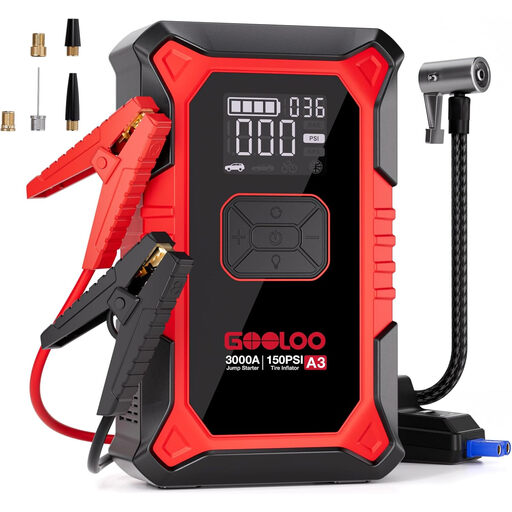
Why This Fits Their Persona: Ideal for drivers of larger cars, SUVs, or diesel vehicles who want a single, powerful solution for all common roadside emergencies. This device combines a strong jump starter with a capable compressor.
The clear engine compatibility rating (up to 9.0L Petrol/6.5L Diesel) is more practical than the peak current figure alone. The compressor has a specified airflow of 35 L/min, ensuring real-world performance.
High performance for both jump-starting and inflation in one unit; 7-in-1 multi-functionality including a power bank and LED light.
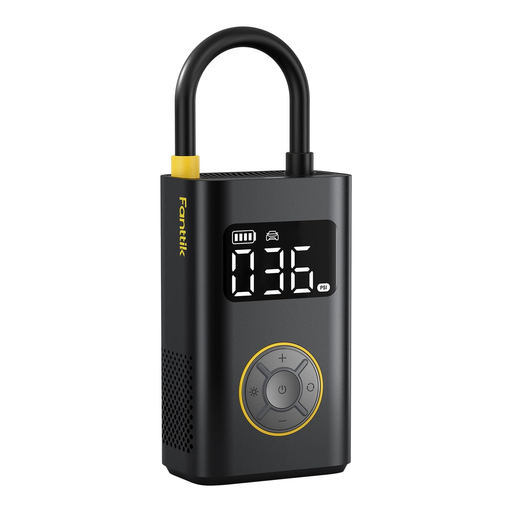
Why This Fits Their Persona: Perfect for drivers who already own a jump starter and are looking for a specialised, fast, and compact cordless tire inflator. Its wireless design is ideal for quick tire pressure checks and emergencies.
This device avoids the pitfall of weak compressors in combo units by focusing on one job. Its fast inflation time (e.g., 30 to 35 PSI in 1 minute, according to the manufacturer) is a testament to its efficiency.
Very fast inflation; compact, cordless design with smart modes and auto-shutoff.
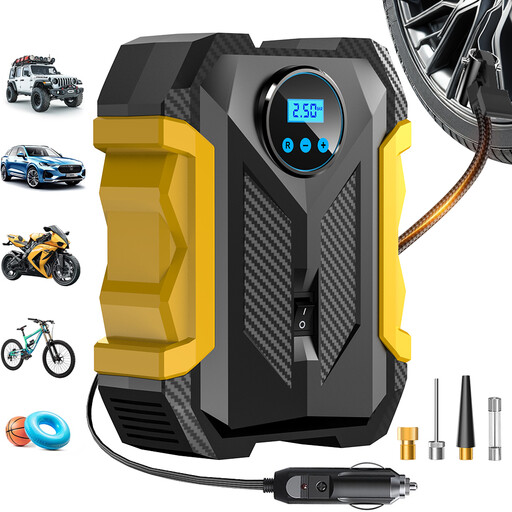
Why This Fits Their Persona: A straightforward and budget-friendly solution for drivers seeking a simple but reliable portable 12V compressor for emergencies. It plugs directly into the vehicle's 12V socket.
This model avoids the aging battery trap because it has no internal battery. As long as the car battery works, the compressor is ready to go. Its simplicity reduces the number of potential points of failure.
No internal battery maintenance required; powered directly by the vehicle; very compact and simple design.
We have compiled a complete, real-time list of products that fully satisfy these strict selection criteria and UK safety regulations.
1. How often do I need to charge a jump starter with a compressor? It is generally recommended to fully charge the device every 3 to 6 months, even if it hasn't been used. This helps maintain battery health and ensures it's ready for an emergency. Always follow the specific recommendations in the manufacturer's user manual.
2. Can I use a 3000A jump starter on smaller engines? Yes, that is perfectly safe. Modern jump starters are equipped with intelligent safety systems. The device only delivers as much current as the vehicle's starter motor requires. The high amperage rating simply indicates the unit's maximum capability and poses no risk to smaller batteries or engines.
3. Is a battery-powered tire inflator better than a 12V model? That depends on your use case. Battery-powered models offer maximum flexibility and can be used anywhere, but they depend on their battery charge. 12V models that plug into the car's 12V socket are always ready as long as the car battery is working and don't need to be charged separately. For pure in-car emergencies, a 12V model is often a very reliable choice.