
Lieferung heute & morgen

Qualitätsgarantie

Willkommens-Angebote freischalten: KOSTENLOSE Lieferung | Bis zu 80 % RABATT | Kostenlose 30-Tage-JoyPlus-Testphase
App herunterladen
A dead car battery or a flat tyre always happens at the worst time—usually far from the nearest garage. A jump starter with a compressor promises quick, independent assistance. However, the market is flooded with devices whose advertised performance specs often fail to deliver in real-world use. As a Joybuy Product Recommendation Officer, I'll help you identify the crucial features and avoid marketing traps, so you can make an informed decision for your roadside emergency kit.
In an emergency, many multi-function devices prove to be inadequate. Pay close attention to these three weak points to avoid a bad purchase:
To ensure your device works reliably in an emergency, you should check the following technical specifications before buying.
The peak current, measured in amps (A), is the maximum current the device can deliver for a short burst to start an engine. A small car with a petrol engine requires significantly less power than an SUV or camper van with a large-displacement diesel engine.
A compressor's performance is determined by two values:
A reliable battery booster with a compressor must have intelligent protection circuitry. Look for at least these features: reverse polarity protection, over-current protection, overload protection, over-voltage protection, and overheating protection. Modern devices use lithium-polymer (LiPo) batteries, which offer high energy density in a compact and lightweight package.
Here are some recommendations tailored to different user needs that avoid the common pitfalls mentioned.
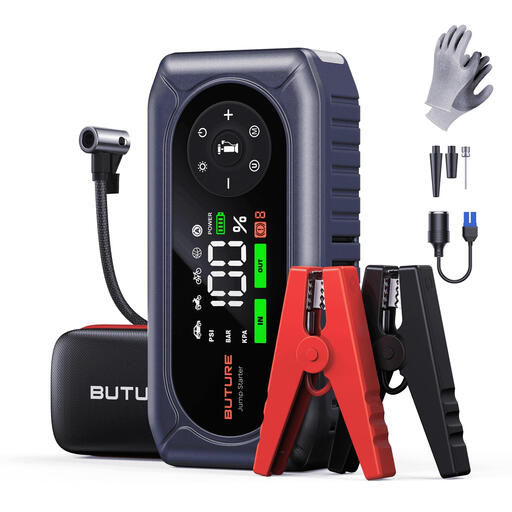
Why This Fits Their Persona: Ideal for owners of SUVs, vans, camper vans, or vehicles with large-displacement engines (up to 9.0L petrol / 8.0L diesel) who need a powerful and reliable all-in-one solution for any eventuality.
The specified 4500A peak current is designed for large engines, avoiding the trap of underpowered units. The 150 PSI compressor is built for real-world use, not just as a marketing gimmick.
Very high starting power for demanding vehicles. Integrated 150 PSI compressor with 5 preset modes and automatic shut-off.
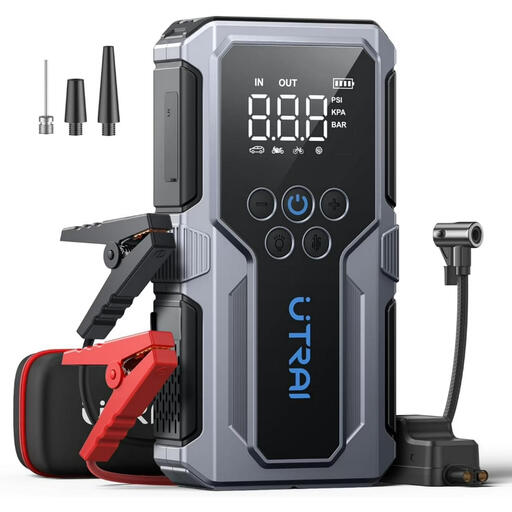
Why This Fits Their Persona: Perfect for drivers of standard cars, estate cars, and mid-size SUVs who are looking for a balanced and reliable multi-tool for everyday breakdowns and travel.
Features 10 integrated protection technologies, including reverse polarity protection. The clear LED display shows the status and prevents user error, thus avoiding the pitfall of unsafe, cheap devices.
Solid 3000A starting power for most vehicles (up to 8.5L petrol / 6.5L diesel). The 150 PSI compressor with pressure preset and auto-stop function is practical and reliable.
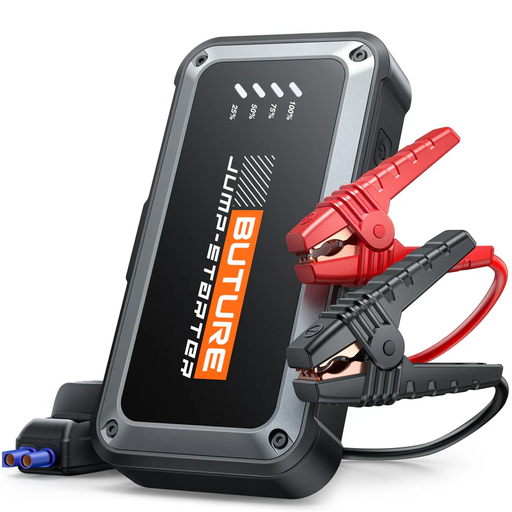
Why This Fits Their Persona: For users who prioritise a lightweight, extremely compact jump starter for the glove compartment and can do without an integrated compressor, perhaps because they already own one.
This model focuses on one job and does it reliably. It offers a high 3000A peak current without the extra bulk of a compressor, thereby avoiding the trap of an underperforming all-in-one device.
Extremely lightweight (only 0.370 kg) and compact. Still offers high starting power for engines up to 9.0L petrol / 8.5L diesel, as well as a power bank function.
We have compiled a complete, up-to-date list of products that fully meet these strict selection criteria and local safety regulations.
Even when not in use, the battery will lose its charge over time. It is recommended to fully charge the device every 3 to 6 months to maintain battery health and ensure it's ready for an emergency. Please refer to the manufacturer's specific instructions in the user manual.
Yes, models with sufficient pressure (e.g., 150 PSI) and an adequate airflow rate are capable of inflating a standard car tyre from 0 bar to the target pressure. This typically takes longer than with a workshop compressor but is perfectly adequate for roadside emergencies.
Although not strictly necessary for a small car with a petrol engine, a higher peak current provides a greater safety margin. This is especially beneficial in very cold temperatures, as battery performance decreases in the cold. A higher peak current will not harm the vehicle, as it will only draw as much current as it needs to start.