
Lieferung heute & morgen

Qualitätsgarantie

Willkommens-Angebote freischalten: KOSTENLOSE Lieferung | Bis zu 80 % RABATT | Kostenlose 30-Tage-JoyPlus-Testphase
App herunterladen
A dead car battery or a flat tire rarely happens at a convenient time. Especially on the way to work or while traveling, such breakdowns can lead to significant delays. A multifunctional jump starter with an air compressor offers an independent and quick solution for both problems. This article serves as a guide to help you understand the technical features of these devices and make an informed choice for your needs.
Selecting the right device depends on several technical factors. Instead of being swayed by marketing promises, you should focus on objective performance data.
The peak current, measured in amperes (A), is the critical value that determines a device's ability to start an engine. A higher peak current means more power to crank an engine.
Always check the manufacturer's specifications for compatibility with gasoline and diesel engines (e.g., "up to 10.0L diesel"). A battery booster with insufficient power will be ineffective on a large engine or one that's reluctant to start in the cold.
An integrated 12V tire compressor is the second core function. Its performance is determined by two key metrics:
Modern devices often feature an automatic shut-off function where the target pressure can be preset.
The capacity of the internal battery, often specified in milliampere-hours (mAh), determines how many times you can jump-start a car or charge devices before the portable jump starter itself needs to be recharged. Many models also function as a car jump starter power bank and include USB ports (USB-A, USB-C) for charging smartphones, tablets, or laptops. An integrated LED light with various modes (flashlight, SOS, strobe) is a useful safety feature for breakdowns in the dark.
Here, we present a selection of devices that cover different needs—from all-in-one solutions to specialized powerhouses.
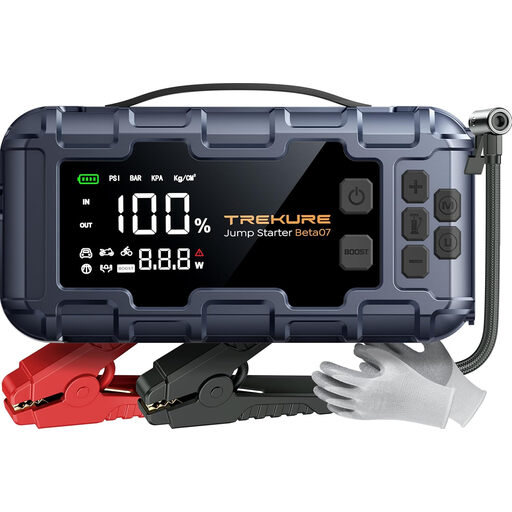
Why It Stands Out: The TREKURE Beta07 is a true multi-function device, combining high starting power with a capable air compressor. The 3.3-inch display clearly shows all relevant data, such as battery status and tire pressure.
Pros:
Who It's For: Vehicle owners looking for a comprehensive all-in-one emergency solution who value high performance reserves for large vehicles (RVs, vans, SUVs) and fast tire inflation.
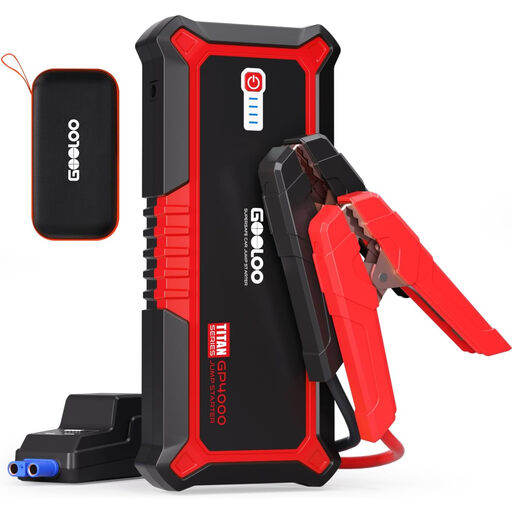
Why It Stands Out: The GOOLOO GP4000 is a specialized jump starter with a focus on maximum starting power. It forgoes an integrated compressor but offers an extremely high peak current in a rugged housing.
Pros:
Who It's For: Owners of vehicles with large-displacement engines, especially diesels, who need an extremely powerful and reliable jump starter and can do without an integrated compressor or already own one.
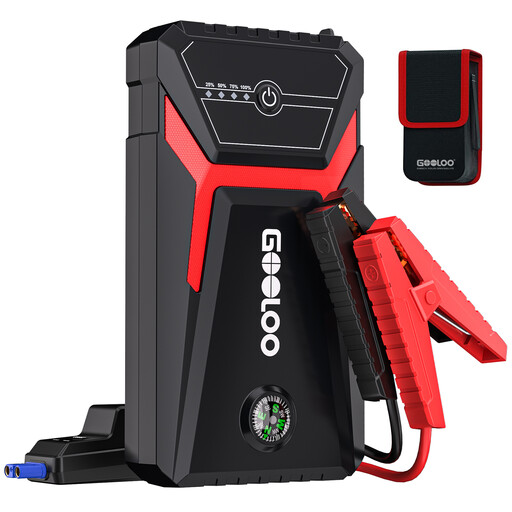
Why It Stands Out: The GOOLOO GE1500 is a compact and lightweight 12V jump starter that focuses on the core functions of jump-starting and power bank capabilities. Weighing less than a kilogram, it is especially easy to store.
Pros:
Who It's For: Drivers of standard cars and motorcycles who are looking for a very compact, lightweight, and straightforward emergency jump starter with a power bank function for their glove compartment.
If the models presented here don't exactly match your needs, or if you are specifically looking for different performance and price classes, you can find more devices in our overview.
? Discover more affordable battery jump starters on Joybuy.de
1. What is the difference between a jump starter with and without a compressor? A jump starter with a compressor is an all-in-one device that can both jump-start a dead car battery and inflate flat tires. Models without a compressor are purely jump starters (often usable as a power bank), which are typically more compact, lighter, and focused on high starting power. The choice depends on whether you prefer an all-in-one solution or would rather have two separate devices for these functions.
2. How do I choose the right peak current (Amps) for my vehicle? Refer to the specifications from your vehicle's manufacturer and the jump starter's manufacturer. As a rule of thumb, diesel engines require more current than gasoline engines of the same size due to their higher compression. For most passenger car gasoline engines, devices up to 1500 A are sufficient. For larger SUVs, vans, or diesel cars, you should consider a model with at least 2000 A or more.
3. How often should you charge a jump starter? Even when not in use, a jump starter's battery slowly self-discharges. To ensure full performance in an emergency, most manufacturers recommend fully charging the device every 2 to 3 months. It's best to store it in a cool, dry place and not permanently in a car that gets freezing cold in winter or scorching hot in summer to maximize the battery's lifespan.